Breakthrough Experiment Illuminates the Cosmic Origin of Rare Proton-Rich Elements
A landmark experiment at the Facility for Rare Isotope Beams has directly measured a key stellar reaction for the first time, shedding new light on the origin of rare proton-rich elements like selenium-74. By recreating a process that occurs in supernova explosions, scientists have halved the uncertainty in astrophysical models. While this marks a significant step forward, the findings also reveal persistent gaps in our understanding, indicating that the full story of how the universe forges its rarest isotopes is not yet complete.
For over six decades, astrophysicists have grappled with a fundamental cosmic mystery: where do the universe's rarest, proton-rich elements come from? These exotic isotopes, known as p-nuclei, cannot be formed through the well-understood neutron-capture processes that create most heavy elements. Now, a groundbreaking experiment has pierced this longstanding veil of uncertainty. For the first time, scientists have directly measured a crucial nuclear reaction that forms selenium-74, the lightest p-nucleus, offering unprecedented insights into the violent stellar forges where these elements are born.
The P-Nuclei Puzzle
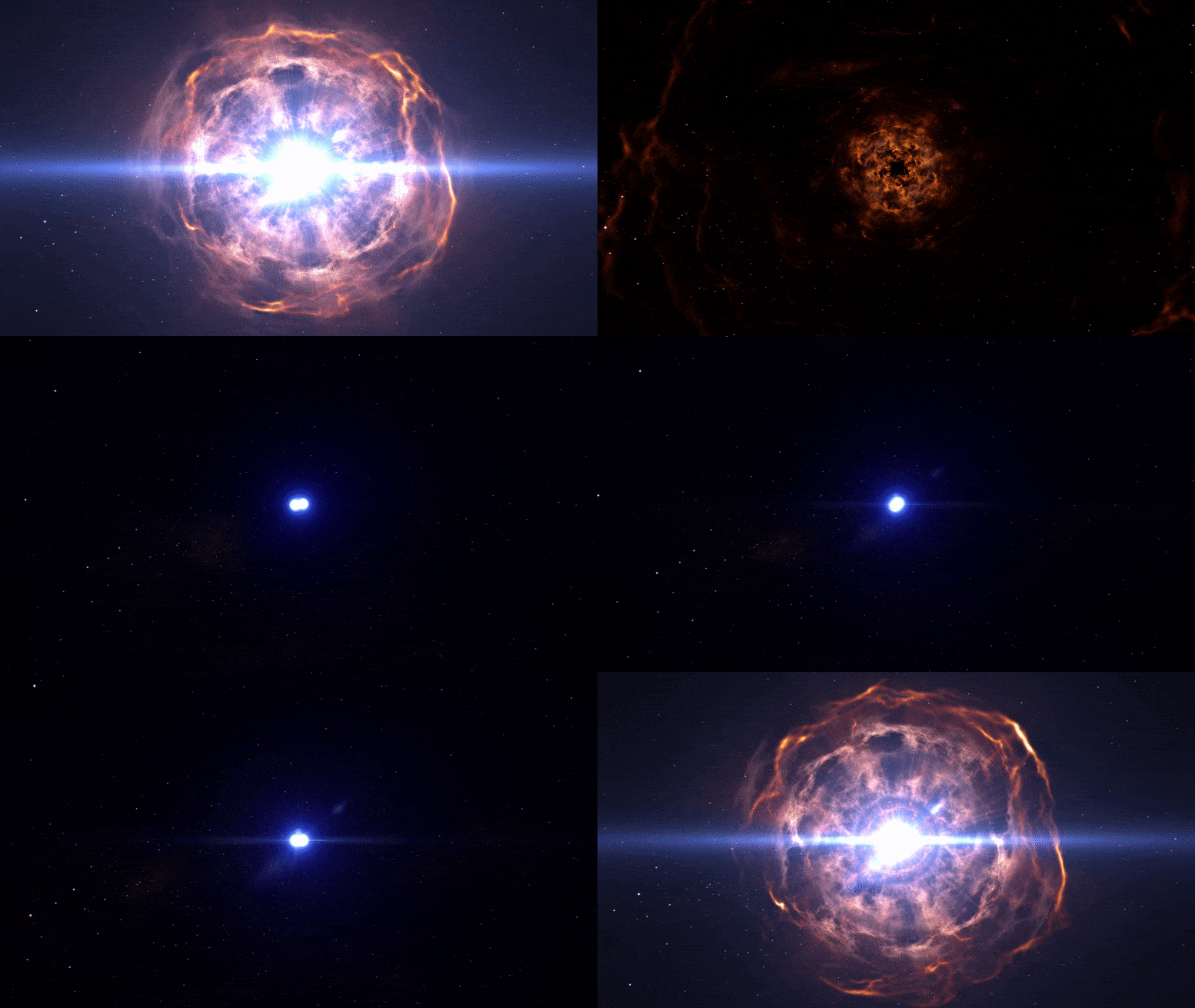
The elements that make up our world and our bodies have diverse cosmic origins. While lighter elements like hydrogen and helium were forged in the Big Bang, and many elements heavier than iron are created by stars capturing neutrons, a special group of 35 proton-rich isotopes defies these explanations. These p-nuclei, ranging from selenium-74 to mercury-196, are exceptionally rare in our solar system, yet their existence poses a critical question for nuclear astrophysics. The leading theoretical explanation for their creation is the gamma process, which is believed to occur in the intense heat of certain supernova explosions. In these cataclysmic events, gamma rays bombard heavier nuclei, stripping away neutrons and leaving behind proton-rich isotopes that later decay into stable p-nuclei.
A First-of-its-Kind Measurement
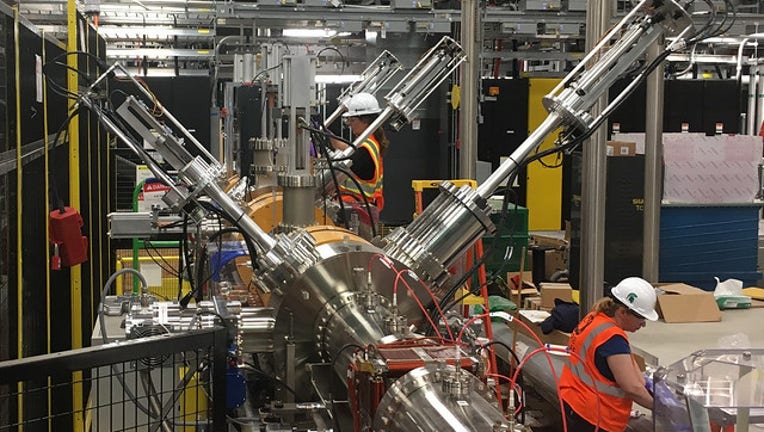
The recent breakthrough, led by researcher Artemis Tsantiri and involving over 45 scientists from 20 institutions, was published in Physical Review Letters. The team achieved a milestone by directly observing the reaction where radioactive arsenic-73 captures a proton to form selenium-74. This was made possible by the advanced capabilities of the Facility for Rare Isotope Beams (FRIB). Researchers generated a specialized beam of the short-lived arsenic-73 isotope and directed it into a hydrogen gas target. They then used the Summing Nal (SuN) detector to capture the telltale gamma rays emitted when the newly formed selenium-74 reached a stable state.

Sharpening Our Cosmic Models
The direct measurement of this reaction rate is a game-changer for astrophysical models. Previously, scientists had to rely heavily on theoretical calculations for these processes, as the involved isotopes are too short-lived and difficult to produce for laboratory study. By incorporating their new, precise data into models of the gamma process, the research team was able to reduce the uncertainty in the predicted abundance of selenium-74 by 50%. This represents a significant leap in our ability to accurately simulate the complex nuclear chemistry of stellar explosions. As Artemis Spyrou, a professor at FRIB and the experiment's architect, noted, this work brings us a step closer to unraveling the origins of the universe's rarest isotopes.
Revealing the Remaining Mysteries
Despite this progress, the experiment also delivered a humbling revelation: even the updated models do not perfectly match the observed amounts of selenium-74 in our solar system. This discrepancy indicates that our understanding of the extreme conditions inside supernovae is still incomplete. The findings suggest that scientists may need to reconsider the temperatures, densities, or types of stars involved in the gamma process. The story of the p-nuclei, therefore, is not yet complete. This research, supported by agencies including the U.S. Department of Energy and the National Science Foundation, has successfully narrowed the path forward while highlighting where the next breakthroughs must be sought.
In conclusion, this pioneering experiment stands as a testament to the power of cutting-edge facilities like FRIB to probe the universe's deepest secrets. By recreating a stellar reaction on Earth, scientists have not only halved a major uncertainty in astrophysics but have also clearly charted the territory of our remaining ignorance. The quest to fully explain the origin of every element in the cosmos continues, driven forward by precise measurements and the enduring curiosity to understand our chemical heritage.