Breakthrough Experiment Sheds New Light on the Origin of Rare Cosmic Elements
For the first time, scientists have directly measured a key stellar reaction that creates selenium-74, a rare proton-rich element. This breakthrough experiment, conducted at the Facility for Rare Isotope Beams, sharpens our understanding of how these exotic isotopes form in supernova explosions, cutting predictive uncertainty in half. While the findings represent a major advance in nuclear astrophysics, they also reveal persistent gaps in our models, indicating the cosmic story of element formation is not yet complete.
For over six decades, the origin of a special class of rare, proton-rich elements has been one of astrophysics' most enduring puzzles. Known as p-nuclei, these isotopes cannot be formed by the same neutron-capture processes that create most heavy elements. Now, a landmark experiment has brought scientists closer to solving this cosmic mystery. Researchers have, for the first time, directly measured a key reaction in the creation of selenium-74, the lightest p-nucleus, using a rare isotope beam. This achievement not only refines our models of stellar explosions but also highlights the complex challenges that remain in understanding the universe's elemental makeup.
The P-Nuclei Problem: A Cosmic Anomaly
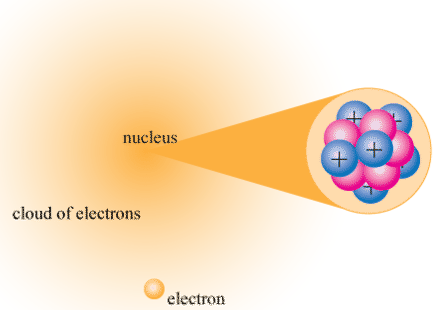
To understand the significance of this discovery, one must first grasp the p-nuclei problem. Elements heavier than iron are typically forged in stars through processes where atomic nuclei capture neutrons. However, approximately 35 proton-rich isotopes, ranging from selenium-74 to mercury-196, defy this explanation. Their existence suggests an alternative astrophysical pathway, one that has eluded direct experimental verification due to the extreme difficulty of recreating stellar conditions and producing the short-lived isotopes involved.
The Gamma Process and Supernova Crucibles
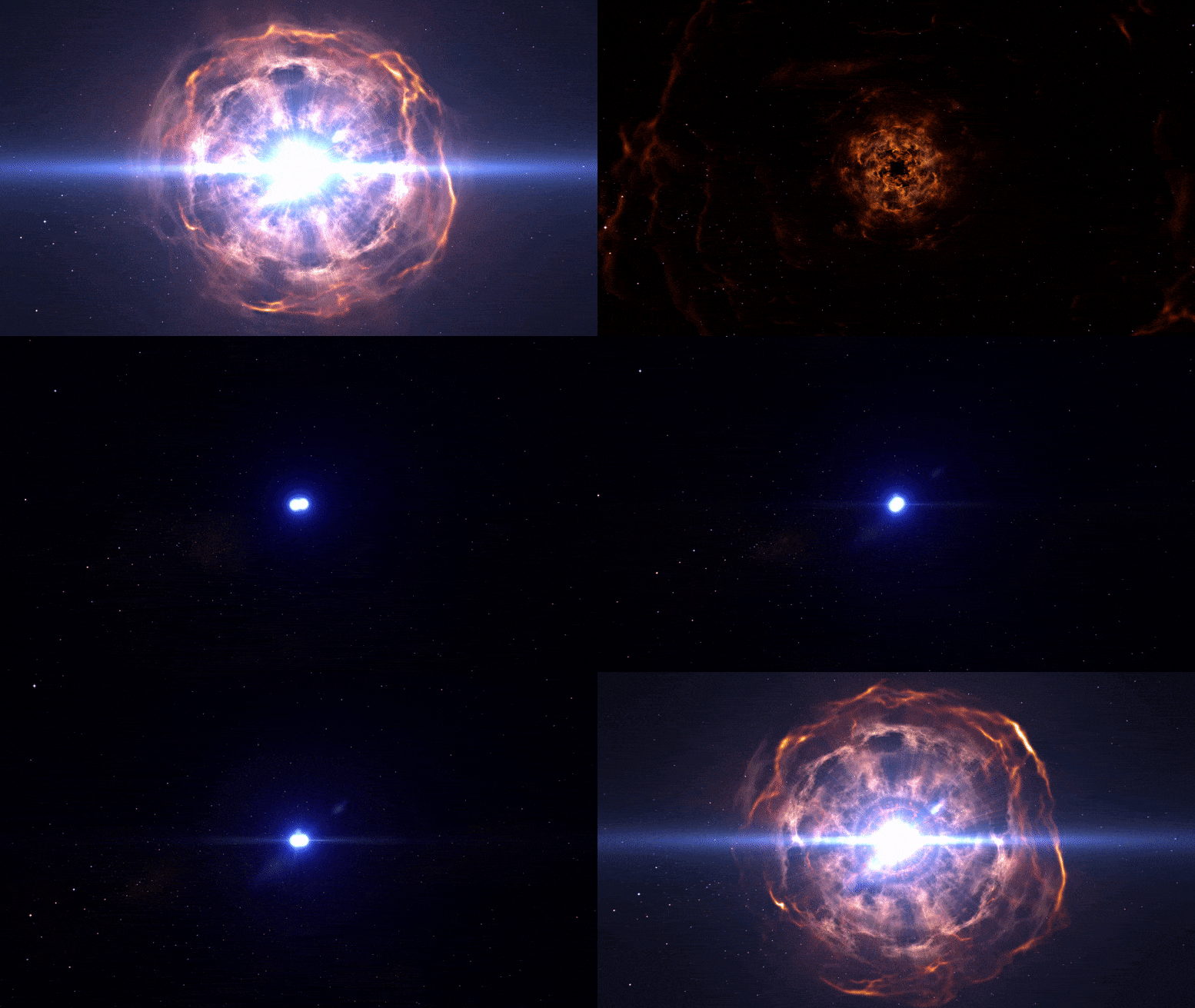
The leading theoretical explanation for p-nuclei creation is the gamma process, believed to occur in certain types of supernova explosions. In these cataclysmic events, intense heat generates gamma rays that bombard heavier nuclei, stripping away neutrons and other particles. The remaining nuclei become proton-rich. Over time, some of these isotopes stabilize to become the p-nuclei we observe. The challenge has been that many isotopes in this chain are highly unstable and nearly impossible to study in a laboratory setting, forcing scientists to rely heavily on theoretical models with large uncertainties.
A First-of-its-Kind Measurement
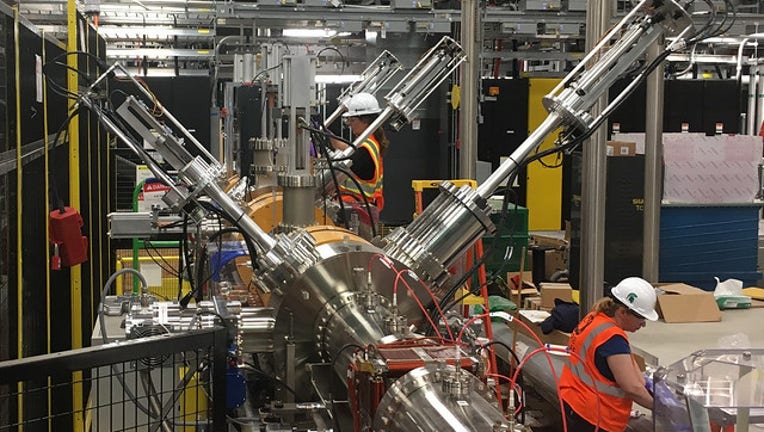
The recent breakthrough, led by researcher Artemis Tsantiri and involving over 45 scientists from 20 institutions, changed this paradigm. As detailed in research published in Physical Review Letters, the team used the unique capabilities of the Facility for Rare Isotope Beams (FRIB). They generated a beam of radioactive arsenic-73 and directed it into a hydrogen gas target. By observing the forward reaction where arsenic-73 captures a proton to form excited selenium-74, they could infer the rate of the reverse reaction—a critical destruction pathway for selenium-74 inside stars. This direct measurement was made possible by FRIB's ReA accelerator and the specialized Summing Nal (SuN) detector.
Sharpening the Cosmic Model
The impact of this experimental data is substantial. When incorporated into astrophysical models, the new measurement reduced the uncertainty in the predicted abundance of selenium-74 by 50%. This is a significant leap forward in precision for nuclear astrophysics. It provides a much firmer foundation for understanding the conditions within the supernovae that produce these elements. The work demonstrates the transformative potential of next-generation facilities like FRIB, which allow scientists to move from theoretical estimation to direct observation of stellar processes.
Persistent Mysteries and Future Directions
Despite this progress, the updated models still do not perfectly match the observed abundances of selenium-74 in our solar system. This discrepancy is a crucial finding in itself. It suggests that our assumptions about the temperature, density, or other conditions inside the supernova explosions may need refinement. The experiment has therefore served a dual purpose: it has answered one question while clearly defining the next set of questions for the field. As Artemis Spyrou, a professor at FRIB and research advisor on the project, noted, these results bring us a step closer, but the collaborative journey to understand the universe's rarest isotopes continues.
This research, supported by agencies including the U.S. Department of Energy and the National Science Foundation, marks a pivotal moment. It proves that key stellar reactions can be studied directly on Earth, validating decades of theoretical work while charting a new, empirical course for nuclear astrophysics. The story of where our elements come from is being rewritten, one rare isotope at a time.