ESA's Mars Orbiters Capture Rare Interstellar Comet 3I/ATLAS
The European Space Agency's Mars orbiters have successfully observed comet 3I/ATLAS, only the third interstellar comet ever discovered. As this rare visitor passed near Mars in October 2025, the ExoMars Trace Gas Orbiter and Mars Express spacecraft captured images revealing the comet's glowing coma from 30 million kilometers away. This groundbreaking observation provides valuable data about interstellar objects and demonstrates the adaptability of Mars exploration technology while foreshadowing future missions like the Comet Interceptor designed to study such elusive cosmic visitors.
In a remarkable feat of astronomical observation, the European Space Agency's Mars orbiters have captured detailed images of comet 3I/ATLAS, marking only the third interstellar comet ever discovered passing through our solar system. This rare celestial event occurred in early October 2025 as the comet made its closest approach to Mars, providing scientists with unprecedented data about these mysterious interstellar visitors.

The Observation Challenge
Between October 1 and 7, 2025, ESA's ExoMars Trace Gas Orbiter (TGO) and Mars Express spacecraft turned their instruments toward the interstellar comet as it passed near the Red Planet. According to ESA's report, these orbiters had the best vantage point among all ESA spacecraft for observing this rare visitor. During its closest approach on October 3, the comet was approximately 30 million kilometers from Mars, presenting significant technical challenges for the observation teams.
The instruments aboard these orbiters were originally designed to capture Mars's bright surface from just a few hundred to a few thousand kilometers away. Observing such a faint object at such a great distance required innovative approaches and careful planning. Nick Thomas, Principal Investigator of the CaSSIS camera, noted that "the comet is around 10,000 to 100,000 times fainter than our usual target," highlighting the extraordinary nature of this observation.
Scientific Breakthroughs and Discoveries
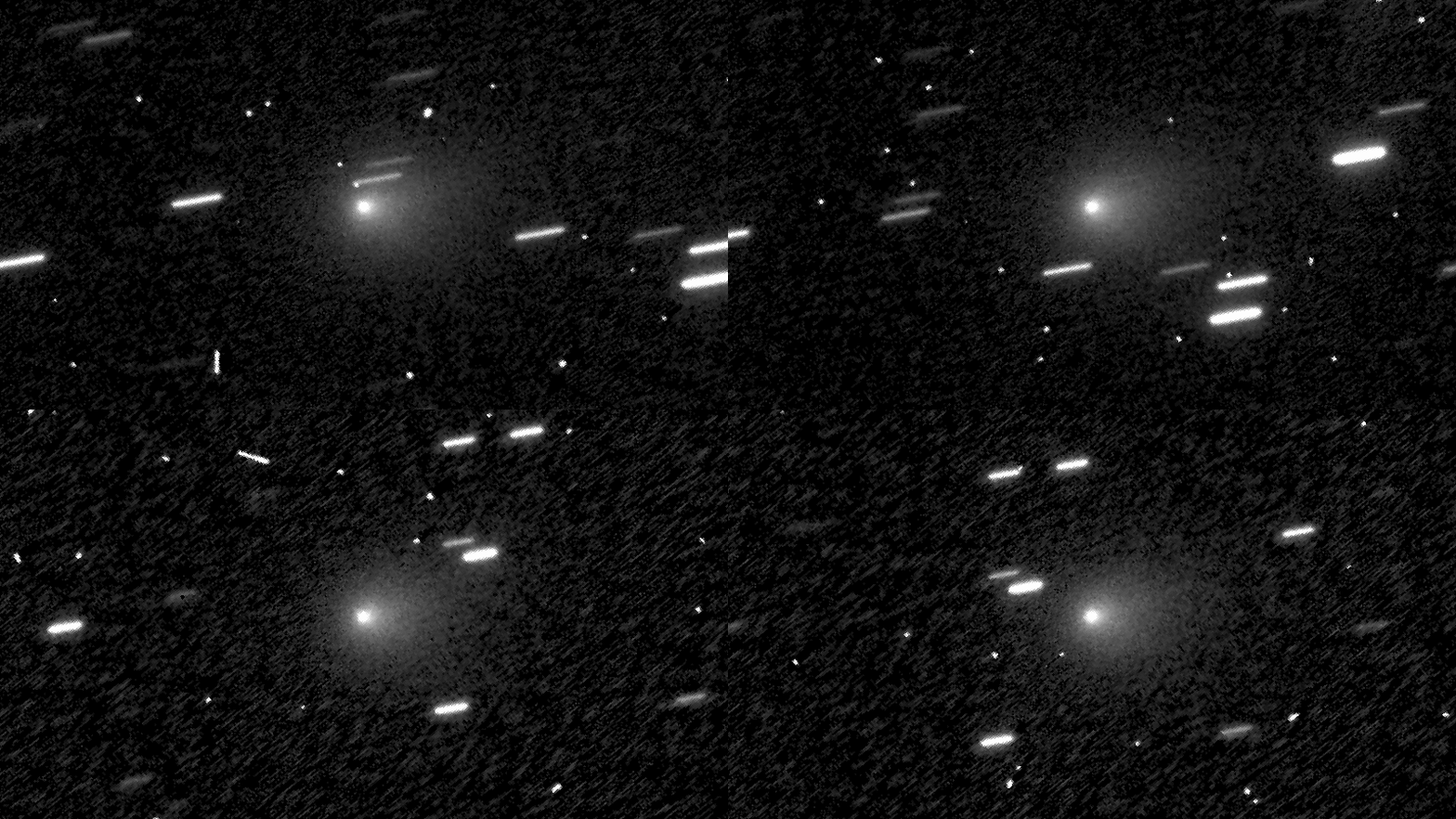
ExoMars TGO successfully recorded a series of images using its Colour and Stereo Surface Imaging System (CaSSIS), revealing the comet's glowing coma—the cloud of gas and dust surrounding its icy, rocky nucleus. The coma stretched several thousand kilometers across, forming as sunlight warmed the comet and released gas and dust that collected into a hazy halo around the core. While the instruments couldn't separate the nucleus from the coma at such distances, the successful detection of the coma itself represents a significant achievement.
Researchers are continuing to process data from both orbiters, with plans to combine multiple Mars Express images to enhance the faint signal and improve detection chances. The teams also attempted to study the comet's light spectrum using various spectrometers, though it remains uncertain whether the coma and tail were bright enough to allow scientists to identify the comet's chemical composition definitively.
Historical Significance of Interstellar Visitors
Comet 3I/ATLAS represents a truly foreign object in our solar system. As Colin Wilson, Mars Express and ExoMars project scientist at ESA, explained in the ESA report, these interstellar comets are "absolutely foreign" compared to every planet, moon, asteroid, comet, and lifeform in our Solar System, which all share a common origin. Interstellar comets like 3I/ATLAS carry crucial clues about the formation of worlds far beyond our own.
This comet follows only two previous interstellar objects ever observed: 1I/ʻOumuamua in 2017 and 2I/Borisov in 2019. What makes 3I/ATLAS particularly intriguing is that astronomers suspect it could be the oldest comet ever observed—potentially three billion years older than our 4.6-billion-year-old Solar System.
Future Missions and Implications
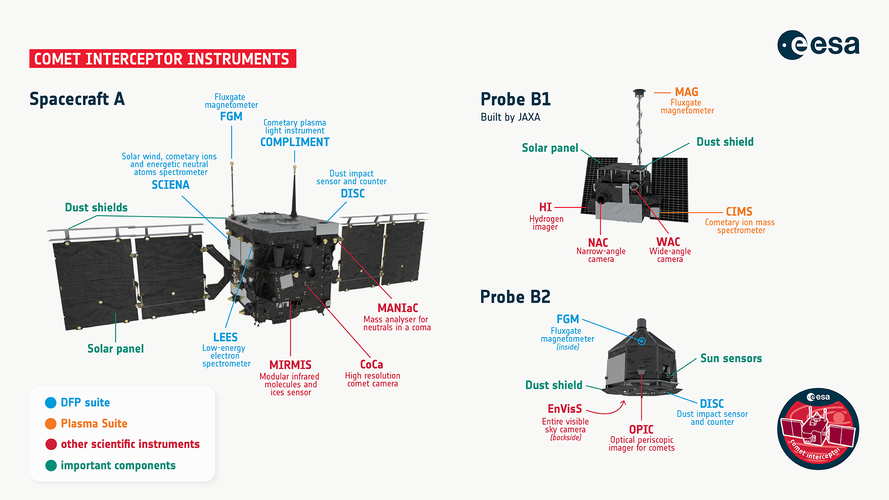
The successful observation of 3I/ATLAS foreshadows exciting developments in space exploration, particularly ESA's upcoming Comet Interceptor mission. Scheduled for launch in 2029, this mission will wait in a parking orbit for a suitable target—either a pristine comet from the distant Oort Cloud or, ideally, another interstellar object like 3I/ATLAS.
Michael Kueppers, Comet Interceptor project scientist, noted in the ESA announcement that when Comet Interceptor was selected in 2019, only one interstellar object was known. The discovery of two more since then shows increasing diversity in these objects' appearance. Visiting one could provide a breakthrough in understanding their nature and origins.
Conclusion
The successful observation of comet 3I/ATLAS by ESA's Mars orbiters represents a significant milestone in interstellar object research. This achievement demonstrates the remarkable adaptability of existing space technology while providing valuable data about these rare cosmic visitors. As researchers continue analyzing the collected data in the coming weeks and months, we can expect new insights into the composition and behavior of interstellar comets.
This event not only advances our understanding of objects from beyond our solar system but also paves the way for future missions like the Comet Interceptor that will enable even more detailed study of these mysterious interstellar travelers. The continued discovery and observation of such objects bring us closer to understanding our place in the broader galactic community.