Decoding Cosmic History: How Starquakes Reveal a Red Giant's Violent Past
Astronomers have uncovered the dramatic history of a distant red giant star orbiting a dormant black hole. By analyzing subtle vibrations in its light, known as starquakes, researchers from the University of Hawaiʻi have pieced together evidence suggesting the star may have collided and merged with another star. This violent event left it spinning unusually fast and created a puzzling mismatch: its chemical composition suggests it's ancient, while its internal structure reveals it's relatively young. This discovery, centered on the Gaia BH2 system, is reshaping our understanding of how stars evolve in binary systems and how we detect quiet black holes in our galaxy.
Astronomers have unlocked a cosmic detective story by listening to the faint tremors within a distant red giant star. This star, a companion to a dormant black hole in a system known as Gaia BH2, holds secrets of a violent past that defy simple stellar evolution models. Using advanced techniques akin to stellar seismology, researchers have decoded signals within the star's light that suggest a dramatic history of collision and merger. The findings challenge our understanding of stellar lifecycles and offer new methods for probing the hidden population of quiet black holes within our Milky Way.

The Science of Stellar Seismology
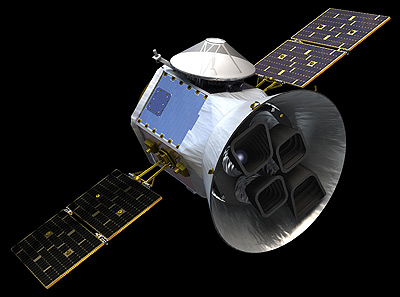
The key to this discovery lies in asteroseismology, the study of starquakes. Just as seismologists use earthquakes to map Earth's interior, astronomers analyze tiny oscillations in a star's brightness to probe its internal structure. For the red giant in Gaia BH2, these observations were made possible by NASA's Transiting Exoplanet Survey Satellite (TESS). The satellite detected faint vibrations rippling through the star, allowing scientists to measure properties of its core with unprecedented precision. This technique revealed the first major clue that something was amiss with this seemingly ordinary star.
A Star of Contradictions
The data from TESS presented astronomers with a series of puzzling contradictions. First, the star's chemical composition marked it as "alpha-rich," containing large amounts of heavy elements typically found in very ancient stars. Based on this chemistry alone, the star should be among the oldest in the galaxy. However, the asteroseismic data told a completely different story. Analysis of the internal vibrations indicated the star is only about 5 billion years old—relatively young in cosmic terms. "Young, alpha-rich stars are quite rare and puzzling," explained lead researcher Daniel Hey from the University of Hawaiʻi Institute for Astronomy. This mismatch between apparent age and actual age became the central mystery of the investigation.
Evidence of a Violent Past
The second major anomaly involved the star's rotation. Long-term monitoring from ground-based telescopes showed the red giant completes a full rotation every 398 days. For a star of its age and type that evolved in isolation, this is unusually fast. "If this rotation is real, it can't be explained by the star's birth spin alone," said co-author Joel Ong, a NASA Hubble Fellow. "The star must have been spun up through tidal interactions with its companion." The most plausible explanation for both the fast spin and the chemical-age discrepancy is a past stellar merger. The researchers hypothesize that the red giant may have collided and merged with another star long ago, acquiring extra mass and angular momentum in the process. Alternatively, it might have absorbed significant material when the black hole companion itself formed.
Implications for Black Hole Discovery
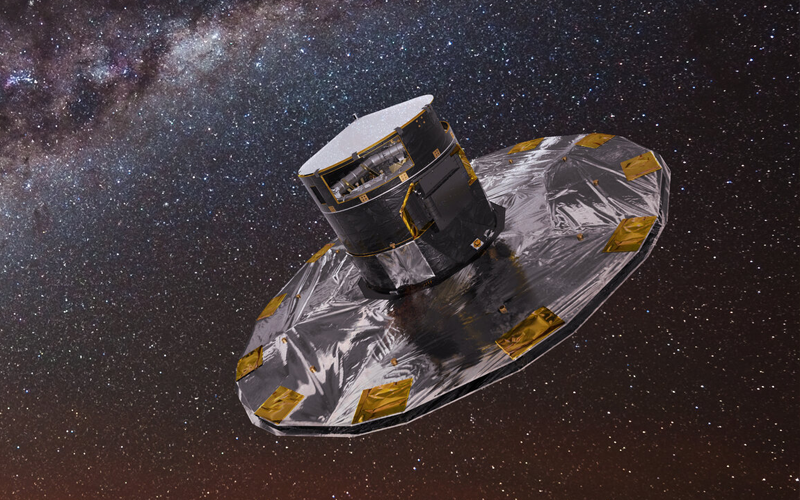
This research has significant implications for how astronomers find and study black holes. Gaia BH2 belongs to a class of "dormant" or "quiet" black hole systems. Unlike their active counterparts, these black holes are not actively pulling in material from their companions and therefore do not emit detectable X-rays. They were discovered not by their own radiation, but by carefully tracking the gravitational influence they exert on their companion stars, as first detected by the European Space Agency's Gaia mission. The study of Gaia BH2's companion star provides a new, indirect method to understand these hidden cosmic objects. The team also examined another system, Gaia BH3, finding that its metal-poor companion star showed no oscillations where models predicted they should exist—suggesting current stellar theories need revision.
The Future of Stellar Archaeology
Future observations promise to deepen our understanding of this enigmatic system. Additional data from TESS will allow astronomers to study the red giant's vibrations in greater detail, potentially confirming the merger hypothesis and clarifying the timeline of events. As Daniel Hey's team continues their work, published in The Astronomical Journal, they are essentially practicing a form of stellar archaeology—using present-day observations to reconstruct violent events from billions of years in the past. Each quiet black hole system like Gaia BH2 represents a unique fossil record of cosmic interactions, and their study is fundamentally changing how we map the hidden architecture of our galaxy.