Unlocking Space Resources: How Asteroid Research Is Paving the Way for Future Mining
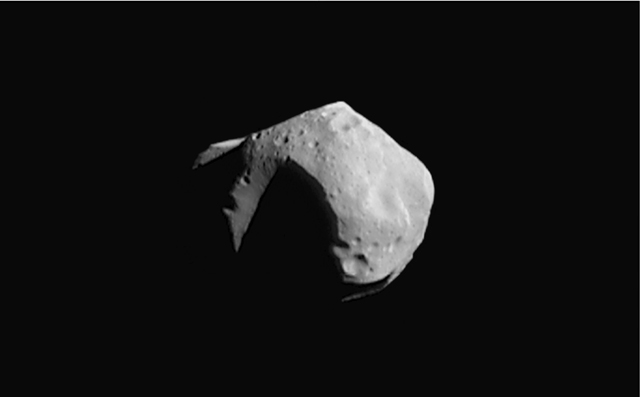
New scientific research is analyzing rare meteorites from carbon-rich asteroids to assess their potential as future sources of space resources. A study led by the Spanish National Research Council (CSIC) examines the chemical composition of carbonaceous chondrites, providing crucial data on which asteroid types might be viable for water and material extraction. While large-scale mining remains a distant prospect, this work helps identify promising targets and supports the technological planning needed for humanity's expansion into the solar system.
The dream of utilizing resources from space is moving from science fiction toward scientific reality. A groundbreaking study is analyzing the fundamental building blocks of our solar system—carbon-rich asteroids—to evaluate their potential as future reservoirs for space exploration. By examining rare meteorites that have fallen to Earth, researchers are uncovering the chemical signatures and histories of these ancient bodies, providing a critical roadmap for identifying which asteroids could one day supply essential materials like water and metals.
This research, spearheaded by the Institute of Space Sciences (ICE-CSIC) in Spain and published in the Monthly Notices of the Royal Astronomical Society, represents a significant step in understanding the practical viability of asteroid resource extraction. The findings help bridge the gap between planetary science and the engineering challenges of in-situ resource utilization, a concept vital for sustained human presence on the Moon, Mars, and beyond.
The Science Behind Carbonaceous Chondrites
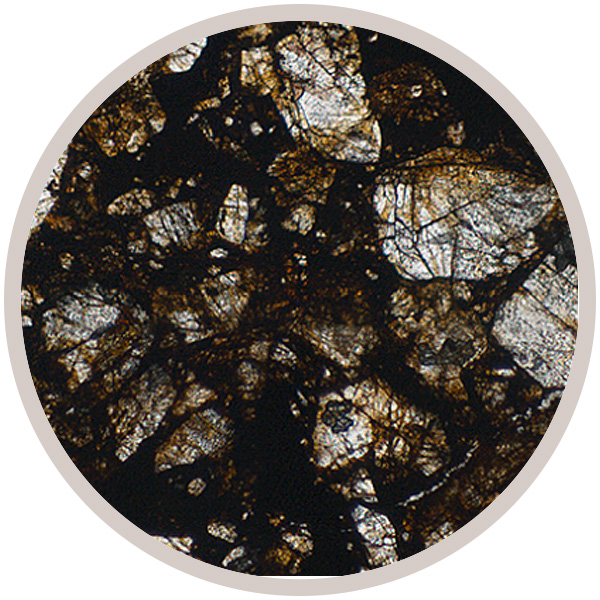
At the heart of this research are carbonaceous chondrites, meteorites that originate from C-type asteroids. These are primitive, carbon-rich objects that have remained relatively unchanged since the formation of the solar system over 4.56 billion years ago. They are scientific treasures, but they are also exceedingly rare, accounting for only about 5% of meteorite falls. Their fragile nature means they often disintegrate upon atmospheric entry, with the best-preserved samples typically recovered from deserts in Antarctica or the Sahara.
"The scientific interest in each of these meteorites is that they sample small, undifferentiated asteroids, and provide valuable information on the chemical composition and evolutionary history of the bodies from which they originate," explains lead author Josep M. Trigo-Rodríguez, an astrophysicist at ICE-CSIC. His team conducted a meticulous chemical analysis of six common types of carbonaceous chondrites using mass spectrometry to determine their precise elemental makeup.
Assessing the Mining Potential
A central question of the study was whether extracting resources from these asteroids would be economically or practically viable. The analysis revealed a complex picture. While these asteroids contain a diversity of minerals, the concentrations of precious metals are often relatively low. "The objective of our study has been to understand to what extent their extraction would be viable," notes Pau Grèbol Tomás, a predoctoral researcher on the team.
The researchers conclude that mining the most primitive, undifferentiated asteroids—the direct parent bodies of these meteorites—is currently impractical. However, they identify a more promising class: relatively pristine asteroids that show specific mineralogical signatures, such as olivine and spinel. These bodies may offer better prospects for resource recovery.
Water as the Primary Target
For near-term space exploration, water is arguably the most valuable resource an asteroid could provide. It can be used for life support, radiation shielding, and, when split into hydrogen and oxygen, as rocket propellant. The study emphasizes that asteroids altered by water and rich in hydrated minerals should be the priority for future prospecting missions.
"If we are looking for water, there are certain asteroids from which hydrated carbonaceous chondrites originate," Trigo-Rodríguez states. He further suggests that for certain water-rich carbonaceous asteroids, extracting water for reuse seems more viable than mining for metals, either as fuel or as a primary resource for exploring other worlds.
Technological Hurdles and Future Directions
The path from scientific assessment to operational mining is fraught with challenges. Extracting and processing materials in the microgravity environment of a small asteroid requires entirely novel technologies. Jordi Ibáñez-Insa, a co-author from Geosciences Barcelona, points out that while an asteroid's dusty surface layer (regolith) might facilitate collecting small samples, "developing large-scale collection systems to achieve clear benefits is a very different matter."
Progress hinges on two parallel developments: continued sample-return missions to confirm the link between meteorites on Earth and their asteroid parents, and significant investment in extraction technology. "Companies capable of taking decisive steps in the technological development necessary to extract and collect these materials under low-gravity conditions are truly needed," Trigo-Rodríguez adds.
Broader Implications: From Resources to Planetary Defense
This research has implications beyond mere resource gathering. A deeper understanding of asteroid composition is crucial for planetary defense. By studying the structure of water-rich asteroids, scientists could develop strategies to mitigate potential impact threats. Trigo-Rodríguez even speculates on a long-term synergy: "In the long term, we could even mine and shrink potentially hazardous asteroids so that they cease to be dangerous."
Globally, concepts are being explored, such as capturing small near-Earth asteroids and placing them in lunar orbit for easier study and resource testing. As in-situ resource use becomes critical for long-duration missions, the data from studies like this one will be invaluable for mission planners at space agencies and private companies alike.
While the large-scale mining of asteroids remains a future prospect, this research provides the essential scientific foundation. By decoding the chemistry of meteorites, scientists are not just looking back at the origins of our solar system; they are helping to chart a practical course for humanity's sustainable future in space.