Read on PBS News
U.S. Christmas Day Strikes in Nigeria: Analyzing the Complexities of Counterterrorism and Religious Conflict
On Christmas Day 2025, the United States conducted military strikes in northwest Nigeria targeting ISIS-affiliated training camps, marking the first such U.S. operation in the region. President Trump stated the timing was deliberate to send a message to groups allegedly targeting Christians, while the Nigerian government praised the attacks and claimed intelligence cooperation. This article examines the complex realities behind the violence in Nigeria, where religious narratives intersect with governance failures, cross-border terrorism, and local criminal networks, creating a multifaceted security challenge that defies simple explanations.
The Christmas Day 2025 U.S. military strikes in northwest Nigeria represent a significant escalation in American counterterrorism operations in West Africa, but they also highlight the complex and often misunderstood nature of violence in Nigeria. While President Trump framed the operation as a message to groups targeting Christians, the reality on the ground involves a tangled web of terrorist organizations, criminal networks, governance failures, and resource conflicts that transcend simple religious narratives. This analysis explores the strategic implications, local dynamics, and broader context of these unprecedented strikes.

The Christmas Day Operation: Tactics and Targets
According to reporting from PBS NewsHour, the U.S. military launched more than a dozen Tomahawk missiles from a ship in the Gulf of Guinea, striking two ISIS training camps in Nigeria's northwest Sokoto state. The missiles reportedly hit at least four locations in this remote rural area near the border with Niger. A U.S. military official confirmed the operation targeted ISIS-affiliated facilities, while local security analysts identified the specific group as Lakurawa, which claims affiliation with ISIS Sahel.
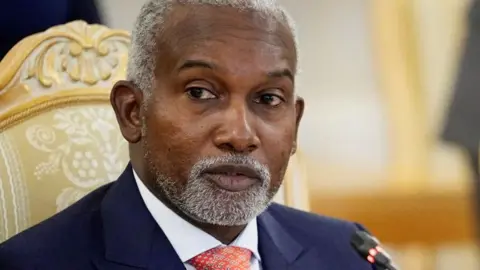
President Trump revealed that he deliberately delayed the strikes until Christmas Day, stating he wanted to "give a Christmas present" to the targeted groups. This timing, he explained, was meant to deliver a message specifically about protecting Christians. The Nigerian government, through Foreign Minister Yusuf Tuggar, praised the attacks and claimed they resulted from joint intelligence cooperation with the United States, emphasizing that the operation was "not targeting any religion."
The Complex Reality of Nigerian Violence
The violence in Nigeria defies simple categorization as religious conflict. While President Trump described the targets as "ISIS terrorist scum in Northwest Nigeria who have been targeting and viciously killing primarily innocent Christians," the situation is considerably more nuanced. According to the PBS NewsHour report, the area struck has been plagued by Lakurawa, a group that originated as local self-defense organizations but evolved into criminal enterprises imposing harsh interpretations of Islam on local populations, most of whom are Muslim.
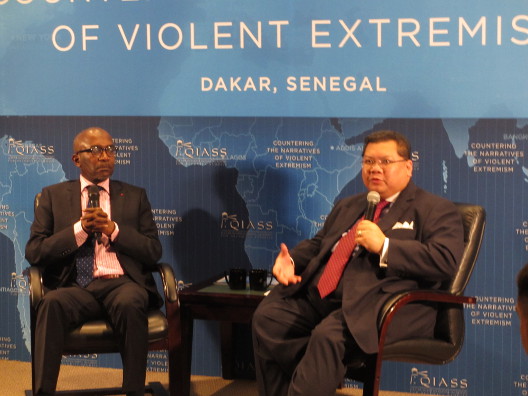
Former Ambassador J. Peter Pham, who served as U.S. special envoy for the Sahel region during the first Trump administration, explained in his interview with PBS that Lakurawa represents "almost a classic example of the cure being worse than the disease." These groups initially formed to protect communities where the Nigerian government failed to provide security, but their ambitions grew until they established control over territories and began kidnapping young people to fill their ranks. Ambassador Pham noted that the group has become "the disease they were there to fight."
Religious Dimensions and Governance Failures
The religious dimension of Nigerian violence is real but often mischaracterized. Christian advocacy groups like the Hudson Institute's Center for Religious Freedom have documented attacks on Christian communities, with Director Nina Shea stating that local Christian leaders report attempts to "cleanse the land of Christians" and establish Islamic rule. However, as Foreign Minister Tuggar emphasized, reducing the conflict to "Muslims killing Christians" represents a fundamental misunderstanding of the interconnected issues.
Ambassador Pham identified governance failure as a central problem, noting "an incapacity or lack of capacity, but there's also a lack of political will to put the resources necessary" to address security challenges. He further suggested that "certain politicians in Nigeria have their own agendas and their own political alliances with extremists," creating a complex situation that "doesn't lend itself to easy solutions."
Strategic Implications and Future Challenges
The Christmas Day strikes raise important questions about U.S. strategy in West Africa. Ambassador Pham expressed skepticism about the strike's location, noting that "there are a couple other places I would have picked to hit extremists in Nigeria" if the goal was protecting Christians. He suggested the operation would have "very limited impact" on violence against Christians but would send a signal about U.S. willingness to act in the region.
The coordination with Nigerian authorities presents another strategic consideration. While Nigeria claims intelligence cooperation, Ambassador Pham expressed concern about operational security, stating he would be "very, very hesitant at sharing and coordinating" given questions about certain elements within the Nigerian government. This highlights the delicate balance between partnership and caution in counterterrorism operations.
Conclusion: Beyond Simple Narratives
The U.S. strikes in northwest Nigeria on Christmas Day 2025 represent more than a military operation—they illuminate the complex realities of violence, governance, and international intervention in West Africa. While the religious protection narrative has political resonance, effective policy requires understanding the multifaceted nature of the conflict, including terrorist networks, criminal enterprises, resource disputes, and governance failures.
As Ambassador Pham concluded, both Muslims and Christians suffer from violence in Nigeria, and the fundamental question remains whether there is sufficient political will to address challenges to all communities. The Christmas Day strikes may signal increased U.S. engagement, but lasting solutions will require nuanced approaches that address root causes rather than symptoms, and partnerships based on realistic assessments of local dynamics rather than simplified narratives.