Cosmic Alchemy Unlocked: First Direct Measurement of a Rare Stellar Reaction
A landmark experiment at the Facility for Rare Isotope Beams has directly measured a key proton-capture reaction for the first time, shedding new light on the cosmic origin of rare proton-rich elements like selenium-74. This breakthrough cuts theoretical uncertainty in half and sharpens models of element formation in supernova explosions. While the findings represent a major step forward, they also reveal persistent gaps in our understanding, indicating that the full story of stellar nucleosynthesis remains incomplete.
For over six decades, astrophysicists have grappled with a fundamental cosmic mystery: the origin of a special class of rare, proton-rich elements heavier than iron. Known as p-nuclei, these isotopes cannot be explained by the well-known neutron-capture processes that forge most heavy elements. Now, a groundbreaking experiment has pierced this long-standing veil of uncertainty. For the first time, scientists have directly observed a crucial stellar reaction in the laboratory, offering unprecedented insights into the violent stellar forges where these exotic atoms are born.
The P-Nuclei Puzzle
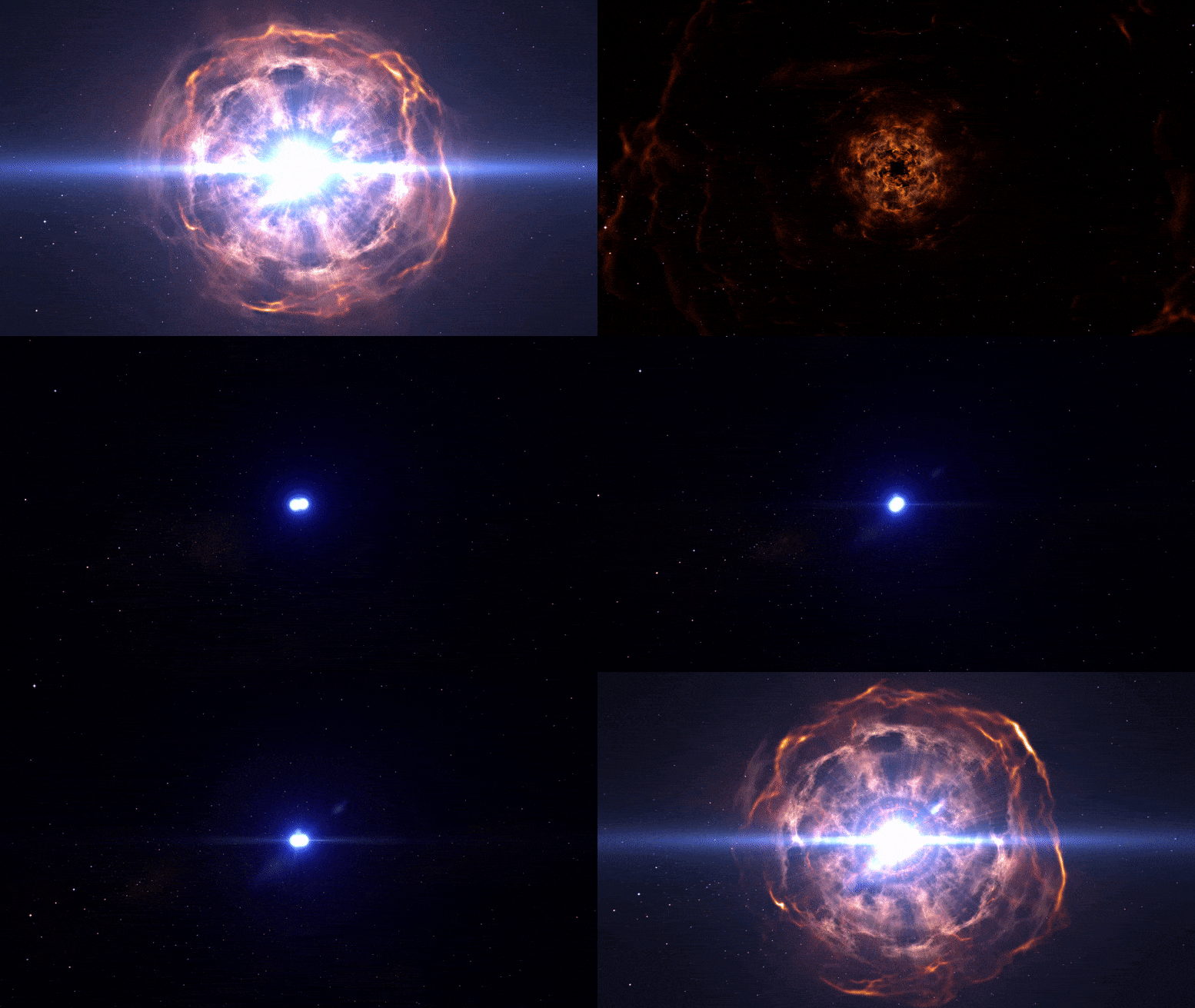
The universe's elemental inventory is a testament to cosmic history. While elements like carbon, oxygen, and iron are forged in the hearts of stars, elements heavier than iron primarily originate through processes where atomic nuclei capture neutrons. However, approximately 35 rare, proton-rich isotopes—from selenium-74 to mercury-196—defy this explanation. These p-nuclei are thought to be synthesized in cataclysmic stellar explosions, but the precise mechanisms have remained theoretical due to the immense difficulty of recreating stellar conditions on Earth.
A Stellar Reaction Recreated in the Lab
The recent breakthrough, led by researcher Artemis Tsantiri and a large international collaboration, focused on the lightest p-nucleus: selenium-74. The team aimed to measure the rate at which radioactive arsenic-73 captures a proton to form selenium-74, a reaction central to the theorized gamma process in supernovae. To achieve this, they utilized the unique capabilities of the Facility for Rare Isotope Beams (FRIB).
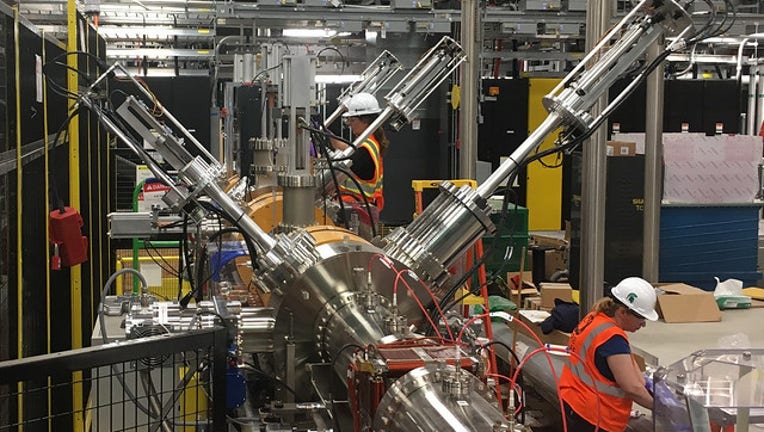
The experiment was a feat of technical ingenuity. Scientists generated a beam of the short-lived arsenic-73 isotope using FRIB's ReA accelerator. This rare isotope beam was then directed into a chamber filled with hydrogen gas at the center of the Summing Nal (SuN) detector. By observing the gamma rays emitted when arsenic-73 absorbed a proton and settled into a stable state as selenium-74, the team could directly measure the reaction rate for the first time.

Sharpening Our Cosmic Models
The direct measurement allowed researchers to constrain a critical uncertainty in astrophysical models. By understanding how quickly selenium-74 is created via proton capture, scientists can better calculate how often it is destroyed by gamma rays in the extreme heat of a supernova—a reverse process crucial for determining its final abundance. Incorporating the new experimental data into models reduced the uncertainty in the predicted abundance of selenium-74 by 50%, a significant leap in precision.
This work demonstrates the transformative power of next-generation facilities like FRIB. "Experiments of this kind are only now possible with facilities like FRIB," noted Tsantiri, highlighting how direct measurements on short-lived isotopes are finally moving the field beyond pure theory.
New Answers, New Questions
Despite this major advance, the updated models still do not perfectly match the observed amounts of selenium-74 in our solar system. This persistent discrepancy is perhaps the most intriguing outcome of the research. It suggests that our understanding of the conditions inside supernova explosions—the temperatures, densities, and timescales of the gamma process—may still be incomplete or require refinement.
"These results bring us a step closer to understanding the origins of some of the rarest isotopes in the universe," said Artemis Spyrou, professor at FRIB and the experiment's architect. The findings, published in Physical Review Letters, underscore that scientific discovery is often a process of solving one mystery while uncovering deeper layers of complexity.
The Path Forward in Nuclear Astrophysics
This experiment is a prototype for the future of nuclear astrophysics. It proves that direct measurements of key stellar reactions are now achievable, paving the way for similar studies on other p-nuclei. Each new measurement will further chip away at the uncertainties in our cosmic models, gradually painting a more accurate picture of stellar nucleosynthesis.
The collaboration involved over 45 scientists from 20 institutions across North America and Europe, supported by agencies including the U.S. Department of Energy and the National Science Foundation. This multidisciplinary effort highlights the scale and cooperation required to tackle fundamental questions about our universe's composition. As facilities like FRIB continue their work, we move closer to a complete understanding of the stellar alchemy that crafted the elements around us—and within us.