Breakthrough Experiment Sheds New Light on the Origin of Rare Cosmic Elements
A landmark experiment at the Facility for Rare Isotope Beams has directly measured a key stellar reaction for the first time, offering crucial insights into the origin of rare proton-rich elements like selenium-74. By recreating the proton capture on radioactive arsenic-73, scientists have significantly sharpened astrophysical models of supernova explosions, cutting predictive uncertainty in half. This research marks a major step forward in solving a decades-old cosmic mystery while revealing that our understanding of stellar element synthesis is still incomplete.
For over six decades, astrophysicists have grappled with a fundamental question: where do some of the universe's rarest elements come from? A special group of proton-rich isotopes, known as p-nuclei, cannot be formed through the well-understood neutron-capture processes that create most heavy elements. Their origin has remained one of the field's most persistent mysteries. Now, a groundbreaking experiment has provided the first direct measurement of a crucial reaction in their creation, offering new clarity and raising fresh questions about the violent stellar furnaces that forge them.
The P-Nuclei Mystery
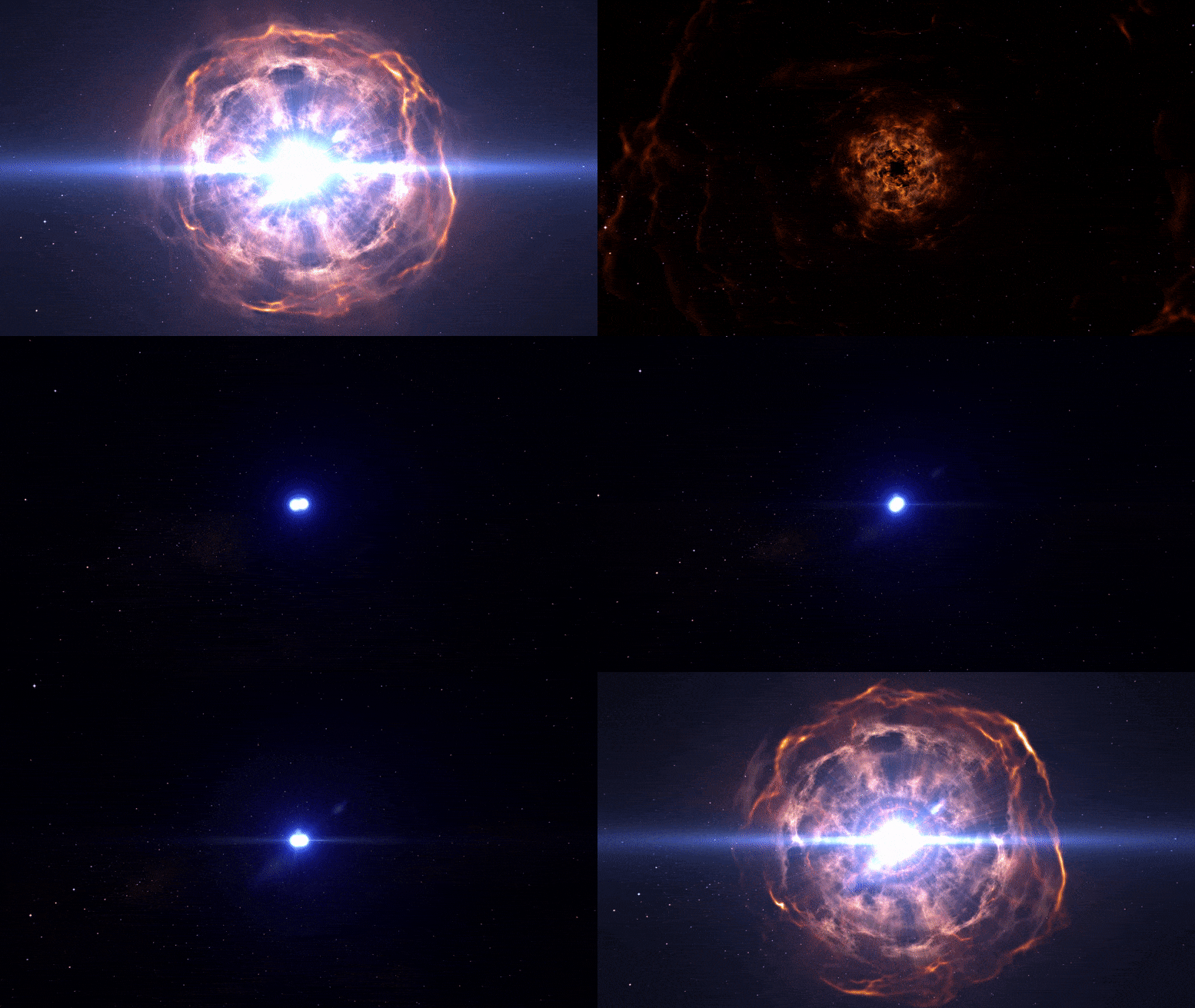
Elements heavier than iron are typically synthesized in stars through processes where atomic nuclei capture neutrons. However, approximately 35 rare, proton-rich isotopes defy this explanation. These p-nuclei, ranging from the lightest, selenium-74, to the heaviest, mercury-196, have presented a unique challenge. The leading theoretical explanation for their existence is the gamma process, believed to occur in certain types of supernova explosions. In these cataclysmic events, intense heat generates gamma rays that strip particles from existing nuclei, leaving behind proton-rich isotopes that later decay into stable p-nuclei.
A First-of-its-Kind Measurement
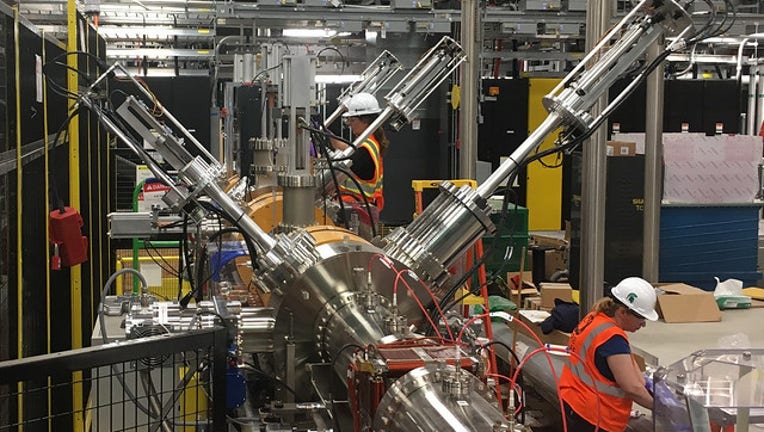
The recent study, led by researcher Artemis Tsantiri and involving over 45 scientists from 20 institutions, achieved a significant milestone. For the first time, the team directly measured the reaction where radioactive arsenic-73 captures a proton to form selenium-74. This was made possible by the advanced capabilities of the Facility for Rare Isotope Beams (FRIB). Researchers generated a beam of the short-lived arsenic-73 isotope and directed it into a hydrogen gas target, meticulously tracking the reaction products with the Summing Nal (SuN) detector.

Sharpening Stellar Models
The experimental data allowed scientists to constrain the rate of the reverse reaction—the destruction of selenium-74 by gamma rays within a star—which is critical for accurate astrophysical modeling. When the team incorporated their new measurements into models of the gamma process, they achieved a remarkable result: the uncertainty in the predicted abundance of selenium-74 was cut in half. This represents a substantial leap in precision for nuclear astrophysics, moving the field from heavy reliance on theory to data-driven understanding.
An Incomplete Story
Despite this progress, the updated models still do not perfectly match the observed abundances of selenium-74 in our solar system. This persistent gap indicates that our understanding of the conditions inside supernovae may require refinement. The findings, published in Physical Review Letters, therefore serve a dual purpose: they validate the experimental path forward while highlighting that the cosmic narrative of element creation is not yet fully written. As Professor Artemis Spyrou noted, this work exemplifies the multidisciplinary collaboration needed to advance the field and provides crucial development opportunities for early-career researchers.
This research, supported by agencies including the U.S. Department of Energy and the National Science Foundation, demonstrates the power of next-generation facilities like FRIB. By allowing scientists to recreate and study fleeting stellar reactions on Earth, we are peeling back the layers of cosmic history, one rare isotope at a time. The journey to fully explain the origin of every element continues, but this experiment has undoubtedly illuminated a critical step on the path.