Israel's Lebanon Campaign Threatens Fragile U.S.-Iran Cease-Fire
As Israeli and Lebanese officials held rare direct talks in Washington, Israel's intensified military campaign against Iran-backed Hezbollah in southern Lebanon emerged as a major threat to the fragile U.S.-Iran cease-fire. The diplomatic meeting occurred amid ongoing airstrikes and ground operations that have displaced over one million people and killed thousands, highlighting the complex regional dynamics that continue to challenge international peace efforts despite the two-week truce between major powers.
In a significant diplomatic development with profound military implications, Israeli and Lebanese officials held direct talks in Washington on Tuesday, April 14, 2026, while Israel simultaneously intensified its military campaign against Iran-backed Hezbollah in southern Lebanon. This rare face-to-face meeting between nations without diplomatic relations occurred against the backdrop of a fragile U.S.-Iran cease-fire that faces its greatest challenge from the ongoing conflict in Lebanon. The talks, which lasted more than two hours and included Secretary of State Marco Rubio, represent a critical attempt to address what has become the most contentious issue threatening regional stability.

The Washington Talks: A Historic Meeting Amid Conflict
The Washington meeting brought together Israel's ambassador to the United States, Yechiel Leiter, and his Lebanese counterpart, Nada Hamadeh Moawad, marking the first sustained direct talks between the two countries in decades. Secretary of State Marco Rubio participated in the discussions, which he described as "a process, not an event" that would not resolve all complexities immediately. The talks were notable because Israel and Lebanon have technically been at war since 1948 and maintain no diplomatic relations, making any direct engagement historically significant.
According to the State Department, the aim of these discussions was to ensure that Iran can no longer dictate Lebanon's future through its influence over Hezbollah. Rubio emphasized that the talks represented an effort to bring "a permanent end to 20 or 30 years of Hezbollah influence in this part of the world." However, the Lebanese government has no direct control over Hezbollah, which has long opposed direct talks with Israel and rejected these negotiations outright.
Military Escalation During Diplomacy
Even as diplomats met in Washington, Israel's military campaign in southern Lebanon continued with full force. Israeli ground troops completed encircling the large Lebanese town of Bint Jbeil and began operating inside it, according to military statements. Simultaneously, Israeli airstrikes targeted sites across southern Lebanon, including one near the main hospital in Tibnin that caused "significant damage" and injured several people. This facility is one of a dwindling number still operating in Lebanon's south, where six hospitals have closed completely and at least 14 have sustained damage according to the World Health Organization.

The military escalation has been particularly intense since the U.S.-Iran cease-fire was announced last week. On the Wednesday following the truce agreement, Israeli attacks killed at least 357 people in Lebanon according to Lebanese authorities. Hezbollah has responded with continued rocket and drone attacks on northern Israel, with at least 10 launches detected in the hour after the Washington talks began. The conflict has displaced more than one million people in Lebanon and, according to the Lebanese health ministry, killed more than 2,000 people, including more than 160 children.
The Cease-Fire Dispute: Lebanon as a Sticking Point
The fighting between Israel and Hezbollah has emerged as one of three major points of contention threatening the U.S.-Iran cease-fire, alongside the status of Iran's nuclear program and control of the Strait of Hormuz. Iran insists that the cease-fire covers Israel's war with its ally Hezbollah in Lebanon, and Pakistani mediators agree with this interpretation. However, Israel and the United States maintain that Lebanon is not included in the agreement.
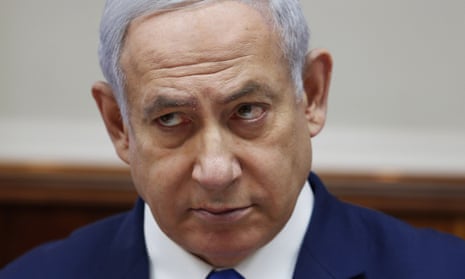
This disagreement creates a precarious situation where the broader cease-fire could collapse over the Lebanon conflict. Prime Minister Benjamin Netanyahu of Israel agreed to the Washington talks only after Iran warned that it could withdraw from the cease-fire unless Israel stopped attacking Lebanon. The State Department clarified that the Israel-Lebanon talks were not connected to America's negotiations with Iran in Islamabad, despite the clear linkage in practice.
International Reactions and Humanitarian Concerns
The international community has responded with mixed reactions to the developments. A group of nearly two dozen European and Western nations, including France and the United Kingdom, threw their weight behind the Washington talks, urging both sides "to seize the opportunity presented by the U.S.-Iran ceasefire." Meanwhile, Italy took the dramatic step of suspending its longstanding defense agreement with Israel, a sharp reversal for Prime Minister Giorgia Meloni's right-wing government that had previously been one of Israel's closest supporters.

Humanitarian concerns continue to mount as the conflict persists. The United States has approved $58.8 million in new humanitarian programs to help Lebanese people displaced by the fighting. International aid agencies sent the first deliveries of emergency medical supplies and other humanitarian aid to Iran since the start of the war, using an overland route from Turkey because movement of Dubai-based stocks was blocked by the conflict. The International Federation of Red Cross and Red Crescent Societies reported that the first convoy carrying trauma kits, tents, blankets and hygiene supplies crossed into Iran on Sunday.
Regional Implications and Future Prospects
The Lebanon conflict represents a microcosm of the broader regional tensions between Iran and its adversaries. Hezbollah's leader, Naim Qassem, called on Lebanese authorities to cancel the Washington talks, urging them not to become "a tool of Israel." He stated that proceeding with the talks would represent "capitulation and surrender" to a country intent on occupying Lebanon. This position reflects the deep ideological divide that makes resolution particularly challenging.
Israel's spy chief, David Barnea, head of the Mossad intelligence agency, suggested in his first remarks about the war that the mission would be complete only once the Iranian regime was replaced, indicating that efforts to that end were continuing. This statement addresses domestic criticism that Israel had not achieved its war goals and that Iran's power structure has survived the conflict.
The Washington talks, while historic, face significant obstacles. As Israeli commentators noted, the meeting has not elicited the same kind of excitement in Israel as previous encounters with potential peace partners in the region, likely due to low expectations. The meeting also took place in the shadow of Israel's annual Holocaust Remembrance Day, adding emotional complexity to the discussions.
Looking forward, the success of both the Washington talks and the broader U.S.-Iran cease-fire will depend on whether diplomatic channels can outpace military escalation. With Hezbollah continuing its attacks and Israel maintaining its military campaign, the window for diplomatic resolution remains narrow. The international community watches closely as these parallel tracks—military conflict and diplomatic engagement—unfold simultaneously, each influencing the other in this complex geopolitical landscape.