Read on foxsports.com
Top 5 Candidates for Michigan's Next Head Football Coach
Following the surprising dismissal of Sherrone Moore, the University of Michigan is conducting a critical head coaching search at an inopportune time in the college football calendar. Despite the late stage in the hiring cycle, the prestige of the Michigan job ensures top candidates will listen. This analysis examines five leading contenders, from seasoned veterans with championship pedigrees to rising defensive coordinators with deep ties to the program's recent success, evaluating who is best positioned to lead the Wolverines forward.
The University of Michigan football program finds itself at a pivotal crossroads. The surprise firing of head coach Sherrone Moore has left one of college football's most prestigious jobs unexpectedly vacant at the end of the typical hiring cycle. While interim coach Biff Poggi steadies the ship for the upcoming bowl game, the athletic department's primary mission is to identify a permanent leader capable of maintaining Michigan's championship standard. The role demands a unique blend of recruiting prowess, cultural understanding, and proven winning ability. Here are five compelling candidates Michigan should prioritize in its search for the next leader of the Wolverines.

5. Brian Kelly: The Proven Veteran
Among available coaches with the requisite experience and resume, Brian Kelly stands out as a candidate who would not look out of place leading the Wolverines. With 297 career wins, he would become the winningest active coach in the FBS if hired. His track record includes developing champions at both the Group of 5 and Power 4 levels, most notably leading Notre Dame to the BCS National Championship Game in 2012 and the College Football Playoff in 2020. More recently, he transformed LSU quarterback Jayden Daniels into a Heisman Trophy winner and first-round NFL draft pick.
For Michigan, Kelly represents a safe, high-floor option. His immediate tasks would be to retain elite quarterback recruit Bryce Underwood, assemble a staff capable of recruiting at a Michigan level, and quickly return the program to Big Ten title contention. While his public relations skills have sometimes been criticized—including televised sideline confrontations with players—his fundamental ability to win games at the highest level is undeniable. As one industry source noted, it would be shocking if Kelly didn't inquire about the position, and equally shocking if Michigan didn't seriously consider him.
4. Matt Patricia: The Defensive Mastermind from Columbus
In a move that would certainly stir the rivalry pot, Michigan could look to poach Ohio State's defensive coordinator, Matt Patricia. In his first season with the Buckeyes, Patricia engineered the nation's top scoring defense, holding opponents to a remarkable 8.2 points per game. His unit developed first-round NFL prospects at every level and was instrumental in Ohio State's undefeated regular season and national championship defense.
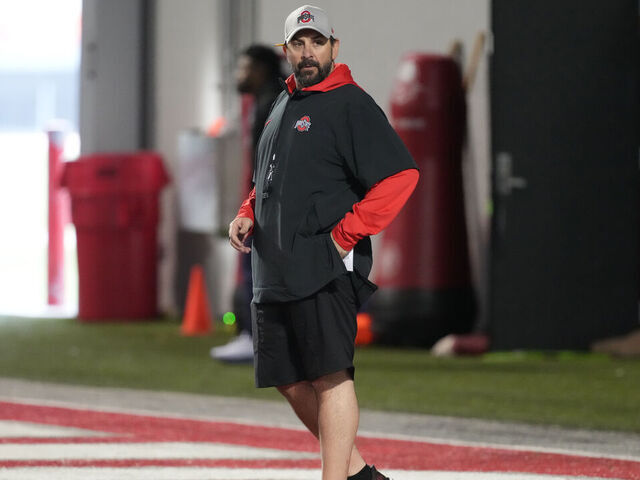
Patricia's head coaching experience with the Detroit Lions (13-29-1 record) is a concern, but it's more experience than many other candidates possess. The potential dual benefit of strengthening Michigan while weakening its arch-rival makes this a strategically intriguing option. Michigan has historically hired from within the Big Ten, and Patricia's proven ability to shut down elite offenses in the conference could translate well to Ann Arbor.
3. Glenn Schumann: The Next Great Saban Protégé
If Michigan seeks the next rising star in the coaching ranks, Georgia defensive coordinator Glenn Schumann represents an ideal target. A product of the Nick Saban and Kirby Smart coaching trees, Schumann has been part of national championship programs as a student assistant, director of operations, position coach, and coordinator. Since following Smart to Georgia in 2016, he has coached 15 first-round NFL draft selections and helped the Bulldogs to three national titles.
Schumann's football intellect is highly regarded within coaching circles. One Power 4 assistant coach described him as "a ball coach" who understands comprehensive program building. His lack of head coaching experience is offset by his immersion in championship processes at Alabama and Georgia. The last defensive coordinator to leave Georgia for a head coaching job was Dan Lanning, who has found tremendous success at Oregon—a precedent Michigan would love to replicate.
2. Bryant Haines: The Big Ten Proven Winner
For a candidate who has recently demonstrated an ability to win at the highest level within the Big Ten, Indiana defensive coordinator Bryant Haines presents a compelling case. In 2025, Haines' defense led Indiana to a Big Ten Championship victory over Ohio State, holding the Buckeyes to just 58 rushing yards. His unit ranked second nationally in scoring defense (10.85 points per game) and sixth in total defense (257.2 yards per game).
Haines embodies the defensive toughness and run-stopping philosophy that has long been synonymous with Michigan football. As the reigning AFCA Assistant Coach of the Year, he has been instrumental in Indiana's remarkable 24-2 run over two seasons. His understanding of the modern Big Ten landscape, combined with his proven ability to scheme against conference opponents, makes him a candidate who could transition smoothly into the Michigan head coaching role.

1. Jesse Minter: The Culture Continuity Choice
The candidate who makes the most logical sense for Michigan is former defensive coordinator Jesse Minter, currently with the Los Angeles Chargers. Minter possesses the ideal combination of familiarity with Michigan's championship culture and proven defensive excellence. During his two seasons in Ann Arbor (2022-2023), his defenses held opponents to 13.1 points per game—the best mark in the FBS—and were instrumental in Michigan's 15-0 national championship season.
Minter's defenses famously shut down the offenses of Ryan Day's Ohio State and Kalen DeBoer's Washington en route to the 2023 title. While he lacks head coaching experience, his four years working under Jim Harbaugh at both Michigan and with the Chargers provide valuable insight into program leadership. As one industry source suggested, Minter might adapt to the head coaching role even more seamlessly than Sherrone Moore did, given his broader exposure to Harbaugh's methodologies.
Conclusion: A Critical Decision for Michigan's Future
The University of Michigan's next coaching hire will shape the program's trajectory for years to come. Each candidate presents distinct advantages: Kelly offers immediate credibility and a proven track record; Patricia provides defensive expertise and a potential competitive edge against Ohio State; Schumann represents the next generation of coaching talent; Haines brings recent Big Ten championship success; and Minter offers cultural continuity and defensive mastery. The decision ultimately hinges on whether Michigan prioritizes experienced leadership, defensive identity, cultural familiarity, or conference-specific knowledge. Regardless of the choice, the Wolverines' commitment to maintaining their place among college football's elite programs remains unwavering as they navigate this unexpected transition.