From Pixels to Physical: Black Forest Labs' Strategic Pivot to Powering Physical AI
Black Forest Labs, the German AI startup that has become a formidable competitor in the image generation space with a $3.25 billion valuation, is now setting its sights on a more ambitious frontier: physical AI. After powering features for tech giants like Adobe, Canva, Meta, and Microsoft, the company is leveraging its efficient latent diffusion technology to enable AI that can perceive and interact with the real world. This strategic pivot, announced at the HumanX conference, includes plans to unveil an AI-powered robot later this year and partnerships with hardware companies for smart glasses and other devices, signaling a major evolution from digital content creation to tangible, real-world applications.
In the competitive landscape of artificial intelligence, where Silicon Valley giants often dominate headlines, a relatively small startup from Germany's Black Forest region has consistently punched above its weight. Black Forest Labs, founded by the researchers behind the groundbreaking Stable Diffusion model, has carved out a significant niche in AI image generation. Now, the company is orchestrating a strategic pivot that could redefine its role in the industry: moving beyond pixels on a screen to power artificial intelligence that interacts with the physical world. This shift represents not just an expansion of capabilities, but a fundamental reimagining of what visual intelligence can achieve.

The Foundation: Dominating AI Image Generation
Black Forest Labs' journey to becoming a key player in AI began with its founders' pioneering research on latent diffusion models. This efficient approach to AI image generation, which involves creating a rough blueprint of an image before adding detailed layers, allowed the startup to compete effectively against better-funded competitors. As reported by WIRED, the company's technology ranks just below offerings from OpenAI and Google on third-party benchmarks, while its models are among the most downloaded on platforms like Hugging Face.
The startup's success attracted significant partnerships and investment. In December, Black Forest Labs raised funds at a $3.25 billion valuation after securing deals with major technology companies. It powers AI image-generation features in Adobe's creative suite and the popular design platform Canva. Perhaps more notably, the company has struck agreements with industry heavyweights including Microsoft, Meta, and initially, Elon Musk's xAI. These partnerships demonstrate both the quality of Black Forest Labs' technology and its strategic importance in the current AI ecosystem.
The Strategic Pivot to Physical AI
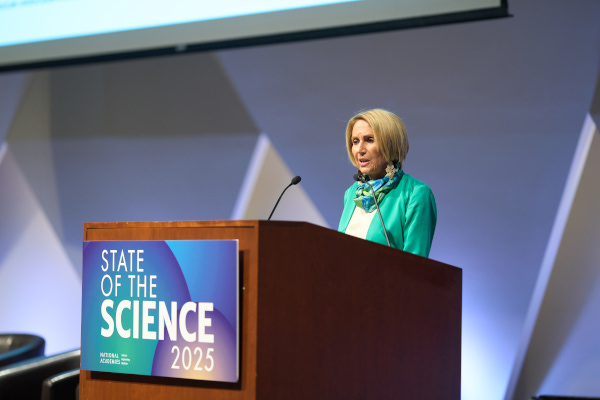
Despite its success in digital image creation, Black Forest Labs views this as merely the beginning. At the recent HumanX conference in San Francisco, cofounder Andreas Blattmann articulated the company's vision for the next phase of its development. "Visual intelligence is so much more than content creation," Blattmann stated. "Content creation is just the first segue into this entire technology. What I'm personally super excited about—and that's a pattern throughout this conference—is physical AI."
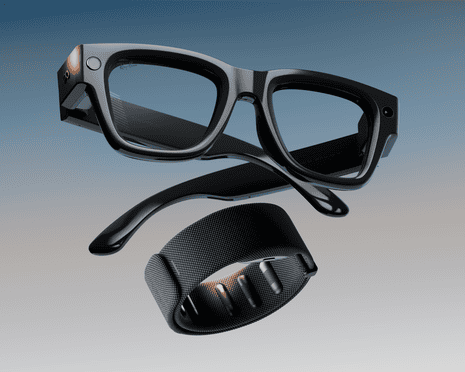
This shift represents a fundamental expansion of the company's mission. Rather than focusing exclusively on generating digital images, Black Forest Labs aims to develop AI systems that can perceive, understand, and interact with the physical environment. According to WIRED's reporting, the company plans to unveil a robot powered by one of its AI models later this year, though Blattmann did not reveal which hardware company is manufacturing the device. Additionally, the startup is in talks with multiple hardware manufacturers to power AI features in products like smart glasses and other robotic systems.

The Competitive Advantage: Focus and Efficiency
Black Forest Labs' ability to compete with larger, better-funded competitors stems from both its technological approach and its strategic location. The company maintains its headquarters in Freiburg, Germany, near the founders' hometowns, rather than relocating to Silicon Valley. Blattmann views this decision as a significant competitive advantage. "It can be a huge asset to not be where everyone else is," he explained. "Everyone who has ever run a startup knows that it's a lot about the ability to focus and work on what matters. Whenever I'm here in SF I love it, but it's also very hard to focus because there's so much stuff going on."
This focus has allowed Black Forest Labs to maintain discipline in its research and development, even as other AI labs have struggled with distractions and shifting priorities. The company's efficient latent diffusion technology, which requires "orders of magnitude less resources" than competitors' approaches according to Blattmann, provides a solid foundation for its expansion into physical AI applications. The same principles of efficiency and focused development that made the company successful in image generation may prove equally valuable as it ventures into more complex, real-world AI applications.
Industry Implications and Future Outlook
Black Forest Labs' pivot to physical AI comes at a time when the industry is increasingly exploring how artificial intelligence can move beyond digital interfaces. The company's partnerships with hardware manufacturers suggest a growing recognition that the next frontier for AI involves tangible interactions with the physical world. By leveraging its expertise in visual intelligence, Black Forest Labs is positioning itself at the intersection of AI software and physical hardware—a space with significant growth potential.
The company's selective approach to partnerships, demonstrated by its decision to decline a renewed collaboration with xAI due to operational concerns, indicates a strategic maturity that belies its relatively small size. As Black Forest Labs expands into physical AI applications, maintaining this disciplined approach will be crucial. The challenges of developing AI for real-world environments—with their unpredictability, safety requirements, and physical constraints—are substantially different from those of digital image generation.
Looking ahead, Black Forest Labs' success in this new direction will depend on its ability to adapt its efficient AI models to the demands of physical interaction. The company's planned robot unveiling later this year will serve as an important test case for its technology in real-world applications. If successful, Black Forest Labs could establish itself not just as a competitor in AI image generation, but as a pioneer in the emerging field of physical artificial intelligence—proving that sometimes, the most innovative approaches come from outside traditional technology hubs.