Key Primaries in Four US States Shape Midterm Election Battle Lines
Voters in Maine, Nevada, South Carolina, and North Dakota head to the polls for primary elections that will determine the final candidates for November's midterm contests. The races are set against a backdrop of tight control of Congress, with the Democratic Party seeking to flip seats in the Senate and maintain its footing in the House. In Maine, the high-stakes Senate primary between progressive Graham Platner and Republican incumbent Susan Collins is grabbing national attention. Nevada's closely watched elections for governor and secretary of state could influence election administration. Meanwhile, South Carolina's primaries feature a key House seat defense and a crowded GOP gubernatorial race. North Dakota's lone congressional district primary is expected to yield few surprises.
Four states—Maine, Nevada, South Carolina, and North Dakota—are holding primary elections on Tuesday that will further define the political battlefield ahead of November’s midterm elections. These primaries, where Democrats and Republicans select their final candidates, are taking place at a moment when control of Congress hangs in the balance. With the Republican Party currently holding narrow majorities in both the Senate and the House, each party is working to put forward its strongest contenders. Among the most closely watched races is Maine’s Senate primary, where progressive candidate Graham Platner is expected to advance to take on longtime Republican incumbent Susan Collins. In Nevada, races for governor and secretary of state are drawing attention due to their potential impact on election administration in a crucial swing state. South Carolina sees key contests for the House and governor, while North Dakota’s primary is largely a formality in a deeply Republican state.
Maine: The Battle for the Senate and Beyond
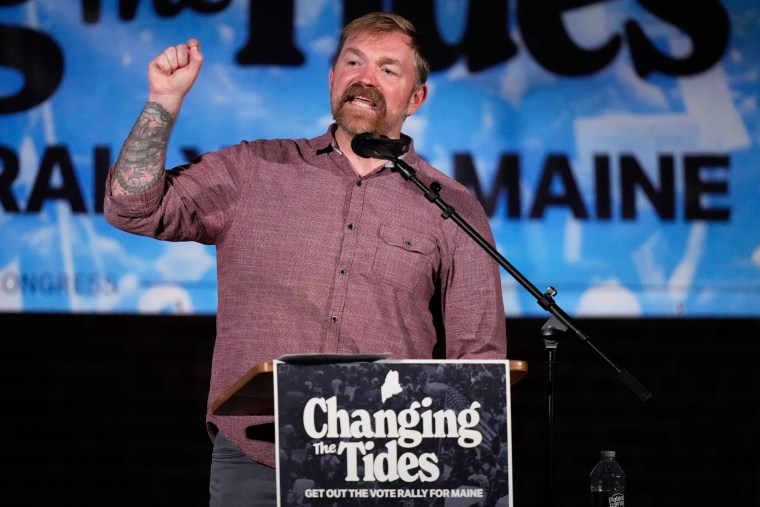
Maine has emerged as one of the most heated primary battlegrounds, largely due to the Senate race. The Democratic Party sees an opportunity to flip the seat held by Republican Senator Susan Collins, who is considered vulnerable. The primary is widely expected to result in Graham Platner, a 41-year-old progressive and former US Marine, advancing as the Democratic champion. Platner has appealed to left-wing voters with his positions favoring universal healthcare and ending US support for Israel. However, recent reports about his past relationships, including an allegation of twisting a romantic partner’s arm, have threatened to dampen enthusiasm. Platner has denied the allegation and has also removed a skull-and-bones tattoo that critics likened to a Nazi symbol, stating he was unaware of its origin. Despite these controversies, Platner is expected to handily defeat his closest Democratic rivals, environmental consultant David Costello and Governor Janet Mills, who remains on the ballot despite withdrawing from the race.
Beyond the Senate, Maine is also holding primaries for an open House seat. Democratic Representative Jared Golden has announced he will not seek re-election, leaving the 2nd congressional district seat up for grabs. Former Republican Governor Paul LePage is running unopposed in his party’s primary, while four Democrats are competing on their side. The governor’s race is also open due to term limits on outgoing Democratic Governor Janet Mills. Notable candidates include Angus King III, son of the current US Senator, and Hannah Pingree, daughter of a current member of Congress, on the Democratic side, and healthcare executive Jonathan Bush, a cousin of former President George W. Bush, on the Republican side.
Nevada: Swing State Dynamics and Election Administration
Nevada, a deeply purple state, holds significant importance in national elections. With 45 percent of voters registered as independents, their influence is outsized, but they cannot vote in Tuesday’s closed primaries. The state has become a political focal point, partly due to former President Donald Trump’s false claims of election fraud. State Attorney General Aaron Ford, a Democrat, is leading a crowded field to take on Republican Governor Joe Lombardo. Lombardo, who has faced criticism for his record use of vetoes, is expected to win his primary easily. Another key race is for secretary of state, where Democratic incumbent Francisco Aguilar, a vocal critic of Trump’s efforts to assert federal control over election administration, is running unopposed on his side. Four Republicans, including former state assemblyman Jim Marchant, who supported Trump’s unfounded election fraud claims, are vying to challenge him.

Nevada’s House races also feature competitive primaries. Three of the state’s four House seats are held by Democrats, and Republicans are selecting challengers to unseat them. The retirement of Republican Representative Mark Amodei has opened up the 2nd congressional district, with eight Democrats and 13 Republicans vying for their party’s nomination, offering Democrats a potential pickup opportunity.
South Carolina: Defending Seats and a Crowded Gubernatorial Race
South Carolina’s primaries come amid a backdrop of Republican-led redistricting efforts. However, last month, lawmakers chose not to pursue a redistricting plan, in part to preserve early votes already cast. This has protected the majority-Black district of longtime Democratic Representative Jim Clyburn, who is expected to win his primary easily. Democrats are also eyeing a potential flip in the 1st congressional district, vacated by Republican Nancy Mace, who is running for governor. Seven Democrats and 10 Republicans are competing in their respective primaries for that district.
The Senate primary is a formality for incumbent Republican Lindsey Graham, who holds a commanding lead despite several challengers. The governor’s race, however, is wide open due to term limits on Governor Henry McMaster. Trump has endorsed Lieutenant Governor Pamela Evette, but recent polls show a tight race with state Attorney General Alan Wilson and Congresswoman Nancy Mace, who has at times broken with Trump on issues like the Iran war.
North Dakota: A Quiet Primary in a Red State
Primary day in North Dakota is expected to make few waves nationally. Neither the governor nor the state’s two senators are up for re-election. North Dakota has been a Republican stronghold since the late 1960s, and its lone congressional district is up for grabs. Incumbent Representative Julie Fedorchak faces a challenge from former State Department project manager Alex Balazs in the Republican primary. Democrat Trygve Hammer is running unopposed on his side. The outcome is unlikely to alter the national political landscape.
The primaries in these four states will set the stage for a highly consequential midterm election. The results will reveal which candidates have secured their parties’ backing and will provide early indicators of the political momentum heading into November. With control of Congress at stake, every race matters.