Read on the Guardian
Kenyans Fear US Plan for Ebola Quarantine Site in Nanyuki
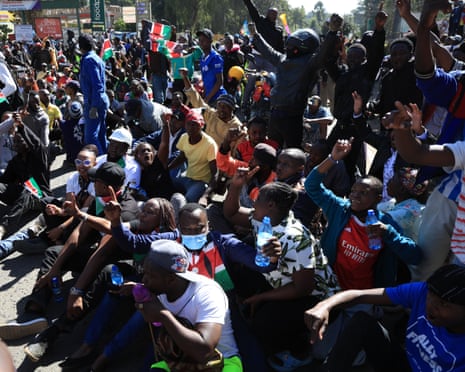
Residents of Nanyuki, Kenya, are strongly opposing a US proposal to establish an Ebola quarantine facility for American citizens at the Laikipia Air Base. The local community fears exposure to the virus, which has no known cases in Kenya, and criticizes what they see as double standards. The plan has sparked protests, a court order blocking its implementation, and broader concerns about national sovereignty and public health.
Plans by the United States to establish an Ebola quarantine facility in the central Kenyan town of Nanyuki have ignited widespread anger and concern among local residents. The proposed site, located at the Laikipia Air Base, is intended for American citizens who may have been exposed to the ongoing Bundibugyo virus outbreak in neighboring Uganda and the Democratic Republic of the Congo (DRC). However, many Kenyans argue that the plan puts their community at risk and reflects a troubling double standard in global health policy.

"Everybody should be quarantined in their home country. We shouldn't allow foreigners to bring us diseases," said Charles Mathenge, a taxi driver who lives near the airbase. "Kenya is our country, and we should be careful with it." His sentiment is echoed by many in the agricultural hub of over 70,000 people, which sits near the equator and hosts a British army training unit. The fear is not just about the virus itself, but also about the potential social and economic disruptions that could follow.
Local Outrage and Calls for Sovereignty
The proposal has drawn sharp criticism from various sectors of Kenyan society. David Mulinge, a souvenir seller, expressed a feeling of being treated as "lesser beings" by the US. "What's shocking is that the Americans don't want their infected fellow citizens to step into their own country but to come to Kenya," he said.
Dr. Davji Atellah from the Kenya Medical Practitioners, Pharmacists and Dentists Union stated the group would not "sit back and watch Kenya be treated as a containment colony." He added, "If it is too dangerous for America, it is too dangerous for Kenya." This sentiment of national sovereignty and equal treatment is a central theme in the opposition to the plan.
Government Response and Legal Challenges
Kenya's President, William Ruto, has defended the plan, arguing it is part of a broader system for national health preparedness. He stated, "These measures are intended solely to safeguard public health and strengthen our capacity to respond effectively to health emergencies." However, this defense has done little to quell public anger.
The Nairobi high court temporarily blocked the establishment of the facility following a petition by the Kenyan nonprofit Katiba Institute, which raised concerns about public health, governance, and sovereignty. Judge Patricia Nyaundi barred the Kenyan government from proceeding with the plan before the case is resolved and ordered the disclosure of all related agreements within seven days. The next hearing is scheduled for June 23.
Broader Implications for Global Health Equity
The controversy in Nanyuki highlights deeper issues in global health politics. The US has historically repatriated citizens diagnosed with Ebola for treatment, as seen with an American doctor who contracted the virus in the DRC and was flown to Germany. The current policy shift under US Secretary of State Marco Rubio, who stated that the US "cannot and will not allow any cases of Ebola to enter the United States," has been seen by critics as a form of health isolationism.
This situation raises questions about the fairness of global health protocols, where wealthier nations can export health risks to less-resourced countries. The WHO has declared the current outbreak a public health emergency of international concern, with 60 deaths and 344 confirmed cases in the DRC, and one death and nine cases in Uganda as of late May. Kenya has no known cases.
For the people of Nanyuki, the fear is immediate and tangible. Purity Kendi, a business person who lives and works near the airbase, said she felt betrayed by the Kenyan government. "We expect our leaders to protect us but they've showed us that they don't care about us," she said, urging Kenyans to unite against the plan. "We don't have another country to run to."