 Read on cbsnews.com
The State of U.S.-Iran Negotiations Amid Hostilities with Hezbollah
The path to a potential U.S.-Iran peace deal remains fraught with challenges as negotiations hit a deadlock and the Israel-Hezbollah conflict complicates prospects. Despite President Trump's optimistic outlook, Iran insists on the unfreezing of billions in assets as a trust-building measure, while hostilities in Lebanon continue to escalate. Explore the latest developments, including Iran's military warnings, the humanitarian toll on Lebanon, and the global implications of a prolonged war. This article delves into the key statements from both sides, the role of Hezbollah, and the broader regional and economic consequences.
The path to a potential peace deal between the United States and Iran remains deeply uncertain, with negotiations at a critical juncture and the ongoing conflict between Israel and Iran-backed Hezbollah adding significant complications. While President Donald Trump has struck an optimistic tone, stating that "the situation with Iran seems to be going quite well," a key adviser to Iran's supreme leader has declared that talks are "at a deadlock." This article provides a comprehensive overview of the current state of affairs, drawing on the latest reports and firsthand accounts from the region.
The Deadlock in U.S.-Iran Talks
According to a report by CBS News, Mohsen Rezaei, a military adviser to Iranian Supreme Leader Mojtaba Khamenei, told CNN that the current negotiations "are at a deadlock and Trump must break this deadlock." Rezaei's comments underscore the deep mistrust between the two nations, as he placed the onus squarely on the U.S. to make the next move. "The ball is in Trump's court," Rezaei stated, explicitly calling for the United States to unseal billions of dollars in frozen Iranian assets. He framed this as "a sign of trust-building" and a crucial "test that America must pass." This demand highlights a core sticking point, as Iran views the release of its assets as a prerequisite for any meaningful progress.
Iran's Conditions and Warnings
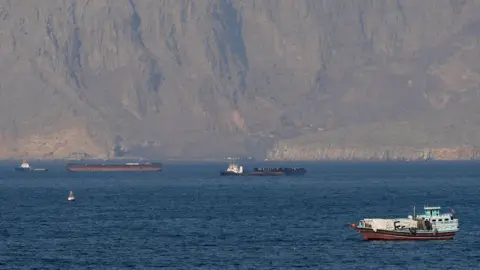
Beyond the asset freeze, Iran has linked the success of any broader peace deal to an end to the hostilities between Israel and Hezbollah in Lebanon. This linkage significantly complicates the negotiation process, as those very hostilities continue to rage. Iran has also issued stern warnings about the consequences of a continued stalemate. Rezaei cautioned that if the U.S. blockade on Iran is not lifted and the war persists, Iran could "give another dimension to the war" by attacking U.S. bases. He further threatened to expand the conflict to the Indian Ocean, the Mediterranean, and the Bab al-Mandab Strait, a vital global shipping lane. These threats signal a potential for a significant escalation that could disrupt global trade and energy markets.
The U.S. Perspective
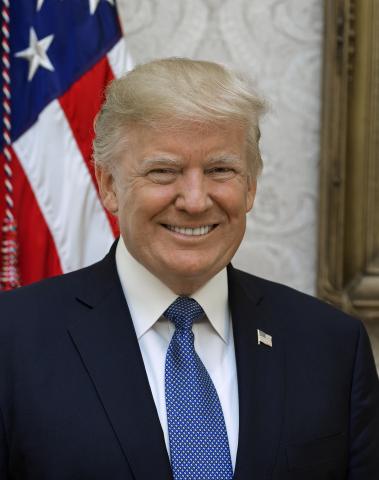
In contrast to Iran's portrayal of a deadlock, President Trump has expressed a more positive view. While traveling to Wisconsin, he offered brief but upbeat remarks on the situation. His economic adviser, Kevin Hassett, also struck a constructive tone, suggesting that gas and fertilizer prices, which have spiked due to the conflict, would fall "relatively quickly" once a deal with Iran is signed and the Strait of Hormuz reopens. However, experts like Patrick De Haan from GasBuddy caution that it could take until mid-to-late 2027 for prices to return to pre-war levels, indicating a potential disconnect between political optimism and economic reality.
The Israel-Hezbollah Conflict Complicates Regional Peace
The fighting between Israel and Iran-backed Hezbollah in Lebanon remains a primary obstacle to a comprehensive regional peace. Despite Israel and Lebanon agreeing to renew a truce, Hezbollah has rejected the terms, leading to continued Israeli strikes in southern Lebanon. On Friday, Hezbollah claimed to have carried out around 20 attacks on Israeli troops, while the Lebanese Ministry of Public Health reported that at least 32 people were killed in the country in the past day alone, bringing the overall death toll since March 2 to 3,558. This ongoing violence underscores the fragility of the situation and the difficulty of achieving a lasting ceasefire.
Lebanon's Strained Position
The conflict has placed Lebanon in an extraordinarily difficult position. Prime Minister Nawaf Salam publicly criticized Iran, accusing it of using Lebanon as a "bargaining chip" in its negotiations with the U.S. "Have mercy on our south and stop treating it and its people as merely a card to improve the terms of your negotiations," he pleaded in a speech. This rare public rebuke from a Lebanese leader highlights the internal resentment towards Hezbollah's actions, which are seen as dragging the nation into a war that is not of its making. President Joseph Aoun echoed this sentiment, delivering a rare criticism of Hezbollah by stating, "the Lebanese people are not your people."
Global Implications and Humanitarian Crisis
The prolonged war is having devastating global consequences, particularly in terms of food security. A report from the United Nations' World Food Programme (WFP) has confirmed its worst fears, projecting that if the regional conflict continues and oil prices remain elevated, millions more people will be pushed into acute food insecurity. The report notes that an additional 2.5 million people in Somalia, 1.3 million in Sri Lanka, and 2.3 million in Afghanistan are struggling to meet basic food needs due to the crisis. The rising costs for fuel, food, and fertilizer, exacerbated by the closure of critical shipping lanes, are causing a ripple effect of hunger across the world's most vulnerable regions. As the U.S. military continues to enforce its maritime blockade, the human and economic costs of the war continue to mount, underscoring the urgent need for a resolution.