Read on bbc.com
Escalating US-Iran Conflict: Fresh Strikes Near the Strait of Hormuz
The United States and Iran have engaged in a new round of military strikes near the vital Strait of Hormuz, escalating tensions just days after a fragile ceasefire. The US conducted 'self-defence strikes' on Iranian radar and drone control sites, while Iran retaliated by targeting a US air base in Kuwait. Kuwait has condemned the repeated Iranian attacks. Negotiations for a permanent deal remain stalled, with the US reportedly requesting new terms regarding the strategic waterway and Iran's nuclear program. This latest exchange threatens to further destabilize the region and global oil markets.
The long-standing geopolitical rivalry between the United States and Iran has once again flared into direct military confrontation, with both nations conducting fresh strikes near the strategically critical Strait of Hormuz. This escalation, the third such exchange in a week, threatens to unravel a tenuous ceasefire and further destabilize the Middle East. The renewed hostilities have drawn sharp condemnation from regional allies, particularly Kuwait, which has found itself on the front lines of this intensifying conflict.
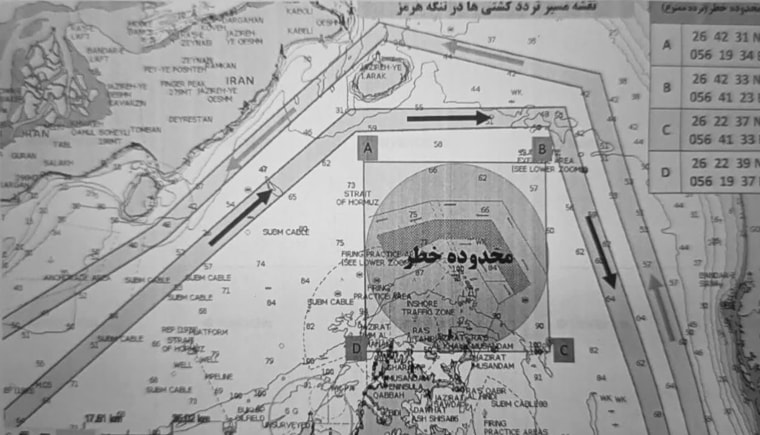
The United States Central Command (Centcom) confirmed it conducted what it termed "self-defence strikes" over the weekend. According to a statement, the strikes targeted Iranian radar and drone command-and-control sites in the coastal city of Goruk and on Qeshm Island, located in the Strait of Hormuz. Centcom justified the action as a response to "aggressive Iranian actions," including the downing of a US drone over international waters. The US military claimed the strikes neutralized air defenses, a ground control station, and two drones that posed a direct threat to commercial shipping in the region. Crucially, Centcom stated that no American personnel were harmed during the operation.
In a direct and predictable response, Iran's Islamic Revolutionary Guard Corps (IRGC) announced it had retaliated by targeting an air base used by US forces. Iranian state-affiliated media reported that the IRGC struck a base in Kuwait, which Tehran claimed the US had used as a staging ground for its attack on a communications tower on Iran's Sirik Island. The Iranian military warned that its next response would be "completely different" if US aggression were to be "repeated," signaling a dangerous escalation spiral. This marked the second time in recent weeks that Iran has launched attacks on Kuwaiti soil in retaliation for US actions.
This latest cycle of violence has placed US ally Kuwait in a precarious and dangerous position. The Kuwaiti military confirmed early Monday that it was "confronting hostile missile and drone attacks," with state news agency KUNA reporting air raid sirens across the country. The Kuwaiti Foreign Ministry issued a strongly worded statement condemning "in the strongest terms... the heinous and repeated Iranian attacks, which represent a dangerous escalation and a direct assault" on its sovereignty. The statement accused Iran of actions that "undermine" efforts to de-escalate regional tensions and affirmed Kuwait's right to "take whatever measures are necessary" to defend itself. The attacks on Kuwait highlight how the US-Iran proxy conflict has increasingly drawn in regional partners, turning them into direct targets.
The military exchanges occur against a backdrop of stalled and fraught negotiations. While a ceasefire was agreed upon on April 8, a comprehensive and permanent deal remains elusive. Reports indicate that US President Donald Trump requested last-minute changes to the terms of a proposed framework agreement during a high-level meeting on Friday. According to the BBC's US news partner, CBS News, these requested changes pertain specifically to the reopening of the Strait of Hormuz and the removal of highly enriched uranium from Iran. The Strait is a vital chokepoint through which approximately one-fifth of the world's oil and liquefied natural gas (LNG) passes, and its effective closure has sent global energy prices soaring. The White House has not commented on the requested revisions.
The stalled negotiations have created a vacuum filled by mutual recrimination. Iran's Foreign Ministry spokesman, Esmail Baghaei, accused the US of being an unreliable negotiating partner, stating that the US is "constantly changing its views and putting forward new or contradictory demands," which he said would inevitably "prolong negotiations." Meanwhile, President Trump attempted to project an air of calm, posting on Truth Social that his critics should "sit back and relax," asserting that "it will all work out well in the end." He claimed that Iran "really wants to make a deal." However, the actions on the ground and the hardline rhetoric from both sides paint a picture of a conflict far from resolution, with the potential for a wider regional war remaining dangerously high.