Spain's PM Sánchez Urges International Community for 'Clear-Eyed Understanding' of China
Spanish Prime Minister Pedro Sánchez, during a speech at Tsinghua University in Beijing, called on the international community to adopt a more accurate and balanced view of China. He warned against zero-sum geopolitical mindsets and emphasized the need for multilateral cooperation in a multipolar world. Sánchez referenced the historical figure Matteo Ricci to illustrate how perceptions can be distorted, highlighting that today’s global dynamics require mutual respect, constructive dialogue, and shared prosperity between Europe and China.
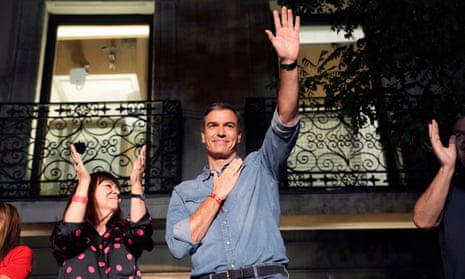
In a compelling address at Tsinghua University in Beijing on Monday, Spanish Prime Minister Pedro Sánchez urged the international community to move beyond outdated perspectives and develop a 'clear-eyed understanding' of China. Speaking during his visit to the Chinese capital, Sánchez delivered a speech that resonated with themes of historical reflection, mutual respect, and the need for robust multilateralism in an increasingly multipolar world.

Sánchez began his remarks by drawing a parallel to the 16th-century Jesuit missionary Matteo Ricci, who introduced a world map to China that placed Europe at its center and Asia at the margins. The Prime Minister noted that this map reflected a clear Eurocentric bias of the time. More than 400 years later, he cautioned, many still view China and the world through similarly distorted lenses. By invoking Ricci's story, Sánchez highlighted how perceptions can be shaped by cultural and historical contexts, and how modern interpretations of global dynamics often suffer from similar narrow-mindedness.
Rejecting Zero-Sum Thinking
A central theme of Sánchez's speech was a firm rejection of the zero-sum mindset in international relations. He argued that interpreting one country's growth as another's loss is not only mistaken but also 'dangerous.' According to the Spanish leader, such a worldview 'holds us back, traps us in the past, and limits the possibilities of the future.' This call for a more cooperative approach reflects Spain's commitment to seeing China's development not as a threat but as an opportunity for shared progress. Sánchez's stance aligns with the European Union's broader push for 'de-risking' rather than decoupling, advocating for a balanced economic relationship based on mutual benefit.
The Prime Minister emphasized that the world today is increasingly multipolar, and this new reality demands a corresponding evolution in global governance. He reaffirmed Spain's unwavering commitment to multilateralism, stating that the mechanisms developed in the 20th century are now 'more necessary than ever.' Sánchez called for a strengthening of international frameworks to manage the complexities of a multipolar order. He added that these frameworks should not aim to impose a single viewpoint but rather to transform the diversity of perspectives into a 'shared strength.'
Constructive Management of Differences
In a nuanced part of his speech, Sánchez addressed the challenge of managing differences between nations. He argued that countries should not seek to eliminate disagreements but instead find common ground while respecting diversity and pursuing peaceful coexistence. This approach, he suggested, is essential for building a stable and prosperous international community. The Spanish leader drew on the historical ties between Spain, Europe, and China, noting that they have 'prospered together in the past' and expressed confidence that they can do so again. By referencing past successes, Sánchez aimed to build a narrative of continuity and cooperation, offering a hopeful vision for future relations.
Sánchez's visit and speech come at a crucial time for EU-China relations, which have been characterized by both cooperation and competition. His call for a 'clear-eyed understanding' serves as a diplomatic bridge, encouraging Western nations to look beyond stereotypes and engage with China on its own terms while maintaining their core values. The Prime Minister's remarks at Tsinghua University, a leading Chinese academic institution, also signal the importance of educational and cultural exchanges in fostering mutual understanding. By speaking directly to a Chinese audience, he underscored Spain's desire for a deeper, more nuanced dialogue between Europe and Asia.

In conclusion, Pedro Sánchez's speech in Beijing represents a significant diplomatic overture. By invoking historical lessons, rejecting zero-sum logic, and championing multilateralism, he has outlined a path for international cooperation that is both pragmatic and principled. His message serves as a timely reminder that in a world of complex challenges, a clear-eyed understanding of partners like China is essential for building a peaceful and prosperous future.