Read on bbc.com
US Lifts Sanctions on Venezuelan Interim Leader, Signaling Diplomatic Thaw
The United States has removed Venezuelan interim President Delcy Rodríguez from its sanctions list, marking a significant step in warming relations between the two nations. This move follows the dramatic seizure of former leader Nicolás Maduro by US forces and his extradition to face drug charges. While the Trump administration praises Rodríguez's cooperation and progress toward stability, opposition voices within Venezuela criticize the lack of pressure to release all political prisoners and hold democratic elections. The reopening of embassies and high-level talks on resource access further illustrate this evolving diplomatic landscape.
The diplomatic landscape between the United States and Venezuela has shifted dramatically in recent months, culminating in a significant policy reversal. The US decision to lift sanctions on Venezuela's interim president, Delcy Rodríguez, represents the latest and most concrete sign of warming relations following the extraordinary military operation that removed Nicolás Maduro from power. This development signals a strategic recalibration by the Trump administration as it seeks to stabilize Venezuela and secure American interests in the region.

The Sanctions Removal and Its Immediate Context
The United States officially removed Delcy Rodríguez from the Specially Designated Nationals (SDN) List on April 2, 2026. This action unblocks any assets she holds in the US and permits American nationals to conduct business with her. The timing is particularly notable, occurring less than three months after US forces executed a commando raid in Caracas that seized Maduro and his wife, transporting them to New York to face drug trafficking charges. Rodríguez, who served as Maduro's vice-president and was herself sanctioned in 2018 for allegedly undermining democracy, was swiftly sworn in as interim president by the Maduro-loyalist National Assembly following the raid.
Official Reactions and Strategic Rationale
The response from both governments has been overwhelmingly positive. Rodríguez hailed the sanctions lift as "a significant step in the right direction to normalise and strengthen relations between our countries" in a public statement. From the American side, White House spokeswoman Anna Kelly framed the decision as recognition of progress made "between our two countries to promote stability, support economic recovery and advance political reconciliation in Venezuela." She notably quoted President Donald Trump's personal assessment, stating "Delcy Rodríguez is doing a great job and is working with the United States very well." This personal endorsement from Trump underscores the administration's current strategic alignment with Rodríguez's interim government.

Criticism and Unresolved Issues
Despite the diplomatic thaw, significant criticism persists, particularly from Venezuelan opposition activists. Their primary concern centers on the approximately 500 political prisoners who remain incarcerated, according to the prisoners' rights group Foro Penal. They argue the US missed a crucial opportunity to leverage the sanctions relief to secure the release of all detainees—a key demand previously articulated by US Secretary of State Marco Rubio. Furthermore, critics bemoan the lack of serious discussion about scheduling democratic elections, viewing the US engagement as prioritizing stability and resource access over democratic restoration.
Broader Diplomatic and Economic Moves
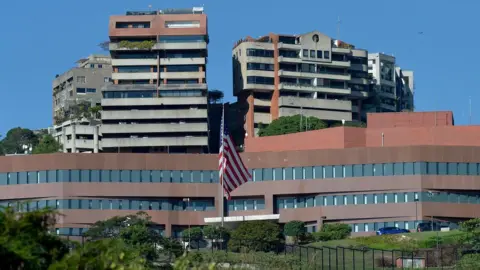
The sanctions lift is not an isolated event but part of a broader pattern of re-engagement. Earlier in the same week, the US officially reopened its embassy in Caracas, which had been shuttered for seven years. Venezuela has reciprocated by dispatching a diplomatic team to Washington to reopen its embassy there. Behind the scenes, multiple high-level US delegations have traveled to Venezuela since Maduro's removal. These talks have focused significantly on how the US could expand its access to Venezuela's substantial oil and mineral wealth, indicating a strong economic dimension to the renewed relationship.
The Road Ahead and Electoral Uncertainty
The future path remains cautiously defined. In a recent interview, Secretary Rubio outlined a three-phase US plan for Venezuela, claiming the country had entered the "recovery" phase. He affirmed that "ultimately, there will have to be a transition phase. There will have to be free and fair elections in Venezuela, and that point has to come." However, he offered no timeline for such elections, urging patience while warning against complacency. Meanwhile, sidelined opposition leader María Corina Machado, who met with Rubio, praised his "dedication to democracy" but remains outside the current US-favored political framework.
The lifting of sanctions on Delcy Rodríguez marks a pivotal moment in US-Venezuela relations, driven by the seismic event of Maduro's capture. While the Trump administration celebrates cooperation and stability, the move exposes tensions between immediate strategic interests and longer-term democratic principles. The reopening of embassies and discussions on resource access suggest a relationship being rebuilt on new, pragmatic foundations. However, with hundreds of political prisoners still detained and no clear electoral horizon, the ultimate success of this diplomatic thaw will depend on whether economic and political reconciliation can progress in tandem.