Read on bbc.com
Iran's Regional Strikes: A Closer Look at Damage to U.S. Military Facilities
Analysis by BBC Verify reveals that Iran's military strikes have damaged at least 20 U.S. military sites across eight Middle Eastern countries since February. The attacks, more extensive than previously acknowledged, have hit high-value assets including advanced THAAD missile defense batteries, surveillance aircraft, and refueling planes. Satellite imagery shows precision strikes on critical infrastructure at bases in Saudi Arabia, the UAE, Jordan, Kuwait, and others. Iranian tactics evolved from mass barrages to smaller, directed salvos targeting specific high-value equipment. The damage underscores vulnerabilities in the region's defense network and raises concerns about future security, especially if the fragile ceasefire breaks down.
The ongoing conflict between the United States and Iran has seen Tehran's military strikes on American bases reach a level of destruction far greater than what has been officially reported. According to an in-depth analysis by BBC Verify, which examined satellite imagery and video evidence, Iran has damaged at least 20 U.S. military sites across eight countries in the Middle East since the end of February. These attacks have inflicted millions of dollars in damage on advanced air defense systems, refueling aircraft, and radar installations, challenging public assessments from Washington.

The scale of the Iranian campaign is significant. Analysts told BBC Verify that Tehran's counter-attacks have been more precise and extensive than American officials have previously acknowledged. While the Pentagon has highlighted extensive operations, including hitting over 13,000 targets in Iran since the start of Operation Epic Fury, the damage observed at U.S. facilities tells a different story. A U.S. defence official declined to comment on BBC Verify's findings, citing "operational security reasons." The U.S. has also sought to limit satellite analysis by requesting that major imagery provider Planet impose an indefinite restriction on new images of Iran and most of the Middle East, a move the company justified to protect allied personnel.
Key Assets Damaged: THAAD Systems and Aircraft
Among the most valuable hardware destroyed or damaged are three state-of-the-art Terminal High Altitude Area Defense (THAAD) anti-ballistic missile batteries. These systems are located at Al Ruwais and Al Sader airbases in the UAE, and Muwaffaq Salti Airbase in Jordan. The U.S. is only known to operate eight THAAD batteries globally, each costing around $1 billion (£766 million) to manufacture and requiring a crew of about 100 troops to operate. Vice-Admiral Mark Mellett, ex-head of the Irish Defence Forces, described these batteries as the core of a "highly complex" regional defence network that cannot be "quickly or easily replaced."
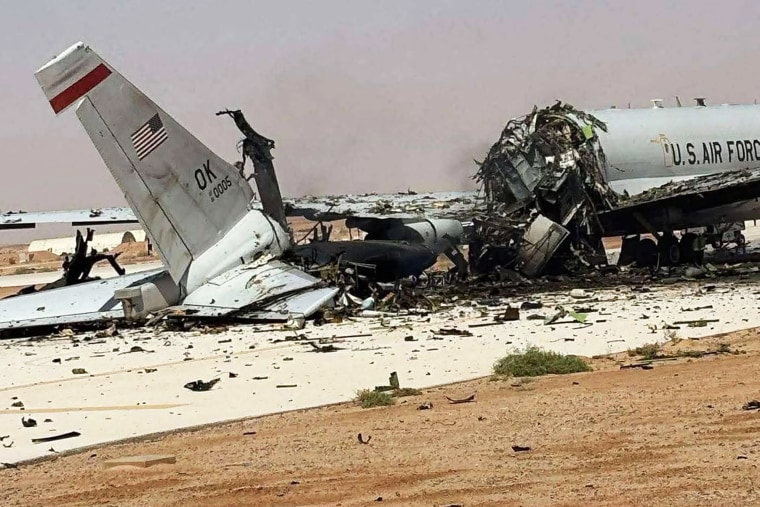
At Prince Sultan Airbase in Saudi Arabia, Iranian strikes heavily damaged refuelling and surveillance aircraft. Expert analysis of satellite images reveals smoking craters and damaged aircraft, including an E-3 Sentry surveillance plane. U.S. media reported that replacing this single aircraft could cost up to $700 million. In Kuwait, bases like Ali Al Salem Airbase and Camp Arifjan were also hit multiple times, with analysts identifying destroyed fuel storage bunkers, aircraft hangars, troop accommodation, and extensive damage to satellite communications hardware at Camp Arifjan.
Evolving Iranian Tactics
Analysts noted a significant shift in Iranian tactics over the course of the conflict. Initially, the attacks involved large barrages of missiles and drones designed to overwhelm defences through sheer numbers. However, within days, Iran transitioned to smaller, more precisely targeted salvos, conserving remaining missiles and drones for specific high-value targets. This evolution, as described by Dr. Kelly Grieco of the Stimson Centre think tank, explains the concentration of damage on expensive equipment like THAAD batteries and surveillance planes. One analyst pointed to a degree of "early-war complacency" by U.S. forces, noting that at Prince Sultan Airbase, for example, aircraft remained in range after a previous attack.
Future Implications and the Ceasefire
The extensive damage to U.S. facilities raises serious concerns about regional security, particularly if the fragile ceasefire between the U.S. and Iran breaks down. The existing destruction has already consumed a significant portion of air defence stocks, and there is no rapid path to replenishment. As Iran's Supreme Leader Mojtaba Khamenei recently vowed that the region will no longer serve as a safe shield for American bases, the vulnerability of Gulf facilities is a stark reality. The findings by BBC Verify underscore that Tehran's military capabilities, often underestimated, have been effectively employed to inflict substantial damage on some of the world's most expensive and advanced military equipment.