Giant Fire Tornadoes: A Novel, Cleaner Approach to Oil Spill Cleanup
Researchers from Texas A&M University, UC Berkeley, and BSEE have demonstrated that controlled 'fire whirls'—effectively spinning fire tornadoes—can burn oil spills on water nearly twice as fast and with significantly less pollution than traditional in-situ burning. In large-scale field experiments, the fire whirls consumed up to 95% of the oil, cut soot emissions by 40%, and burned 40% faster. The technology offers a potential breakthrough for emergency response, transforming one of nature's most destructive forces into a precise, eco-friendly restoration tool. This article explores the science, the experimental setup, the environmental implications, and the path toward deploying this technology for real-world oil spill remediation.
When an oil spill threatens coastlines and marine life, emergency teams are often forced to make a difficult choice: let the oil spread, or set it on fire. Traditional in-situ burning, while effective at removing surface oil, generates enormous plumes of black smoke, releases soot into the atmosphere, and leaves behind a toxic residue. Now, a groundbreaking study led by researchers from Texas A&M University and the University of California, Berkeley, has demonstrated a novel and dramatically cleaner alternative: using controlled fire whirls, or fire tornadoes, to consume oil spills faster and more thoroughly than ever before.
Faster, Cleaner Combustion
The burning of oil spills via conventional methods has long been a trade-off between containing the spread and accepting significant air pollution. However, the research team, including Dr. Elaine Oran and Dr. Qingsheng Wang of Texas A&M and Dr. Michael Gollner of UC Berkeley, has found that fire whirls change this equation. The spinning vortex draws in a massive amount of oxygen, creating a far hotter and more efficient flame. This results in a burn that is not only faster but also more complete.
Key Experimental Findings
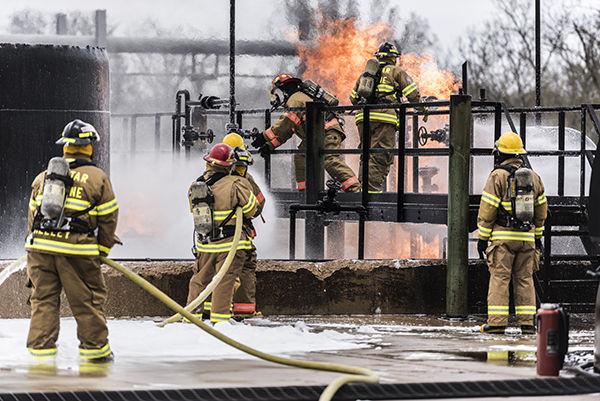
To test the concept on a realistic scale, the team built a 16-foot-tall triangular structure at the Texas A&M Engineering Extension Service (TEEX) Brayton Fire Training Field. Inside, they placed a 1.5-meter-wide pool of crude oil floating on water. When ignited, the setup generated a fire whirl reaching nearly 17 feet in height. The results, published in the journal Fuel, were striking:
- Faster Burn Rate: The fire whirl burned oil approximately 40% faster than traditional in-situ fire pools. This speed is critical for preventing spills from spreading into sensitive habitats.
- Reduced Soot Emissions: The technique cut soot emissions by 40%, significantly reducing the dense smoke plumes that are a major drawback of conventional burning.
- Higher Consumption Efficiency: The fire whirls consumed up to 95% of the fuel, leaving far less unburned tar-like residue on the water's surface.
The Science Behind the Whirl
The key to the fire whirl's superior performance lies in its aerodynamic structure. The rotating vortex acts like a giant incinerator, pulling in air and oxygen from the environment, which sustains a much hotter and more complete burn. This higher temperature destroys many of the particles responsible for thick smoke plumes. As Dr. Oran noted, "Our results show that fire whirls, compared to in-situ fires, dramatically reduce overall emissions."
Finding the 'Goldilocks' Zone
Despite their power, fire whirls are sensitive to environmental conditions. The researchers identified a 'Goldilocks' zone—a narrow range of wind speeds and oil layer thicknesses where the vortices achieve peak efficiency. Strong winds can destabilize or collapse the spinning column, while insufficient airflow prevents the vortex from forming. Additionally, if the oil slick is too deep, the fire may extinguish before consuming all the fuel.
Practical Applications and Future Vision
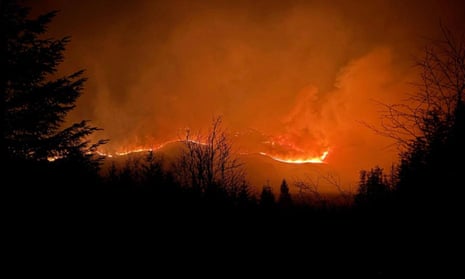
The team envisions a future where portable systems could be deployed directly over a burning oil spill to intentionally generate these fire whirls on demand. This technology could transform emergency response, converting a destructive fire into a highly effective cleanup tool. The findings also have broader implications, helping engineers understand how to create more efficient combustion systems and improving models for predicting wildfire behavior.
A Historic Context
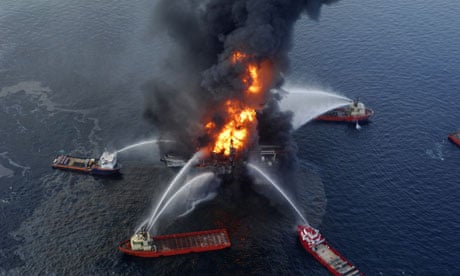
The research is partly motivated by the devastating 2010 Deepwater Horizon disaster, the largest offshore oil spill in U.S. history. The accident caused widespread environmental damage and served as a catalyst for exploring faster, cleaner remediation methods. The use of fire whirls represents a paradigm shift from seeing fire solely as a destructive force to harnessing its power as a precise restoration tool.
Conclusion: Turning Destruction into a Tool
The successful large-scale demonstration of fire whirls for oil spill cleanup marks a significant step forward in environmental remediation. By burning oil faster and with far less pollution, this technology offers a promising new weapon in the fight to protect coastlines, marine ecosystems, and the atmosphere. As Dr. Oran stated, "This study is more than just an experiment, it's a glimpse into a future where fire isn't a force of destruction, but a tool to protect our oceans and planet."