The Formation of Pele's Hair: How Lava Stretches into Delicate Glass Fibers
Pele's hair, the fragile glass filaments formed from volcanic eruptions, represents a fascinating intersection of geology and fluid dynamics. Recent experimental research reveals that these fine fibers are created when bubble-rich lava is stretched rapidly while molten, then cools into delicate strands. This natural phenomenon, named after the Hawaiian volcano goddess, provides insights into volcanic processes and the behavior of molten rock under extreme conditions. Understanding Pele's hair formation helps scientists interpret eruption dynamics and the physical properties of lava.
When volcanoes erupt, they produce more than just rivers of molten rock and clouds of ash. Among the most delicate and intriguing volcanic products are the fine glass filaments known as Pele's hair, named after Pele, the Hawaiian goddess of volcanoes. These fragile-looking strands, which can form during certain types of eruptions, represent a remarkable natural process where lava transforms into delicate fibers through rapid stretching and cooling.
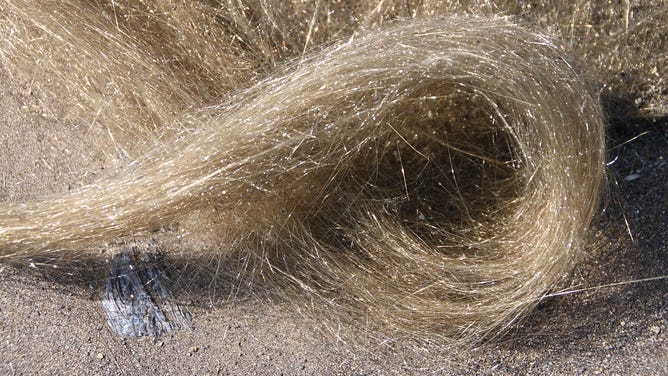
The formation of Pele's hair occurs when molten lava containing numerous gas bubbles is subjected to rapid stretching forces. As described in recent geological research published in Geology, this process involves the physical separation of bubble-rich lava pockets that pull apart quickly while the material remains in a molten state. The resulting thin strands of lava then cool almost instantly, solidifying into the glassy filaments that characterize Pele's hair.
The Science Behind the Formation
The key to understanding Pele's hair formation lies in the physical properties of molten lava and the conditions under which it erupts. Lava is not a simple liquid but rather a complex mixture of molten rock, dissolved gases, and sometimes solid crystals. When this mixture contains numerous gas bubbles and is subjected to rapid stretching, the material can thin out dramatically before it has time to cool significantly.
Experimental studies have demonstrated that the formation of these glass fibers requires specific conditions. The lava must be sufficiently fluid to stretch without breaking immediately, yet it must cool quickly enough to preserve the filamentous structure rather than collapsing back into droplets. This delicate balance between viscosity, temperature, and cooling rate determines whether Pele's hair will form during a particular volcanic event.
Geological Significance and Occurrence
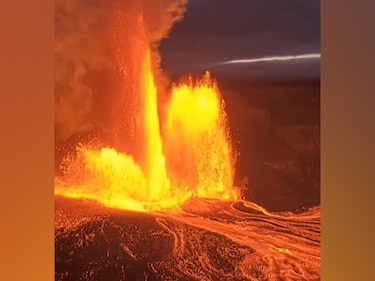
Pele's hair is most commonly associated with Hawaiian-style eruptions, particularly those involving lava fountains or vigorous spattering. These eruption styles provide the necessary mechanical forces to stretch the molten material into fine strands. The fibers often accumulate downwind from active vents, creating golden or brownish deposits that can cover significant areas around erupting volcanoes.
The presence of Pele's hair in volcanic deposits provides valuable information to geologists studying past eruptions. These delicate fibers can indicate specific eruption conditions, including the gas content of the magma, the eruption intensity, and the physical properties of the lava at the time of eruption. By examining Pele's hair samples, researchers can reconstruct aspects of volcanic events that occurred even thousands of years ago.
Safety Considerations and Research Applications
Despite their delicate appearance, Pele's hair fibers can pose hazards due to their glassy nature and sharp edges. The fibers are brittle and can break into smaller fragments that may irritate skin, eyes, and respiratory systems. Volcanologists and visitors to active volcanic areas must exercise caution when encountering deposits of these glass filaments.

Current research into Pele's hair formation continues to advance our understanding of volcanic processes. Experimental studies that simulate the stretching of bubble-rich melts under controlled conditions help scientists quantify the physical parameters necessary for fiber formation. This research has implications beyond volcanology, potentially informing industrial processes involving fiber formation from molten materials.
The study of Pele's hair represents a fascinating example of how natural processes can create intricate structures through the interplay of physical forces and material properties. As research continues, scientists hope to develop more detailed models of fiber formation that could improve hazard assessments at active volcanoes and enhance our fundamental understanding of how molten materials behave under extreme conditions.