Read on the Guardian
Global Wildfires in 2025: A Tale of Devastation in Affluent Regions and Declining Global Burn Area
A 2025 study reveals a stark global wildfire picture: devastating 'megafires' in California, Canada, Europe, and South Korea caused immense damage and loss of life, even as the total area burned worldwide hit its second-lowest level since 2002. The decline is attributed to agricultural expansion in Africa, which has fragmented landscapes and limited savannah fires. This creates a 'growing disconnect between total area burned and real-world impacts,' highlighting how climate change and land-use shifts are intensifying fire risks in wealthier, populated zones.
The year 2025 presented a stark global paradox in the world of wildfires. Even as the total area burned across the planet fell to its second-lowest level since 2002, 'devastating' megafires ripped through some of the wealthiest parts of the world, causing catastrophic loss of life, homes, and jobs. A comprehensive study has highlighted this growing disconnect between global statistics and local devastation, underscoring the complex interplay of climate change, land use, and human settlement patterns.

The study, led by climate scientist Matthew Jones at the University of East Anglia, found that while the global area ravaged by flames stood at 335 million hectares, the real-world impacts were disproportionately concentrated in wealthier regions. Catastrophic blazes in California, Canada, Europe, and South Korea claimed lives and inflicted massive economic damage. '2025 shows that a 'quiet' fire year globally can still be devastating,' said Jones. 'We are seeing a growing disconnect between total area burned and real-world impacts.'
The Paradox of Global Burn Area Decline
The primary driver for the global decline in burned area is not a reduction in fire risk but a significant shift in land use, particularly in Africa. The expansion of farms has fragmented landscapes across the continent, effectively creating barriers that hamper the spread of large savannah fires. This has led to a significant decrease in the total hectares burned globally, as savannah fires historically accounted for a large portion of the world's total burned area.
However, this positive global trend masks a dangerous counter-current. According to the Guardian, changes in land use mean wildfires burn less of the planet than they have historically done. Yet, climate change is creating conditions that allow fires to spread more explosively, particularly at what researchers call the 'wildland-urban interface' (WUI)—the zone where human development meets undeveloped wildland. In these areas, the danger is acutely amplified as human lives, property, and critical infrastructure are directly in the path of flames.
Regional Hotspots of Catastrophic Fire
North America: California and Canada
In 2025, California experienced some of the most destructive fires in its history. The Palisades and Eaton fires, fueled by high winds and dry vegetation, tore through densely populated areas, causing exceptional mortality, mass evacuations, and major infrastructure losses. The patterns of destruction highlighted the extreme vulnerability of communities living in the WUI, where homes are often surrounded by flammable vegetation.
Canada also recorded extreme wildfire emissions for the third consecutive year. Since 2023, the boreal forests of North America have emitted close to 4 billion tonnes of CO₂, a staggering figure that exceeds the total emissions from the preceding 15-year period. This continuous burning not only devastates ecosystems but also releases massive amounts of carbon dioxide, creating a dangerous feedback loop that worsens the climate crisis.
Europe: The Mediterranean and the UK
Across the Atlantic, Europe faced its own fire crisis. Portugal and Spain endured record-breaking blazes that burned more than half a million hectares. An attribution study co-authored by David Garcia, an applied mathematician at the University of Alicante, found that the extreme weather fueling these flames was made 39 times more likely by climate breakdown. 'If we continue to warm the planet, large-scale fires will continue to increase,' Garcia warned.
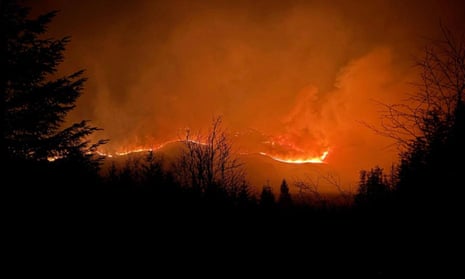
Perhaps most notably, the United Kingdom experienced its most extensive wildfire season on record, driven by a single 'megafire' in Scotland that torched more than 100,000 hectares. The event in Galloway forest park illustrated that even historically wet and cool regions are not immune to the dangers of fire in a warming world.
Asia: South Korea's Deadliest Season
South Korea also suffered its biggest and deadliest wildfire season on record. Driven by a combination of dry conditions, high winds, and accumulated fuels, the fires devastated communities, with strong winds driving flames into populated areas. The disaster served as a stark reminder that fire risk is a global phenomenon, affecting nations across diverse climates and geographies.

The Human and Economic Toll
The economic impact of these fires was staggering. Fires accounted for more than 38% of insured losses from weather disasters in 2025. Beyond the immediate financial costs, the fires left a deep human toll, with lives lost, communities displaced, and long-term health consequences from smoke exposure.
The toxic particles spewed by Canadian wildfires in 2023, for example, were linked to the deaths of 82,000 people, according to a study published in September. The smoke can choke cities not only in Canada but also in the United States, Europe, and even Africa, highlighting the transboundary nature of the health threat.
Challenges and Future Outlook
The events of 2025, as summarized by researchers, illustrate how a relatively small number of extreme fires can dominate the ecological, social, and economic consequences of an entire fire season. Adrián Regos, a landscape ecologist at the Biological Mission of Galicia, Spain, noted that 'the broader pattern highlighted by this study is consistent with what we are observing across southern Europe: while total burned area may fluctuate from year to year, climate change is increasing the likelihood of extreme fire-weather conditions.'
Regos further emphasized that fuel accumulation associated with rural abandonment is making many landscapes more vulnerable to large, fast-moving fires. 'The challenge is therefore not only reducing the number of fires, but increasing the resilience of landscapes and communities to extreme events,' he said.
In conclusion, the 2025 wildfire season serves as a critical wake-up call. While global headlines may tout a decline in total burned area, the reality on the ground for wealthier regions is one of escalating risk and devastation. The growing disconnect between these two metrics underscores the urgent need for targeted investments in landscape management, community preparedness, and aggressive climate action to mitigate the conditions that turn a 'quiet' fire year into a catastrophic one for millions.