Saving Socotra's Last Giants: The Fight to Protect Endangered Trees from Climate and Goats
On the remote Yemeni island of Socotra, a unique forest of ancient dragon's blood trees faces a dual threat: intensifying drought driven by climate change and relentless grazing by free-ranging goats. This article explores the conservation efforts led by Indigenous manager Mohammed Amar, who bridges the gap between international scientists, local communities, and authorities. We examine the challenges of protecting endemic species like the cucumber tree and frankincense tree in an environment where livestock often takes precedence over flora, and highlight the critical role of on-the-ground collaboration in finding sustainable solutions for both nature and people.
On the isolated, otherworldly island of Socotra, part of Yemen, a silent battle for survival is unfolding. The combatants are not armies, but ancient, endemic trees pitted against the escalating pressures of a changing climate and an insatiable local herbivore: the goat. This struggle represents a microcosm of global conservation challenges, where ecological preservation must be carefully balanced with human livelihoods and cultural practices. The fate of species found nowhere else on Earth hangs in the balance, dependent on innovative strategies and cross-cultural collaboration.
The Unique Flora of Socotra
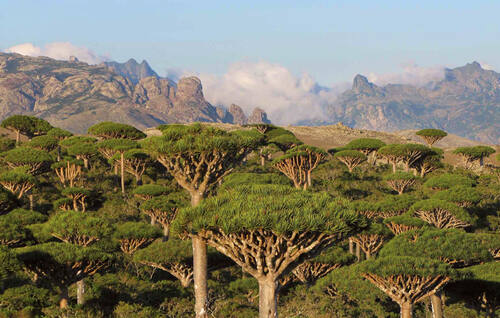
Socotra's extreme geological isolation, having split from mainland Arabia millions of years ago, has acted as an evolutionary crucible. This isolation has given rise to an astonishing array of endemic species—plants and animals that exist nowhere else on the planet. The island's most iconic botanical resident is the dragon's blood tree (Dracaena cinnabari), named for its crimson resin. Its distinctive, umbrella-shaped canopy is a symbol of the island's ancient and fragile ecosystems. Alongside it, other threatened botanical wonders include the peculiar, swollen-trunked cucumber tree (Dendrosicyos socotranus) and various species of frankincense trees (Boswellia spp.), sources of the precious aromatic resin used for millennia.
The Dual Threat: Climate Change and Grazing Pressure
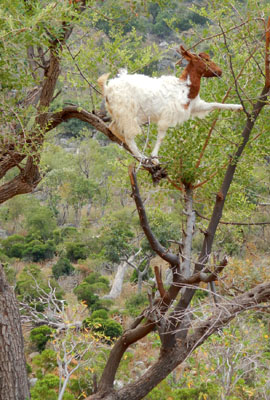
The survival of these unique trees is threatened by a powerful one-two punch. The first is climate change, manifesting on Socotra primarily as prolonged and intensifying drought. These endemic species, while adapted to arid conditions, are facing climatic extremes beyond their historical experience, stressing mature trees and making successful regeneration increasingly difficult. The second, and more immediate threat to seedlings, comes from the island's ubiquitous free-ranging goats. These animals consume virtually any young plant that isn't expertly hidden within rocky crevices, effectively preventing the natural replacement of aging trees and dooming the forest's long-term future.
Bridging Science and Community for Solutions
Addressing these intertwined challenges requires more than just scientific knowledge; it demands deep cultural understanding and community engagement. This is the role undertaken by individuals like Mohammed Amar, the Indigenous on-site manager for the Socotra endangered-tree project. For 25 years, Amar has served as the vital link between international research teams from institutions like Mendel University in the Czech Republic and the local Indigenous communities and authorities. His work involves scouting areas for potential habitat restoration and, crucially, collaborating with remote communities to develop conservation strategies that are ecologically sound and socially acceptable. The core challenge is that for many locals, goats—a source of food, income, and cultural value—are often a more immediate priority than protecting rare plants.
The Path Forward: Integrated Conservation
The future of Socotra's endemic trees hinges on finding integrated solutions that respect both ecological and human needs. Successful conservation cannot be imposed from the outside; it must be co-created with the people who live alongside these species. Potential strategies include establishing protected enclaves for seedling growth, exploring community-based livestock management plans, and continuing vital research into the trees' drought tolerance. The goal is to repair the natural world in a way that also supports the well-being of Socotra's inhabitants. As this work progresses, it offers a model for conservation in other regions where biodiversity hotspots intersect with human communities facing their own pressures.