 Read on cbsnews.com
Judge Imposes Limits on White House Ballroom Construction Amid Legal Challenge
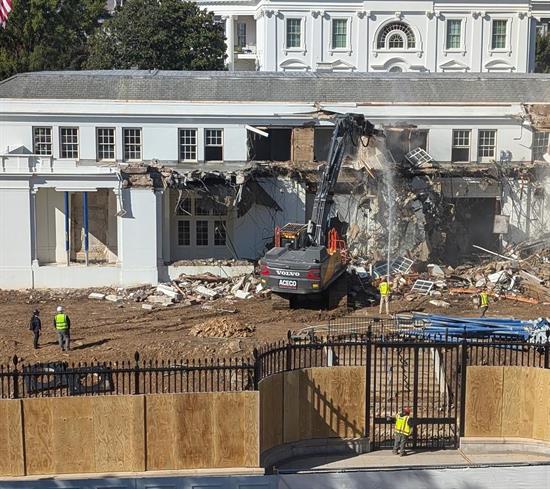
A federal judge in Washington, D.C., has denied a request to temporarily halt construction of a new ballroom at the White House but has imposed significant restrictions on the project for the next two weeks. Judge Richard J. Leon ruled that while the National Trust for Historic Preservation failed to demonstrate sufficient irreparable harm for a complete pause, construction crews cannot build any below-ground structures that would determine the final ballroom's placement. The ruling comes as part of the first major lawsuit against the Trump administration over the project, which preservationists argue violates multiple laws by proceeding without proper public review.
A federal judge in Washington, D.C., has issued a nuanced ruling that allows the Trump administration to continue construction of a new White House ballroom while placing specific, critical limitations on the project's progress. The decision by U.S. District Judge Richard J. Leon represents a compromise between preservationists' concerns and executive authority, setting the stage for further legal battles over one of the most significant White House renovation projects in recent history.
The Court's Compromise Ruling
Judge Leon's ruling denied the National Trust for Historic Preservation's motion for a temporary restraining order that would have completely halted construction. However, the judge imposed significant restrictions that could shape the project's ultimate outcome. According to court proceedings reported by CBS News, Leon declared that construction crews cannot build any below-ground structures over the next two weeks that would determine how and where the final ballroom structure will exist. This restriction prevents the administration from making irreversible decisions about the ballroom's placement while legal challenges proceed.
The Legal Arguments Presented
Preservationists' Position
The National Trust for Historic Preservation filed what they describe as the first major lawsuit against President Trump and his administration specifically targeting the ballroom construction. Their central argument, as detailed in court filings, is that no president should be allowed to tear down parts of the White House "without any review whatsoever" or construct significant additions on public property "without giving the public an opportunity to weigh in." The group's attorneys argued in court that five separate laws have been violated by the demolition and construction project, and they characterized the environmental impact statement submitted by the administration as "woefully inadequate."
Government's Defense
The Justice Department, representing the Trump administration, presented several counterarguments during the hearing. Attorney Adam Gustafson contended that the government has no obligation to file plans with the National Capital Planning Commission for demolition or below-ground work, insisting that no laws have been violated because "there is nothing final about this building." The government also argued that because the construction and planning originate from the Executive Office of the President, federal courts have limited power to review these executive actions. Additionally, the administration claimed the lawsuit was filed too late, noting that demolition of much of the East Wing was completed a week before the complaint was filed.
Project Details and Timeline
The National Park Service expects the ballroom project to be completed in summer 2028, which would be shortly before President Trump leaves office if he serves two terms. The president has provided varying cost estimates for the donor-funded project, recently suggesting it could cost as much as $400 million, up from his previous $300 million estimate, though he added that he expects to complete it for less. At a Hanukkah event following the court ruling, President Trump celebrated the decision, saying "we just won the case" and "we didn't want to be held up," while questioning who would sue to stop what he called a "$400 million beautiful ballroom that people have been after for the White House."
Next Steps and Requirements
Judge Leon has established specific requirements for the administration moving forward. The government must submit construction plans to the National Capital Planning Commission by the end of the year, and the Justice Department indicated that "initial outreach" has already begun to set up meetings on this front. The judge also issued a stern warning that any violation of his order restricting below-ground construction would result in the White House being "forced to take it down." A preliminary injunction hearing is scheduled for the second week of January, where both sides will present further arguments about whether construction should continue while the lawsuit proceeds.

Broader Implications
This case raises significant questions about the balance between executive authority and preservation laws governing historic federal properties. The government's argument that courts have limited power to review executive actions related to White House construction could establish important precedents for future administrations. Meanwhile, preservationists emphasize that their lawsuit isn't about the need for a ballroom but about "the need to follow the law," as their attorney stated in court. The outcome could influence how future White House renovations are planned and reviewed, potentially requiring more public input and formal approval processes for significant structural changes to the presidential residence.
The judge's ruling represents a temporary compromise that allows limited construction while preserving the legal questions for more thorough examination in January. Both sides will return to court with additional arguments about whether the project violates preservation laws and whether the administration followed proper procedures. The restrictions imposed by Judge Leon ensure that no irreversible decisions about the ballroom's placement will be made before these fundamental legal questions are resolved, balancing the administration's construction interests with preservationists' concerns about due process and legal compliance.