Read on bbc.com
Lebanon's Precarious Path to Peace: Government's Limited Leverage Over Hezbollah
The Lebanese government is navigating a critical juncture as it enters peace talks with Israel, but its influence over Hezbollah—the powerful Iran-backed militia and political party—remains severely limited. This article examines the complex dynamics at play, from Hezbollah's deep roots as a 'resistance movement' and social service provider to the state's inability to enforce disarmament. With a fragile ceasefire in place and a population exhausted by conflict, we analyze the historical context, sectarian divisions, and geopolitical pressures that constrain Beirut's options, questioning whether a lasting peace is achievable without addressing the fundamental issue of Hezbollah's weapons.
As Lebanon reels from another devastating conflict, its government faces the monumental task of pursuing peace talks with Israel while grappling with a central, intractable problem: its limited influence over Hezbollah. This Iran-backed militia and political party, which is both a formidable military force and a vital social service provider for many Lebanese, operates with significant autonomy. The recent ceasefire, brokered after intense hostilities, has opened a diplomatic window. However, with Hezbollah's weapons and strategic decisions largely outside state control, the Lebanese state's ability to negotiate a durable peace and implement any agreement is profoundly constrained. This analysis explores the historical, political, and social factors that have led to this impasse and the stark challenges facing President Joseph Aoun's administration.

The Hezbollah Conundrum: A State Within a State
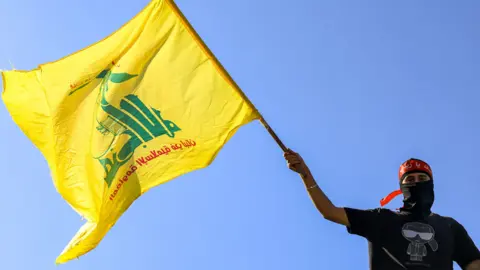
Hezbollah, or the "Party of God," is not merely an armed faction; it is a multifaceted entity deeply embedded in Lebanon's political and social fabric. Forged during Israel's occupation in the 1980s and the Lebanese Civil War, its official ideology includes the destruction of Israel, and it has been continuously financed and armed by Iran. Despite the 1989 Taif Agreement, which mandated the disarmament of all militias to end the civil war, Hezbollah successfully retained its arsenal by branding itself as a legitimate resistance movement. This status was further cemented after Israel's withdrawal in 2000 and the subsequent 2006 war, after which United Nations Resolution 1701—demanding Hezbollah's disarmament—was never fully implemented.
Today, Hezbollah is Lebanon's most powerful group. It holds seats in parliament and the cabinet, and it runs an extensive network of schools, hospitals, and social services, particularly in Shia-majority areas where the state's presence is weak. For its supporters, the group is an essential protector against Israel and a champion of their community. For its opponents, it is a proxy for Iranian interests that drags Lebanon into unnecessary wars. This dual identity—as both a domestic political actor and an international armed faction—creates a fundamental paradox for the Lebanese state.
The Government's Limited Hand in Negotiations
President Joseph Aoun, a former army chief, came to power advocating for a "state monopoly on arms." Following the 2024 ceasefire, Hezbollah agreed to withdraw its fighters from southern Lebanon, a significant concession. However, the group's secretary-general, Naim Qassem, has flatly rejected discussing nationwide disarmament. Aoun has acknowledged that attempting to disarm Hezbollah by force could plunge Lebanon into another civil war, stating, "Disarmament can't be done by force." This leaves the government with few coercive tools.
The recent peace talks, facilitated by the US and expected to focus on a ceasefire, highlight the government's weak position. As analyst Michael Young from the Carnegie Center notes, "Lebanon has nothing to offer" in these negotiations because it cannot guarantee Hezbollah's compliance. The Lebanese Armed Forces, chronically underfunded and underequipped, lack the capacity to confront Hezbollah militarily or to disarm a population that largely supports the group in Shia areas. This reality renders the government a party with "very limited influence" at the bargaining table.
Sectarian Divisions and Public Opinion
Lebanon's complex sectarian landscape further complicates the disarmament issue. The country officially recognizes 18 religious sects, with a population roughly divided among Sunni Muslims, Shia Muslims, and Christians. A December Gallup poll revealed deep divisions: nearly 80% of Lebanese overall favored having only the national army bear arms, implying support for disarming Hezbollah. However, this support broke down along sectarian lines, with overwhelming approval from Christians, Druze, and Sunnis, while more than two-thirds of Shias disagreed.
This split reflects Hezbollah's role as a perceived guardian of the Shia community, which has historically felt marginalized in Lebanese politics. Journalist Kim Ghattas explains that for many Shias, the weapons represent security and identity, asking, "If they were to give up their weapons, what would happen to them?" This deep-seated fear makes a state-led disarmament initiative not just a military challenge, but a profound social and political one.

Regional Geopolitics and the Iranian Factor
Hezbollah's fate is inextricably linked to regional geopolitics, particularly its relationship with Iran. The group is a key pillar of what Iran calls the "Axis of Resistance," a network of allied militias across the Middle East. As author Nicholas Blanford points out, any major decision about Hezbollah's strategic direction, including disarmament, would likely be made in Tehran, not Beirut. The group's rearmament after the 2024 war was reportedly overseen by officials from Iran's Islamic Revolutionary Guard Corps, underscoring this dependency.
Israeli actions also play into Hezbollah's narrative. Israel's stated goal of creating a "security buffer zone" in southern Lebanon raises fears of a prolonged occupation, which would strengthen Hezbollah's argument that its weapons are necessary for national defense. Furthermore, Israeli airstrikes during the ceasefire, including a devastating "Black Wednesday" that killed hundreds, have exhausted the Lebanese public but also reinforced the group's raison d'être for its base.
Conclusion: A Precarious Path Forward
The Lebanese government's pursuit of peace is hamstrung by a power dynamic it did not create and cannot easily alter. Hezbollah's entrenched military, political, and social power, combined with sectarian loyalties and Iranian backing, creates a formidable obstacle to any peace agreement that requires its disarmament. President Aoun's administration is essentially negotiating with one hand tied behind its back, unable to deliver on core security guarantees.
Lasting peace in Lebanon will require more than a ceasefire between states; it will necessitate a fundamental, internally-driven political settlement that addresses the legitimate security concerns of all communities while re-establishing the state's sovereignty. Until Lebanon's political factions can forge a new national consensus on the monopoly of force, the state's influence over Hezbollah will remain limited, and the cycle of crisis—leaving millions displaced and in a state of permanent war, as resident Mohammed Hamoud described—is likely to continue. The path to peace is not just through diplomatic channels in Washington but through the difficult, unresolved conversations within Lebanon itself.