Ancient Fish Fossils Unlock Secrets of Vertebrate Evolution and the Move to Land
Groundbreaking research on 400-million-year-old fish fossils is providing unprecedented insights into the evolutionary journey that led vertebrates from water to land. By applying advanced CT scanning to enigmatic specimens from Australia's Gogo Formation and reconstructing a 410-million-year-old lungfish skull from China, scientists are piecing together the anatomical changes that enabled this monumental transition. These discoveries highlight the critical role of ancient lungfish as the closest living relatives to land vertebrates, offering a clearer window into our own deep evolutionary past.
For centuries, the question of how life transitioned from water to land has captivated scientists. Recent breakthroughs in paleontology are now providing some of the most detailed answers yet, thanks to the meticulous study of ancient fish fossils. By re-examining specimens with cutting-edge technology, researchers are uncovering the anatomical blueprints that paved the way for the first vertebrates to walk on land, a group that includes humans. This article explores two pivotal studies that are reshaping our understanding of this critical evolutionary leap.
The Gogo Formation: A Window into a Devonian Reef
Nestled in the Kimberley region of northern Western Australia, the Gogo Formation represents one of the world's most significant fossil sites. This location preserves a Devonian-era reef system, often called Australia's first 'Great Barrier Reef,' in exceptional detail. For decades, Flinders University paleontologists have studied its bounty, but some fossils remained too fragmentary or damaged for traditional analysis. A recent study, published in the Canadian Journal of Zoology, has changed that by applying advanced imaging techniques like CT scanning and computed tomography to a previously enigmatic specimen.
Lead researcher Dr. Alice Clement from Flinders University explains that this technology allowed her team to create comprehensive new digital images of both the external and internal cranium. "The unusual specimen was so enigmatic, the authors who first described it in 2010 considered it could be a whole new type of fish never before seen in science," Dr. Clement notes. The high-resolution scans revealed the complex structure of the brain cavity and, crucially, corrected previous misinterpretations by showing the fossil had likely been viewed upside down and back to front. This work, supported by the Australian Research Council, adds a vital data point to the collection of early vertebrate species from Gondwana.

Paleolophus: A Missing Link from Ancient China
While the Australian team revisited old mysteries, a separate international collaboration focused on a new discovery from southern China. Researchers from Flinders University and the Chinese Academy of Sciences reconstructed the skull of a 410-million-year-old lungfish species named Paleolophus yunnanensis ('Old crest from Yunnan'). This fossil, detailed in the journal Current Biology, provides an unprecedented look at a lungfish from a pivotal time in their evolutionary history.
Dr. Brian Choo, a Flinders researcher involved in the study, emphasizes the fossil's significance: "Paleolophus gives us an unprecedented look at a lungfish from a time between their earliest appearance and their great diversification a few million years later." The skull shows both primitive features and the beginnings of specialized feeding adaptations that would define later lungfish. By comparing it to earlier species like Diabolepis from China and contemporaries like Uranolophus from Wyoming, scientists can trace the rapid evolutionary diversification that occurred during the Devonian period.
Lungfish: The Key to Understanding Our Aquatic Ancestors
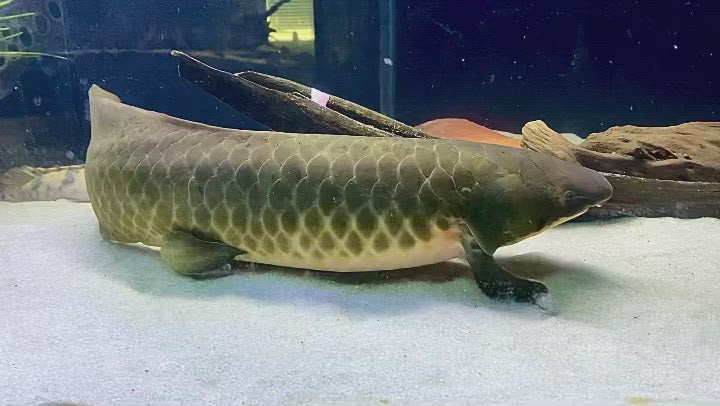
Why are lungfish so important to this story? They represent an extremely ancient branch of the vertebrate family tree and are the closest living relatives to tetrapods—the four-limbed vertebrates that include amphibians, reptiles, birds, and mammals. Modern species, like the Australian lungfish from Queensland, retain anatomical clues about the transition from water to land. Studying their ancient relatives allows scientists to pinpoint when and how key adaptations for terrestrial life, such as changes in skull structure, jaw mechanics, and potentially limb development, began to emerge.
The research from both Australia and China converges on this central theme. By analyzing the inner ear structures of Gogo lungfish and the detailed cranial anatomy of Paleolophus, scientists are building a more complete picture of the sensory and feeding systems of these early vertebrates. Understanding these systems is crucial, as the move to land required new ways to sense gravity, sound, and prey in a dramatically different environment.
Conclusion: Piecing Together the Evolutionary Puzzle
The combined insights from the Gogo Formation and the Yunnan fossil site are more than isolated discoveries; they are complementary pieces of a global evolutionary puzzle. They demonstrate how international collaboration and technological innovation—from CT scanners to advanced digital reconstruction—are revolutionizing paleontology. These studies do not just catalog ancient life; they actively decode the anatomical innovations that allowed vertebrates to conquer new frontiers. As research continues, each fossil fragment scanned and each skull reconstructed brings us closer to answering one of biology's most fundamental questions: how our distant ancestors took their first steps onto land. The work, acknowledging the traditional custodians of the Gogo land, the Gooniyandi community, reminds us that this history is written in the rocks of countries around the world, waiting to be read.