Read on the Guardian
US and Japan Forge $36 Billion Energy and Critical Minerals Partnership
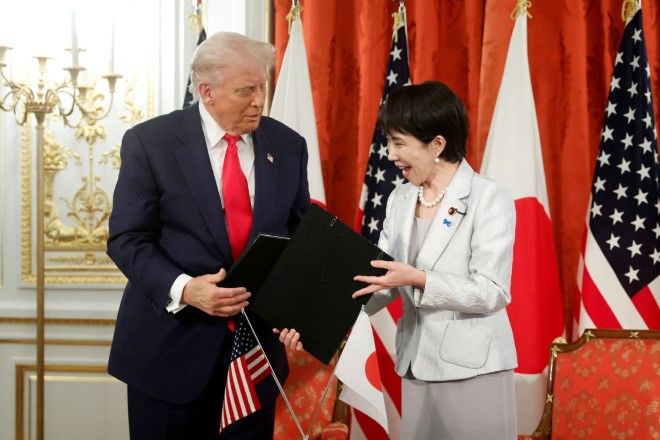
The United States and Japan have launched the first phase of a landmark economic security partnership, unveiling approximately $36 billion in joint investments across US oil, gas, and critical mineral projects. Announced by President Donald Trump and Prime Minister Sanae Takaichi, the initiative includes a massive natural gas power plant in Ohio and aims to reduce reliance on foreign supply chains, particularly from China. This deal represents the initial wave of a broader $550 billion commitment from Japan, strengthening bilateral ties amid ongoing geopolitical tensions in the Asia-Pacific region.
The geopolitical and economic landscape is witnessing a significant realignment as the United States and Japan solidify a strategic partnership centered on energy security and critical supply chains. The recent announcement of approximately $36 billion in Japanese investments across key US projects marks a pivotal step in this alliance, designed to counter foreign dependencies and bolster domestic industrial capacity. This article explores the details of this landmark deal, its strategic implications, and the broader context of US-Japan relations under the current administrations.
The $36 Billion Investment Package
The cornerstone of the newly announced partnership is a trio of major infrastructure and manufacturing projects. The largest of these is a natural gas-fired power plant in Portsmouth, Ohio. Billed by the Trump administration as the largest facility of its kind in US history, this plant is projected to generate 9.2 gigawatts of electricity annually and will be operated by SB Energy, a subsidiary of Japan's SoftBank Group. This project represents the bulk of the initial $36 billion commitment.
Complementing the energy project are investments in strategic materials. Japan will fund the development of a deepwater crude oil export facility off the coast of Texas, enhancing US energy export capabilities. Perhaps most strategically significant is the planned synthetic industrial diamond manufacturing site in Georgia, valued at around $600 million. This facility is designed to ensure the United States can produce all the synthetic diamond grit it needs domestically, a material critical for advanced manufacturing and semiconductor production.
Strategic Drivers and Geopolitical Context
The partnership is explicitly framed as a move to enhance "economic security" for both nations, a term frequently used by Prime Minister Takaichi. While not directly naming China in the announcement, the deal's focus on securing supply chains for critical minerals and reducing foreign dependence is a clear response to Beijing's dominance in these sectors. China controls a significant portion of the global market for rare earths and other critical minerals, essential for everything from electric vehicles to defense systems, and has previously used export restrictions as a geopolitical tool.
This initiative unfolds against a backdrop of heightened tensions between Japan and China, particularly concerning Taiwan. Prime Minister Takaichi's previous comments suggesting potential Japanese military involvement in a Taiwan contingency have angered Beijing, which has responded with restrictions on rare earth exports to Japan. The US-Japan deal, therefore, serves a dual purpose: strengthening the bilateral economic bond while creating a more resilient supply chain less vulnerable to geopolitical coercion.
Economic Mechanics and Controversies
This initial $36 billion represents the first tranche of a much larger $550 billion commitment Japan made under a broader trade agreement with the US last year. In return for these investments, the US agreed to reduce tariffs on key Japanese exports, including automobiles—a sector of vital importance to Japan's economy. President Trump has championed tariffs as a central tool of his trade policy, claiming "The scale of these projects are so large, and could not be done without one very special word, tariffs."
However, this approach has drawn criticism from some economists who warn that such protectionist policies could exacerbate inflationary pressures within the US economy. The administration counters that the investments will create American jobs, expand industrial capacity, and secure essential materials. Commerce Secretary Howard Lutnick emphasized the structure of the deal: "Japan is providing the capital. The infrastructure is being built in the United States. The proceeds are structured so Japan earns its return, and America gains strategic assets, expanded industrial capacity, and strengthened energy dominance."
Conclusion: A New Chapter in Alliance Economics
The $36 billion US-Japan investment package signifies a profound shift in how strategic allies are collaborating to address shared vulnerabilities. By directly linking capital, infrastructure, and trade policy, the two nations are building an economic bulwark against supply chain disruptions and foreign market dominance. While the long-term economic impacts and the efficacy of the tariff-for-investment model remain to be seen, the immediate effect is a substantial deepening of the US-Japan alliance. This partnership moves beyond traditional diplomacy into the realm of integrated industrial policy, setting a potential precedent for how democracies might collectively secure the foundational elements of their modern economies in an increasingly competitive world.