Read on PBS News
U.S. Announces Troop Reduction in Syria Amid Strategic Shift and Regional Tensions
The United States has announced a significant reduction of its military presence in Syria, marking a major policy shift as it transitions support from Kurdish forces to the Syrian government led by President Ahmed al-Sharaa. This consolidation of troops follows the closure of two U.S. bases and comes amid heightened tensions with Iran, which appears to be preparing for potential U.S. military action. The move raises questions about the future of counter-ISIS operations and regional stability in the Middle East.
The geopolitical landscape of the Middle East is undergoing a significant transformation as the United States announces a reduction of its military forces in Syria. This strategic shift represents a fundamental change in American foreign policy in the region, moving away from a decade-long partnership with Kurdish forces toward alignment with Syria's central government. The decision comes amid escalating tensions with Iran, creating a complex security environment that requires careful navigation by all regional actors.
The Strategic Shift in Syria
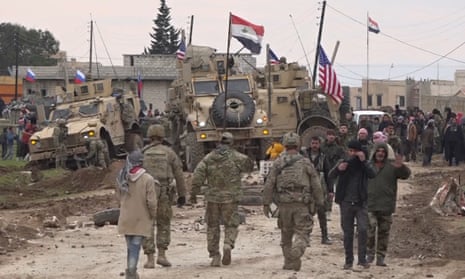
According to a senior Trump administration official who spoke with PBS NewsHour, the United States will reduce the number of troops who have been fighting ISIS in Syria. This announcement follows what the official described as "a major shift in U.S. policy in the country." The official stated that "the U.S. presence at scale is no longer required in Syria, given the Syrian government's willingness to take primary responsibility for combating the terrorist threat within its borders." This represents a significant departure from previous U.S. strategy, which relied heavily on partnership with Kurdish forces in northeastern Syria.
Military officials have clarified that this move constitutes a consolidation rather than a complete withdrawal. The approximately 1,000 U.S. troops stationed in Syria will be repositioned, with the final number and location dependent on the Syrian government's demonstrated capability to combat ISIS effectively. The United States has already announced the closure of two military bases in Syria as part of this consolidation effort.
Transition from Kurdish Partnership to Syrian Government Alignment
For the past decade, U.S. troops have fought ISIS alongside the mostly Kurdish Syrian Democratic Forces (SDF), who controlled much of northeastern Syria. Together, these forces liberated the region from ISIS control. However, the U.S. is now shifting its support to Syrian President Ahmed al-Sharaa's government. This transition has been marked by recent events where central government forces overran Kurdish positions, prompting the U.S. to withdraw support for the Kurds.
The commander in chief of the Syrian Democratic Forces, General Mazloum Abdi, has expressed serious concerns about this policy shift. Speaking at the Munich Security Conference, Abdi warned that "withdrawing American troops at this critical moment is not a good idea, as it will inevitably present inherent challenges, especially in the ongoing fight against terrorism." He emphasized that "the presence of the United States is very crucial for implementing existing agreements, achieving stability in Syria, and for the commitment of all parties to the agreements to continue."

Escalating Tensions with Iran
Simultaneously with the Syria policy shift, regional tensions have escalated significantly with Iran. According to reports, Iran appears to be bracing for a potential U.S. strike. This development comes amid ongoing negotiations between U.S. and Iranian officials regarding Iran's nuclear program. Recent diplomatic exchanges have revealed a significant impasse between the two nations.
Iran has reportedly made an offer that includes a pause in domestic uranium enrichment through the end of the first Trump administration, participation in a regional consortium for future enrichment, and the export or dilution of highly enriched uranium. In exchange, Iran seeks sanctions relief and openness to U.S. investment. The United States has countered with demands for Iran to permanently relinquish any domestic uranium enrichment capability.
Military Preparations and Diplomatic Stalemate
White House Press Secretary Karoline Leavitt recently commented on the negotiations, stating that "there was a little bit of progress made, but we're still very far apart on some issues." She noted that "the Iranians are expected to come back to us with some more detail in the next couple of weeks," indicating ongoing but difficult discussions.
Meanwhile, the United States has deployed significant military assets to the region, including what the president has described as "an armada" featuring the U.S.'s largest aircraft carrier and strike group, along with dozens of additional fighter jets. Analysts and former officials suggest that while the U.S. is capable of delivering a substantial military blow against Iran, it would face challenges defending itself and allies from a significant Iranian response.

Regional Implications and Future Outlook
The concurrent developments in Syria and Iran create a complex regional security picture. Alan Eyre, a former State Department official and current distinguished diplomatic fellow at the Middle East Institute, observes that Iran appears to be preparing for military confrontation despite ongoing negotiations. Eyre notes that "what they see is, any capitulation in the face of pressure will invite further aggression. What they're doing now is, they're getting ready to take a hit."
Iranian preparations reportedly include deploying troops across the country, dispersing decision-making authority, and fortifying nuclear sites—all indicators that analysts interpret as preparations for potential U.S. military action. These developments suggest that despite diplomatic efforts, the region may be heading toward increased confrontation.
The U.S. troop reduction in Syria represents not merely a tactical adjustment but a strategic realignment with far-reaching implications for regional stability, counter-terrorism efforts, and great power competition in the Middle East. As these dynamics continue to evolve, the international community will be closely monitoring how these policy shifts affect the delicate balance of power in one of the world's most volatile regions.