Read on the Guardian
The AI Sovereignty Imperative: Why Nations Must Embrace AI or Risk Economic Decline
Former UK Chancellor George Osborne, now leading OpenAI's international program, has issued a stark warning to global leaders: nations that fail to adopt advanced AI risk becoming 'weaker and poorer.' Speaking at the AI Impact Summit in Delhi, Osborne framed the choice as one between embracing US or Chinese AI systems or facing economic stagnation and brain drain. This article explores the geopolitical dynamics of AI adoption, the competing visions from the US and EU, and the emerging push from Global South nations to develop sovereign AI capabilities that serve their unique needs.
The global race for artificial intelligence supremacy is no longer just a technological competition—it's a fundamental question of national sovereignty and economic survival. As former UK Chancellor George Osborne starkly warned at the AI Impact Summit in Delhi, countries that hesitate to embrace powerful AI systems risk being left behind as "weaker and poorer" nations. Osborne, now head of OpenAI's "for countries" program, represents a new frontier where geopolitical influence is increasingly measured by AI capability and adoption.

Osborne's message to world leaders was unequivocal: "Don't be left behind." He argued that without proactive AI rollouts, nations could experience a workforce exodus, with talented individuals seeking "AI-enabled fortunes" elsewhere. This creates a dual challenge for countries outside the US-China AI duopoly—managing the fear of missing out (FOMO) on technological revolution while safeguarding national sovereignty when relying on foreign-controlled AI systems.
The Geopolitical AI Landscape: US vs. China Dominance
Osborne framed the current AI landscape as a binary choice for most nations: adopt systems developed either in the United States, exemplified by OpenAI's $500 billion valuation, or those emerging from China. These two superpowers have established early dominance in developing the most powerful AI systems, creating what some describe as a new form of technological colonialism.
The White House's position, articulated by senior AI adviser Sriram Krishnan at the same summit, reinforces this dynamic. Krishnan emphasized the Trump administration's desire for AI supremacy, stating plainly: "We want to make sure the world uses our AI model." This approach represents a stark contrast to regulatory frameworks emerging elsewhere, particularly in Europe.

Regulatory Divergence: The EU's Alternative Path
While the US pushes for technological dominance, the European Union has taken a different approach through its AI Act, which aims to establish comprehensive regulations for artificial intelligence development and deployment. Krishnan criticized these efforts, claiming the EU's regulatory framework "is not really very conducive to an entrepreneur who wants to build innovative technology."
This regulatory divergence highlights a fundamental tension in global AI governance: balancing innovation with safety, and national sovereignty with technological dependency. As European reliance on US tech grows, questions emerge about whether regulatory approaches can foster competitive AI ecosystems or merely cement existing power structures.
The Global South's Sovereign AI Ambitions
Perhaps the most significant development emerging from the Delhi summit is the growing assertion of sovereignty from Global South nations. Contrary to Osborne's binary framing, countries like Benin and Rwanda are charting alternative paths that reject simple US-China alignment.
Kevin Degila, overseeing AI and data at Benin's digital agency, articulated this perspective clearly: "For us, it's not a US or China thing. We are Africans and our job is to collaborate [with each other] to build our own AI." With 64 languages spoken among 15 million people, Benin represents the complex linguistic and cultural realities that mainstream AI systems often overlook.
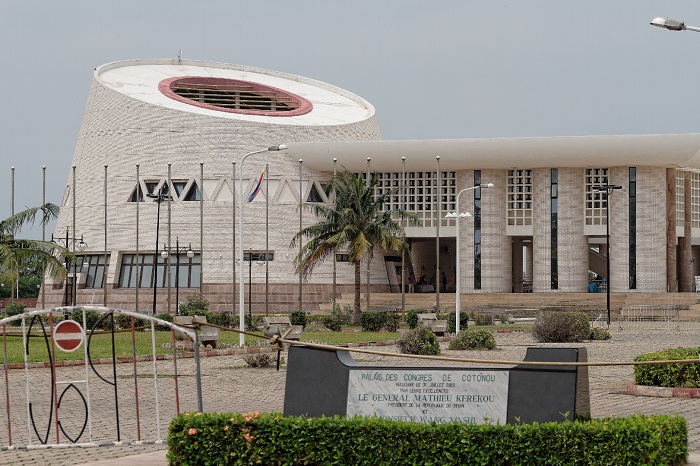
Rwanda's Minister of ICT and Innovation, Paula Ingabire, echoed this sentiment, describing her country's strategy of seeking partnerships "that are going to be progressively less necessary" to avoid being "locked into very dependent partnerships." These approaches represent a third way—neither wholesale adoption of foreign systems nor complete isolation, but strategic collaboration aimed at building sovereign capabilities.
The Economic Imperative and Workforce Dynamics
Osborne's warning about workforce mobility underscores a critical economic reality. In an increasingly connected world, talent follows opportunity, and AI represents perhaps the greatest economic opportunity of our generation. Countries that fail to create AI-enabled economies risk not just technological落后 but actual demographic decline as their most ambitious citizens seek opportunities elsewhere.
This creates a virtuous cycle for AI-leading nations and a vicious cycle for laggards. As Rishi Sunak, former UK Prime Minister and now adviser to Anthropic and Microsoft, noted at the summit: "AI needs to go to a centralised responsibility so we can realise the benefits." His call for political leaders to treat AI as an "'action this day' issue" rather than "tomorrow's issue" reflects the urgency of the situation.
Conclusion: Beyond Binary Choices
The future of global AI development appears more complex than the US-China binary suggests. While Osborne correctly identifies the risks of technological exclusion, the response from Global South nations demonstrates that alternative paths exist. The challenge for national leaders is navigating between the Scylla of technological dependency and the Charybdis of economic isolation.
Successful nations will likely be those that develop hybrid approaches—adopting and adapting foreign technologies while investing in sovereign capabilities tailored to local needs. As the AI revolution accelerates, the most enduring form of sovereignty may prove to be the capacity to shape technological development rather than simply choose between competing foreign systems. The nations that master this balance will define the next century of global economic and political power.