Read on France 24
UN Chief Warns Against Billionaire Control of AI, Proposes $3 Billion Global Fund
At a global AI summit in India, UN Secretary-General Antonio Guterres issued a stark warning about the concentration of artificial intelligence power. He argued that the future of this transformative technology cannot be dictated by "the whims of a few billionaires" and called for a collective, equitable approach. Guterres urged technology leaders to support a proposed $3 billion global fund aimed at ensuring open access to AI advancements for all nations, highlighting the risks of leaving such a powerful tool under the exclusive control of private tech tycoons.
In a powerful address to global technology leaders, United Nations Secretary-General Antonio Guterres has drawn a line in the sand on the governance of artificial intelligence. Speaking at a major AI summit in India, the UN chief delivered a stark warning about the dangers of concentrated power, declaring that the trajectory of one of humanity's most transformative technologies must not be subject to "the whims of a few billionaires." This statement underscores a growing international concern that the development and control of AI is becoming dangerously centralized within a small group of powerful tech corporations and their wealthy founders.
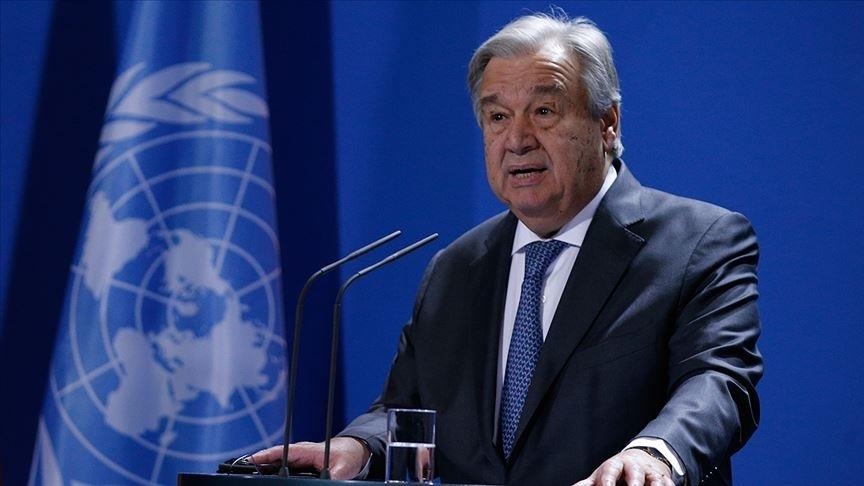
Guterres's warning comes at a critical juncture, as AI capabilities advance at a breathtaking pace with profound implications for global security, economic inequality, and social stability. The UN chief's message was clear: the immense benefits and equally significant risks of AI are too important to be managed by private interests alone. He emphasized that without proper oversight and inclusive governance, AI could exacerbate existing global divides, undermine democratic institutions, and create new forms of digital colonialism where a handful of nations and corporations dictate the technological future for the rest of the world.
The Call for a $3 Billion Global AI Fund
Moving beyond criticism, Guterres presented a concrete proposal to address the imbalance. He called on the world's technology tycoons to financially support a new $3 billion global fund. The primary objective of this initiative is to democratize access to AI, ensuring that developing nations and smaller entities are not left behind in the technological race. This fund would aim to build capacity, share knowledge, and provide the computational resources necessary for a more diverse range of countries and researchers to participate meaningfully in AI development and application.

The proposed fund represents a shift from purely market-driven AI development toward a model of global public good. By pooling resources, the international community could foster innovation that addresses pressing global challenges—such as climate change modeling, pandemic prediction, and sustainable agriculture—rather than innovations solely optimized for commercial profit. Guterres's appeal to tech leaders is a direct challenge to their stated commitments to ethical AI and social responsibility, testing whether their philanthropy will extend to fundamentally reshaping the power structures of the industry they dominate.
The Risks of Unchecked AI Concentration
The UN chief's warning highlights several specific risks associated with the current trajectory. First is the risk of bias and discrimination. AI systems trained on data and developed within the cultural and economic contexts of a few Western tech hubs may not serve, and could actively harm, populations in other parts of the world. Second is the threat to global security. Autonomous weapons and advanced cyber capabilities developed by private companies could fall into the wrong hands or be used in ways that destabilize international relations without any democratic accountability.
Finally, there is the economic risk of creating a permanent "AI divide." Nations and communities without access to cutting-edge AI tools could see their economies stagnate, their job markets disrupted by automation they did not help create, and their policy-making influenced by black-box algorithms they do not understand. Guterres's speech frames this not just as a technical issue, but as a fundamental question of power, justice, and the kind of future humanity wants to build.
The Path Forward: Multilateralism vs. Private Power
The summit in India serves as a crucial platform for this debate, positioning global governance as a counterweight to private control. The success of Guterres's proposed fund hinges on the willingness of both nation-states and private actors to cede some degree of control for the sake of stability and equity. It calls for a new form of multilateral cooperation specifically designed for the digital age, one that can set safety standards, ethical guidelines, and access frameworks that are binding and inclusive.
In conclusion, Antonio Guterres's intervention at the India AI summit marks a significant moment in the global conversation about technology's future. By challenging the dominance of "a few billionaires" and proposing a substantial global fund, he is advocating for a future where artificial intelligence serves all of humanity, not just the interests of a privileged few. The response from the tech industry and world governments to this $3 billion call to action will be a telling indicator of whether the AI revolution will be guided by collective human values or remain subject to the unchecked whims of private power. The stakes for global equality and security could not be higher.