Canada's Carney Champions Middle Powers Amid Global Uncertainty
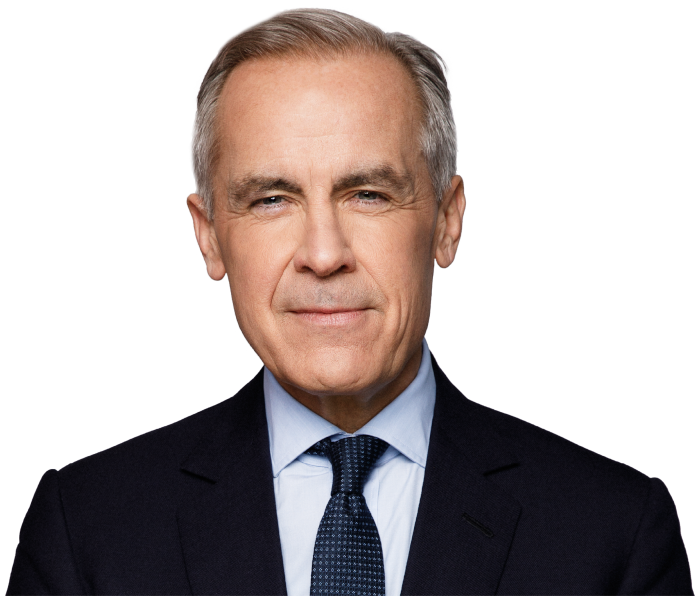
Canadian Prime Minister Mark Carney is actively rallying global 'middle powers' to forge new alliances in response to an increasingly unpredictable international climate. His strategy focuses on diversifying Canada's trade and security partnerships, particularly in the face of frictions with the United States under President Donald Trump. This approach includes new agreements with China and a push for deals with India, ASEAN, and Mercosur, while firmly asserting Canadian sovereignty.
In an era marked by shifting global power dynamics and the fraying of established international norms, Canadian Prime Minister Mark Carney is positioning his nation as a leader among the world's "middle powers." His strategy is a direct response to what he describes as an "unpredictable global climate," where traditional alliances are tested and economic sovereignty is paramount. This article examines Carney's recent diplomatic and trade maneuvers, his public critique of the fading "rules-based order," and Canada's assertive path forward in a landscape dominated by great power rivalry.
Diversifying Trade in the Face of US Friction
At the core of Prime Minister Carney's foreign policy is a concerted effort to diversify Canada's economic partnerships. This push comes amid ongoing and public tensions with the administration of US President Donald Trump. Carney recently hailed 12 new economic and security accords secured over the past six months, framing them as essential for national ambition and unity. "Our country is more united, ambitious and determined than it has been in decades, and it’s incumbent on all of us to seize this moment, build big things together," Carney stated during a meeting with provincial leaders.
The most prominent of these new agreements is one with China designed to lower trade levies. Carney clarified that this is not a free-trade agreement but a targeted deal expected to unlock over $7 billion in export markets for Canadian agricultural producers. This agreement, however, drew an immediate rebuke from President Trump, who threatened to impose a 100 percent tariff on Canadian goods, accusing Canada of becoming a "drop-off port" for Chinese products.
The Davos Doctrine: A Call to Middle Powers
The philosophical underpinning of Carney's approach was laid out in a landmark speech at the World Economic Forum in Davos. He directly challenged the notion of a functioning "rules-based" international order, declaring it a "fiction" that is fading. In its place, Carney warned, is "an era of great power rivalry," where "might makes right" and rules are applied asymmetrically. "We knew that international law applied with varying rigour depending on the identity of the accused or the victim," he told the global audience.
From this diagnosis, Carney issued a clarion call for middle powers—nations with significant influence but not superpower status—to rally together. This coalition would aim to create stability, uphold shared principles, and negotiate from a position of collective strength in an unpredictable world. The speech was widely interpreted as a pointed critique of Trump's unilateralist "America First" policies and his administration's aggressive use of tariffs.
Asserting Sovereignty and Navigating Tensions
Carney's "middle power" rallying cry and trade diversification are fundamentally linked to a robust defense of Canadian sovereignty. Tensions with the Trump administration extend beyond trade. Trump has repeatedly referred to Canada as a "state" and its prime minister as a "governor," rhetoric seen as undermining Canadian nationhood. Furthermore, reports that US State Department officials have met with the Alberta Prosperity Project, a group advocating for the western province's independence, have raised serious concerns in Ottawa.
In response to these pressures, Carney's stance has been unequivocal. When asked about the US meetings with Alberta separatists, he replied, "We expect the US administration to respect Canadian sovereignty. I’m always clear in my conversations with President Trump to that effect." This firm posture extends to security matters, with Carney pledging to work on renewing the critical Canada-United States-Mexico Agreement (CUSMA) through a joint review later in the year.

The Path Forward: Building New Alliances
Looking ahead, Carney's government has signaled its intent to advance trading relationships beyond its traditional partners. He specifically mentioned pursuing deals with "global giants" like India, the Association of Southeast Asian Nations (ASEAN), and the South American bloc Mercosur. This multi-pronged strategy seeks to reduce economic over-reliance on any single nation while positioning Canada as a pivotal connector between different regions and economic blocs.
This forward-looking agenda is not without significant challenges. It requires deft diplomacy to deepen ties with partners like China while managing the vital—if fraught—relationship with the United States. It also depends on maintaining domestic unity and economic resilience. However, by articulating a vision for middle-power collaboration and taking concrete steps to diversify alliances, Carney is charting a distinct course for Canada in a turbulent global era, one defined by principled engagement and assertive independence.