Alysa Liu's Golden Comeback: Ending a 24-Year U.S. Figure Skating Drought
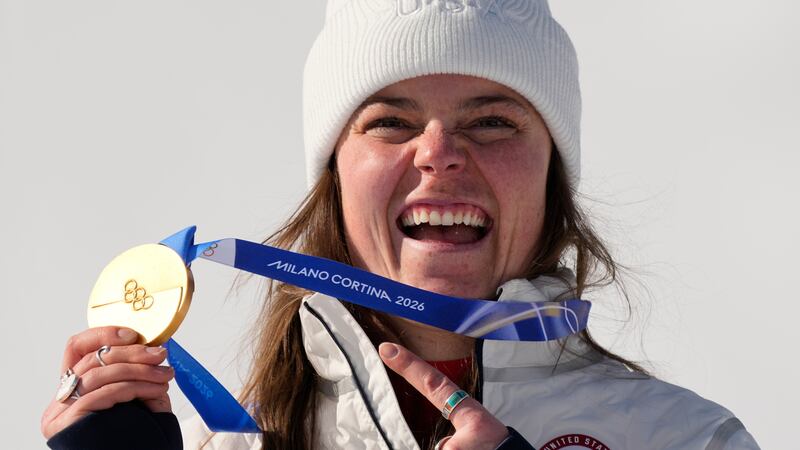
In a stunning performance at the 2026 Winter Olympics, American figure skater Alysa Liu captured the women's individual gold medal, ending a 24-year drought for the United States. Her flawless free skate, set to Donna Summer's 'MacArthur Park Suite,' combined technical perfection with unique artistry, capping an improbable comeback from a two-year retirement. Liu's victory, achieved with a total score of 226.79, highlights a journey defined by prioritizing mental health, personal creativity, and the joy of performance over competitive pressure.
The 2026 Winter Olympics in Milan witnessed a historic moment for American figure skating as Alysa Liu, a 20-year-old from California, soared to the top of the podium in the women's individual event. Her gold medal performance ended a 24-year wait for the United States, a drought stretching back to the 2002 Salt Lake City Games. Liu's victory was not merely a triumph of athletic skill but the culmination of a deeply personal journey—one that saw her walk away from the sport entirely only to return on her own terms, redefining success along the way.
The Historic Performance
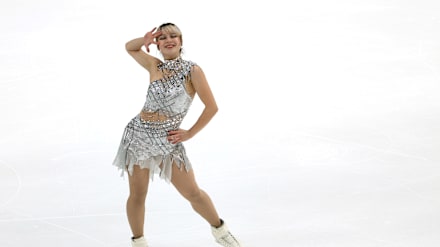
Entering the free skate in third place, behind Japan's Ami Nakai and Kaori Sakamoto, Liu faced formidable competition. Skating to Donna Summer's "MacArthur Park Suite"—the same program that secured her the world championship title in 2025—she delivered a performance described as "flawless" and "effortless." She opened with a confident triple flip, followed by a high-difficulty triple lutz-triple toe loop combination, immediately captivating the audience who began clapping along to the disco rhythm. Her technical score of 150.20 shattered her previous season's best, and her total of 226.79 propelled her into first place with only two skaters remaining.
As reported by ESPN, Liu's reaction was one of pure, unfiltered joy. After leaving the ice, she turned to a camera and exclaimed, "That's what I'm f---ing talking about!" She then celebrated wildly with her coaches, Phillip DiGuglielmo and Massimo Scali. Perhaps most telling was her demeanor while awaiting the final results. Seated in the leader's chair, she enthusiastically cheered for her competitors, later telling reporters, "I don't need this [medal]. But what I needed was the stage and I got that, so I was all good. No matter what happened."
The Improbable Comeback Journey
Liu's path to Olympic gold was anything but linear. A prodigy who became the youngest U.S. national champion at age 13 in 2019, she made her Olympic debut in 2022 in Beijing, finishing sixth. Shortly after, citing burnout, she announced her retirement from the sport. For the next two years, she embraced a normal teenage life, attending UCLA and spending time with friends.
The call of the ice, however, proved irresistible. A family ski trip reignited her passion for the thrill of winter sports, leading her to a public skating session and, ultimately, the decision to return. She reunited with coaches DiGuglielmo and Scali, who were initially skeptical given the rarity of successful comebacks after such a long hiatus. Liu was adamant, insisting that this time, her skating would be an expression of her own creativity. She demanded final say on everything from music and costumes to her training schedule, a level of autonomy rarely afforded to elite athletes.
A New Philosophy on Competition
This comeback was built on a foundation fundamentally different from her first career. Winning was deliberately de-emphasized. "We never actually had a goal of winning. We never said winning an Olympic gold medal," coach Phillip DiGuglielmo explained after the victory. "For her, it's all about showing her art, and the goal [for this season] was just to make the Olympic team."
Liu's priority was to experience a full Olympic Games, unlike the restricted 2022 event, and to perform her art for a live audience, including friends and family. This perspective allowed her to skate in Milan without the crushing weight of expectation. DiGuglielmo revealed that he and Scali had even shared a "pre-celebratory" toast with champagne before the free skate, content that any podium finish would be a monumental achievement. "[Saying] she has to win doesn't jibe with her values," he stated.

Impact and Legacy
Liu's victory resonated deeply within the figure skating community and beyond. Her teammate Amber Glenn, who delivered a redemptive free skate after a disappointing short program, stood in ovation during Liu's performance. Glenn highlighted the broader significance of Liu's journey: "Her story of taking a step back, mental health—I think it really attests to you never know what the journey to success is going to be. I really hope that can reach the skating community, that it's OK to take time."
Liu herself reflected on the meaning of her accomplishment, focusing on the narrative rather than the medal. "I think my story is more important than anything to me, and that's what I hold dear," she said. "And this journey has been incredible, and my life has just been—I have no complaints and I'm just so grateful for everything." Her gold medal was the second of the Games, having also won gold as part of the U.S. team event the previous week.
Conclusion
Alysa Liu's Olympic gold medal is a landmark achievement in U.S. sports history, breaking a 24-year drought in women's figure skating. Yet, its true legacy may be the powerful narrative it represents: that success can be redefined, that mental health and personal joy are valid priorities, and that an athlete's journey, with all its detours and personal growth, can be as valuable as the destination. Liu didn't just win a medal; she showcased a new, healthier paradigm for high-performance athletics, inspiring a generation to pursue their passion with authenticity and balance.