Tormod Frostad Secures Olympic Gold in Big Air Freeskiing with Historic Performance
Norwegian freeskier Tormod Frostad captured the gold medal in men's big air at the Milan Cortina 2026 Winter Olympics, defeating American rival Mac Forehand in a dramatic final decided on the last jump. Frostad's innovative approach, featuring previously unseen tricks, earned him victory in what participants called 'one of the greatest events ever' in the sport's history. The competition showcased exceptional athleticism and progression in freeskiing, with both athletes pushing the boundaries of what's possible on snow.
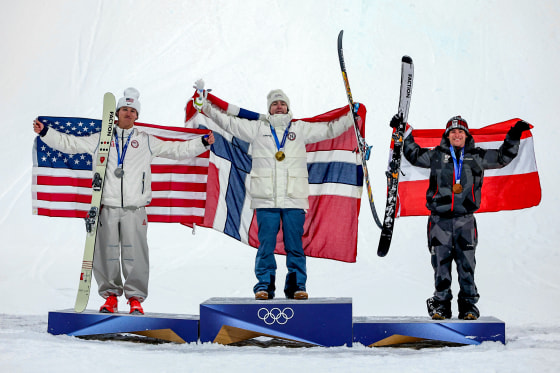
In a breathtaking display of athleticism and innovation, Norwegian freeskier Tormod Frostad claimed Olympic gold in the men's big air competition at the Milan Cortina 2026 Winter Games. The 23-year-old edged out American Mac Forehand by a mere 2.25 points in a high-scoring final that will be remembered as a landmark moment for the sport. The Tuesday night competition in Livigno, Italy, featured unprecedented tricks and near-perfect scores, demonstrating the rapid evolution of freeskiing on the world's biggest stage.

The Decisive Final Jump
The competition came down to the very last jump of the night, with Forehand having taken a temporary lead on the second-to-last attempt. This turned what appeared to be Frostad's victory lap into the most pressure-filled moment of his career. According to ESPN's coverage, Frostad responded with a flawlessly executed trick that secured his first Olympic gold medal with a final score of 195.50 points to Forehand's 193.25. Remarkably, both athletes' scores approached the maximum possible 200 points, indicating the exceptional quality of their performances.
Innovation Over Rotation
What set Frostad apart wasn't simply the number of rotations in his tricks, but rather his innovative approach to the sport. While Forehand focused on incredibly difficult spins and flips, including a final attempt he had "only recently joked about," Frostad took freeskiing in a new direction—literally. He performed tricks that had never been seen before on a big air jump, including what participants called a "butter double bio" that involved spinning forward off a ramp designed for backward rotations. This physics-defying approach demonstrated that progression in freeskiing extends beyond simply adding more rotations.
Historic Competition Context
The significance of this competition extends beyond the medal standings. Participants and observers alike recognized the event as a milestone in freeskiing history. Frostad himself reflected that despite challenging snowy conditions, "it ended up being like probably one of the greatest events ever." Forehand echoed this sentiment, emphasizing his gratitude simply to "walk away alive" from such an intense and dangerous competition. The American's perspective highlights the inherent risks in a sport where athletes push physical limits with each new trick.
Broader Implications for the Sport
This Olympic final demonstrated that freeskiing's evolution involves more than technical difficulty—it requires creativity, style, and innovation. As 2022 gold medalist Birk Ruud noted, Frostad's victory with previously unseen tricks proved that "progression is not just in the spinning." The competition also showcased strong American representation, with Konnor Ralph attempting a never-before-landed triple-cork 2160 (six full spins) and finishing fifth, while teammate Troy Podmilsak placed fourth. This collective performance marked the best overall showing by the United States in snowpark events at these Olympics.
Conclusion: A New Era in Freeskiing
Tormod Frostad's gold medal victory represents more than individual achievement—it signals a new direction for big air freeskiing. By prioritizing innovation and style over pure rotational count, Frostad has expanded the sport's creative possibilities. His performance, along with Forehand's exceptional silver-medal showing, has elevated competitive standards and inspired the next generation of freeskiers. As the sport continues to evolve, this Olympic final will be remembered as a turning point where creativity and technical precision converged to create something truly extraordinary.