Ukrainian Athlete Barred from Olympics Over Memorial Helmet Protest
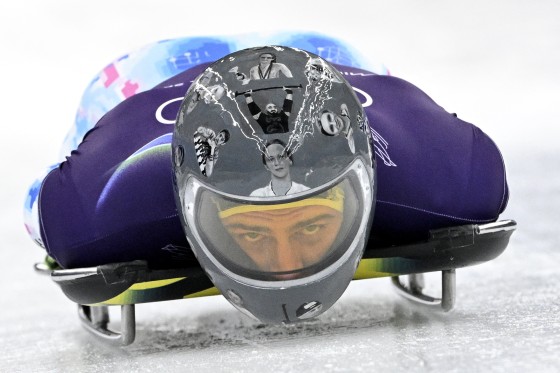
Ukrainian skeleton athlete Vladyslav Heraskevych, a medal contender at the 2026 Winter Olympics, was disqualified from competition after refusing a last-minute IOC request to not wear a helmet honoring over 20 Ukrainian athletes and coaches killed in the war with Russia. The International Olympic Committee and International Bobsled and Skeleton Federation deemed the helmet a violation of rules against on-field political statements, despite offering alternative commemorative gestures. The decision has sparked condemnation from Ukrainian officials and athletes, highlighting ongoing tensions between the Olympic movement's neutrality and athletes' desire to honor victims of conflict.
The 2026 Winter Olympics in Milan Cortina have been thrust into a geopolitical controversy following the disqualification of Ukrainian skeleton athlete Vladyslav Heraskevych. The likely medal contender was barred from competition after refusing a last-minute plea from the International Olympic Committee (IOC) to not wear a helmet honoring more than 20 Ukrainian athletes and coaches killed since Russia's invasion of Ukraine four years earlier. This incident represents a significant clash between Olympic regulations and an athlete's personal expression of remembrance, raising fundamental questions about where the line is drawn between political statement and humanitarian tribute in international sports.
The Disqualification Decision
The International Bobsled and Skeleton Federation (IBSF) announced Heraskevych's disqualification approximately 45 minutes before the start of competition, concluding a three-day standoff. According to the federation, Heraskevych's decision to wear the memorial helmet was "inconsistent with the Olympic Charter and Guidelines on Athlete Expression." The athlete had been permitted to wear the helmet during training sessions, but the IOC requested he wear a different helmet during actual races, offering concessions such as wearing a black armband or displaying the helmet once off the ice.
Heraskevych maintained that his actions did not violate Olympic rules, stating, "I believe, deeply, the IBSF and IOC understand that I'm not violating any rules." He expressed frustration at what he perceived as inconsistent application of regulations, noting, "It really looks like discrimination because many athletes already were expressing themselves. ... They didn't face the same things. So, suddenly, just the Ukrainian athlete in this Olympic Games will be disqualified for the helmet."
Failed Negotiations and Emotional Aftermath
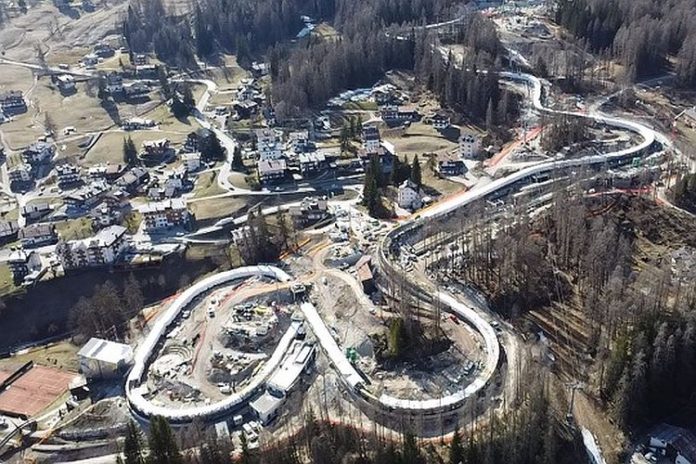
IOC President Kirsty Coventry, originally scheduled to attend Alpine skiing events, instead traveled to the sliding center to meet with Heraskevych personally. The Olympic champion swimmer waited at the top of the track and engaged in approximately 10 minutes of private discussion with the Ukrainian athlete, but was unable to change his position. "We didn't find common ground in this regard," Heraskevych confirmed after the meeting.
The emotional toll of the failed negotiations was visibly evident, with tears rolling down Coventry's face as she addressed the media. "As you've all seen over the last few days, we've allowed for Vladyslav to use his helmet in training," Coventry explained. "No one, no one -- especially me -- is disagreeing with the messaging. The messaging is a powerful message. It's a message of remembrance. It's a message of memory, and no one is disagreeing with that. The challenge that we are facing is that we wanted to ask or come up with a solution for just the field of play."

Legal Appeals and Olympic Aftermath
Following his disqualification, Heraskevych filed an appeal with the Court of Arbitration for Sport (CAS), requesting a response by Friday. However, with the competition's first two runs completed on Thursday and the final two scheduled for Friday, any potential remedy from CAS would come too late for Heraskevych to compete in these Games. The IOC permitted him to retain his athlete credential, allowing him to remain at the Olympics as a non-competing participant.
The controversy occurs against the backdrop of approximately a dozen Russian athletes competing as neutral individuals alongside seven Belarusians, all without national flags or anthems. Heraskevych has been vocal about his opposition to their participation, stating the IOC's decision "plays along with Russian propaganda."
International Reactions and Athlete Solidarity
The decision drew immediate condemnation from Ukrainian leadership and fellow athletes. Ukrainian President Volodymyr Zelenskyy wrote on social media, "Sport shouldn't mean amnesia, and the Olympic movement should help stop wars, not play into the hands of aggressors. Unfortunately, the decision of the International Olympic Committee to disqualify Ukrainian skeleton racer Vladyslav Heraskevych says otherwise."
Ukrainian athletes demonstrated solidarity during the luge team relay Thursday night, with all six sliders taking a knee after crossing the finish line and hoisting their plain white helmets skyward in support of Heraskevych. Ukrainian skier Kateryna Kotsar posted on Instagram, "Disqualified. I think that's enough to understand what the modern IOC really is and how it disgraces the idea of the Olympic movement. Vladyslav Heraskevych, for us and for the whole world, you're a champion. Even without starting."
Historical Context and Inconsistency Concerns
Heraskevych pointed to what he views as inconsistencies in the IOC's application of expression rules. He noted that during the 2022 Beijing Olympics, when he displayed a "No war in Ukraine" sign after his final run, the IOC determined he was simply calling for peace and did not violate the Olympic Charter. He also referenced U.S. figure skater Maxim Naumov bringing a photo of his late parents—former pairs world champions killed in a 2025 plane crash—to the kiss-and-cry area in Milan, and Israeli skeleton athlete Jared Firestone wearing a kippah bearing the names of 11 Israeli athletes and coaches killed in the 1972 Munich attack during the opening ceremony.
"A competitor literally placed the memory of the dead on his head to honor them," Heraskevych wrote on Instagram. "I frankly do not understand how these two cases are fundamentally different." Firestone responded simply, "I think he's a man with strong values."
Olympic Principles and Rule Enforcement
IOC spokesperson Mark Adams defended the decision, emphasizing the necessity of consistent rule enforcement. "If athletes were allowed to display messaging without restrictions on the field of play, that would lead to a chaotic situation," Adams stated. "Sport without rules cannot function. ... If we have no rules, we have no sport."
This incident highlights the ongoing tension between the Olympic movement's commitment to political neutrality and athletes' desire to use their platform for personal and national expression. The IOC's guidelines on athlete expression, established to prevent the Games from becoming a platform for political protests, are being tested by conflicts that many athletes view as humanitarian rather than purely political.
Conclusion: The Cost of Principle
Vladyslav Heraskevych's disqualification represents more than just the loss of a potential Olympic medal. It symbolizes the difficult choices athletes face when personal conviction conflicts with institutional regulations. Heraskevych, who placed fourth at last year's world championships and showed strong form in Olympic training, chose principle over competition, stating that the helmet "mattered more" than a potential medal.
His coach and father, Mykhailo Heraskevych, captured the family's sentiment: "The International Olympic Committee destroyed our dreams. It's not fair." As the Olympic movement continues to navigate the complex intersection of sports, politics, and personal expression, this incident will likely fuel ongoing debates about how international sporting bodies should respond to athletes' desires to honor victims of conflict while maintaining the Olympic ideal of peaceful competition.