NCAA Tournament 2026: Ranking the Contenders from Title Favorites to Cinderellas
As the 2025-26 men's college basketball season enters its critical stretch, the landscape of NCAA tournament contenders is coming into focus. ESPN analysts have distilled the field into six distinct tiers, identifying three national championship favorites, nine Final Four threats, and 35 additional teams capable of winning tournament games. This analysis, based on comprehensive team performance and emerging trends, provides a clear hierarchy for March Madness expectations, from the dominant Arizona Wildcats to potential Cinderella stories like the undefeated Miami (Ohio) RedHawks.
The road to Indianapolis and the 2026 NCAA Men's Basketball Final Four is heating up, and the hierarchy of contenders is becoming clearer with each passing week. Based on a detailed analysis of team performance, roster strength, and season trajectory, ESPN's Jeff Borzello and Myron Medcalf have categorized the nation's top teams into six distinct tiers. This framework identifies three elite national title favorites, nine legitimate Final Four contenders, and a broad field of 35 additional squads with the potential to make noise in March Madness.

Tier I: The National Championship Favorites
At the pinnacle of college basketball sit three teams that have separated themselves as the clear favorites to cut down the nets. The Arizona Wildcats (21-0) have been utterly dominant, boasting a perfect record and a road win over UConn that announced their championship credentials. Coach Tommy Lloyd has crafted a balanced team with elite defense, led by perimeter anchors Jaden Bradley and Brayden Burries and a formidable frontcourt of Koa Peat, Motiejus Krivas, and Tobe Awaka.
The Michigan Wolverines, under first-year coach Dusty May, have overwhelmed opponents with their size and pace, starting three players 6-foot-9 or taller. Despite suffering their first loss in early January, their historically impressive performances, including a 40-point win over Gonzaga, keep them in this elite category. The UConn Huskies round out the top tier. While their efficiency metrics may not match the other two, Dan Hurley's squad is battle-tested from a brutal non-conference schedule and, now at full health, possesses the depth, size, and shot-making reminiscent of their 2023 and 2024 title teams.
Tier II: The Final Four Contenders
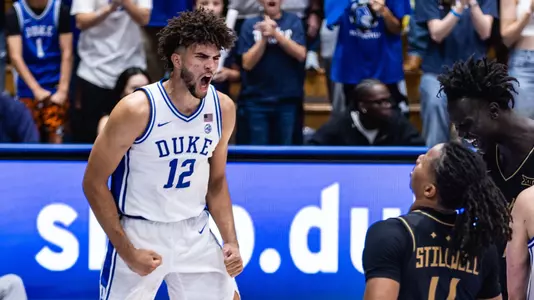
This group of nine teams possesses the high-end talent and coaching to make a deep March run, though they may have more discernible flaws than the top tier. Duke is led by Cameron Boozer, who is statistically rivaling the greatest seasons in Blue Devil history. Nebraska has been the season's surprise, transforming from a 7-13 Big Ten team into a 20-win powerhouse, fueled by Pryce Sandfort's breakout performances.
Other key players define this tier: Houston's freshman sensation Kingston Flemings, Purdue's nation-leading assist man Braden Smith, and Iowa State's dynamic duo of Tamin Lipsey and Player of the Year contender Joshua Jefferson. Gonzaga hopes for the return of injured big men Graham Ike and Braden Huff to bolster an already stout defense, while Texas Tech relies on the potent combination of JT Toppin and Christian Anderson. BYU and Illinois round out this group, each featuring elite individual talent like AJ Dybantsa and Keaton Wagler, respectively, that can carry a team in tournament settings.
The Broader Field: Teams Built to Win Games
Beyond the top 12, a large group of teams has demonstrated the capability to win NCAA tournament games. Tier III consists of second-weekend threats like Kansas (when Darryn Peterson is healthy), Michigan State, and Vanderbilt, though each has a glaring weakness that could halt an Elite Eight run.
Tier IV is the most volatile group, labeled "Final Four or first-round exit?" Teams like St. John's, Kentucky, and North Carolina have shown both a high ceiling and a troubling floor. Their tournament fate is the most unpredictable. Tier V is a deep collection of 17 teams that have flashed tournament-winning potential. This includes squads with signature wins (Auburn over Florida, Wisconsin over Michigan), elite individual stars (Iowa's Bennett Stirtz, Ohio State's Bruce Thornton), and programs with strong March pedigrees (Saint Mary's, San Diego State).

Tier VI: The Potential Cinderellas
Every March needs its Cinderella stories, and six teams stand out as potential double-digit seeds capable of an upset. Leading the pack are the undefeated Miami (Ohio) RedHawks (21-0), who rank in the top-20 nationally in both two-point and three-point shooting percentage. McNeese, under first-year coach Bill Armstrong, forces turnovers on a remarkable 25% of opponent possessions.
Other dangerous mid-majors include Murray State, led by standout guard Javon Jackson, UNC Wilmington with its exceptional depth, Liberty and its nation's second-best field goal percentage, and Yale, which connects on 41% of its three-point attempts. As history has shown over the past three tournaments, at least a few teams from this group will likely send a high-major favorite home early.
Conclusion: A Wide-Open Race to Indianapolis
The 2026 NCAA tournament landscape is shaping up to be both top-heavy and deeply competitive. While Arizona, Michigan, and UConn have established themselves as the teams to beat, a large contingent of contenders from Tiers II through V possesses the talent and coaching to challenge them on any given night. Furthermore, the presence of several strong mid-major programs in Tier VI ensures the first weekend will be filled with potential upsets. As conference play intensifies, these tiers will continue to evolve, but one thing is clear: the path to the national championship will be fiercely contested by a broad and talented field of contenders.