Read on France 24
Vladimir Medinsky: The Historian Shaping Russia's Narrative at Ukraine Peace Talks
Vladimir Medinsky, Russia's lead delegate in the latest Geneva peace talks with Ukraine, is more than a presidential aide. As an ultraconservative historian and former culture minister, he has systematically rewritten Russia's historical narrative to justify the invasion of Ukraine. His return to the negotiating table signals Moscow's intent to frame the conflict through an ideological lens of Russian nationalism and civilizational struggle, rather than purely territorial disputes. This article examines Medinsky's background, his role in shaping state-sanctioned history, and what his leadership means for the prospects of a diplomatic resolution.
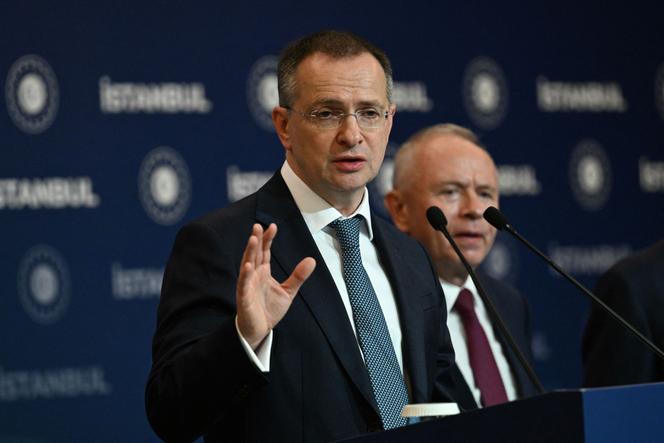
The resumption of US-brokered peace talks between Russia and Ukraine in Geneva has brought a familiar figure back to the forefront of international diplomacy: Vladimir Medinsky. As the head of Moscow's delegation, Medinsky represents not just the Kremlin's political interests but also its ideological battleground. A presidential aide and former minister of culture, Medinsky has spent years reconstructing Russia's historical narrative to support its current geopolitical ambitions. His presence at the negotiating table suggests that for Russia, the conflict in Ukraine is as much about historical legitimacy and civilizational identity as it is about territory and security.
From Toy Soldiers to Peace Negotiations
Vladimir Medinsky's fascination with military conflict began in childhood. Growing up in Smila, Ukraine, during the 1970s, he meticulously crafted paper soldiers and orchestrated elaborate battles on hand-drawn maps. This early hobby foreshadowed a career dedicated to interpreting and weaponizing history. Denied entry to a military academy due to poor eyesight, Medinsky pursued journalism at the prestigious Moscow State Institute of International Relations. Despite being a model student in the Communist Party's youth organization, he participated in the 1991 demonstrations defending Boris Yeltsin against a hardline coup attempt—an experience that coincided with the Soviet Union's collapse.
Architect of Russia's Nationalist Narrative
Following the Soviet dissolution, Medinsky co-founded a successful PR firm before entering politics under Vladimir Putin's rising administration. He gained prominence through his three-volume series "Myths About Russia," which sought to debunk what he characterized as centuries of foreign misinformation and prejudice against the Russian nation. His academic work, including a controversial doctorate in medieval history, consistently argued that Western historians maintained systemic bias against Russia. According to Maria Falina, a specialist in modern Eastern European history at Utrecht University, Medinsky embodies the Kremlin's vision of Russia as a civilizational alternative to the Western liberal order.
Weaponizing Culture and Education
Medinsky's appointment as Minister of Culture in 2012 marked a turning point, granting him state authority to promote a singular, patriotic narrative across all cultural productions. He championed films, theater, and exhibitions that glorified the Russian state across all historical periods, from medieval times through the Soviet era. As head of the Russian Military Historical Society, he organized youth camps emphasizing military glory. His most significant impact came in 2023 with the nationwide rollout of a new high school history textbook, partially authored by Medinsky himself. The textbook presents a revisionist account that praises Joseph Stalin, justifies the invasion of Ukraine as a continuation of the fight against Nazism, and suppresses critical perspectives on Russia's past.
Medinsky's Role in Peace Talks
Medinsky's return to lead the Geneva delegation after an absence from earlier rounds in Abu Dhabi carries specific implications. Analysts like Falina suggest that when Medinsky heads the delegation, Russia aims to emphasize political ideology and civilizational positioning. His approach reportedly involves lengthy historical lectures that frame the Ukraine conflict within a centuries-old struggle for Russian sovereignty and respect. This contrasts with delegations led by military or security officials, which tend to focus on technical details like territory and security guarantees. Medinsky's rhetoric during talks has been uncompromising, famously referencing Russia's 21-year war with Sweden to question Ukraine's endurance.
Implications for Diplomacy and Historical Truth
The central challenge Medinsky presents to the peace process is his conflation of historical narrative with current political demands. By insisting on a version of history that legitimizes Russian expansionism, he makes compromise difficult. His career demonstrates a consistent pattern: historical myths, even when debunked by evidence, are defended as "sacred legends" essential for national cohesion. This approach prioritizes ideological victory over factual reconciliation. For Ukraine and its allies, negotiating with Medinsky means engaging not just with Russia's territorial claims but with its foundational historical assertions—a layer of complexity that has contributed to the failure of previous talks and the prolongation of the war.
In conclusion, Vladimir Medinsky's leadership of Russia's peace delegation underscores that the Kremlin views the Ukraine conflict through a deeply ideological lens. His life's work—rewriting textbooks, controlling cultural narratives, and promoting a militant patriotism—has prepared him to use diplomacy as another arena for advancing a nationalist historical vision. As long as Medinsky represents Moscow, any potential agreement will likely require acknowledging Russia's constructed historical narrative, posing a significant obstacle to a peace based on mutual recognition of sovereignty and factual history. The talks in Geneva are thus not merely about ceasefires and borders, but about competing truths and the power to define the past to control the future.