Read on Global News
Trump Orders Reopening of Venezuelan Airspace, Signaling Diplomatic Shift
In a significant policy reversal, former U.S. President Donald Trump announced on January 29, 2026, that he has instructed officials to reopen all commercial airspace over Venezuela, allowing American citizens to travel there 'very shortly.' This move follows the U.S. military raid that ousted former President Nicolás Maduro and represents a major step toward restoring diplomatic relations, which collapsed in 2019. The announcement includes plans for American Airlines to resume service, though the State Department's highest-level travel advisory remains in effect, highlighting the complex security landscape.
In a dramatic shift in U.S. foreign policy, former President Donald Trump announced on January 29, 2026, that he has directed the reopening of Venezuela's commercial airspace to American travel and commerce. This decision, communicated directly to acting Venezuelan President Delcy Rodríguez, reverses a closure imposed months earlier and signals a potential thaw in relations following the U.S. military operation that removed socialist leader Nicolás Maduro from power. The move represents a critical step in what the Trump administration describes as a "phased approach" to potentially resuming full diplomatic operations in Caracas.

The Announcement and Immediate Instructions
Speaking during a cabinet meeting at the White House, Trump stated he had instructed U.S. Transportation Secretary Sean Duffy and U.S. military leaders to execute the reopening by the end of the day. "American citizens will be very shortly able to go to Venezuela, and they’ll be safe there," the Republican president asserted, as reported by The Associated Press. The Venezuelan government did not provide an immediate public response to the announcement, leaving questions about coordination and on-the-ground security arrangements unanswered at the time of the statement.
Context: From Closure to Reopening
This policy reversal comes just months after Trump declared the airspace "above and surrounding" Venezuela "closed in its entirety" in November, as he ramped up pressure on the Maduro regime. Following that declaration, the U.S. Federal Aviation Administration (FAA) issued warnings to pilots about heightened military activity, leading international airlines to cancel flights. The diplomatic relationship between the two nations had completely collapsed in 2019, prompting the U.S. State Department to shutter its embassy in Caracas and issue its highest-level travel advisory, warning Americans against any travel due to risks of wrongful detention, kidnapping, and violence.
Diplomatic Thaw and Embassy Plans
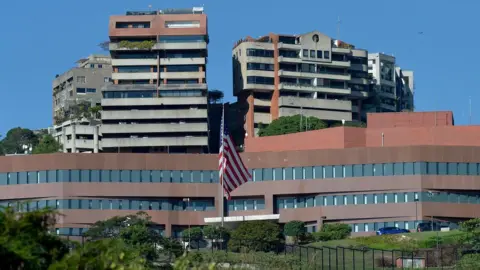
The airspace reopening is part of a broader diplomatic initiative. Earlier in the same week, the Trump administration notified Congress it was taking initial steps to potentially reopen the U.S. Embassy in Venezuela. In letters to congressional committees, the State Department outlined its intent to implement a "phased approach" and was sending a growing contingent of temporary staff to conduct select diplomatic functions. This notification, dated Monday and obtained by The Associated Press, marks the first official movement toward restoring a formal diplomatic presence since relations broke down.
Commercial Response and Travel Advisory Paradox
Reacting to the political shift, American Airlines announced its intention to reinstate nonstop service from the U.S. to Venezuela in the coming months. The airline, which had been the last U.S. carrier serving Venezuela before suspending flights in March 2019, stated it was working with federal authorities on security assessments. "We have a more than 30-year history connecting Venezolanos to the U.S., and we are ready to renew that incredible relationship," said Nat Pieper, American's chief commercial officer. However, a significant contradiction remains: as of Trump's announcement, the State Department's travel advisory for Venezuela was still listed at Level 4: "Do Not Travel," its most severe warning. The department did not immediately clarify if this warning would be amended, creating uncertainty for prospective travelers.
Analysis and Implications
The decision to reopen airspace is a powerful symbolic and practical step in normalizing relations with a post-Maduro Venezuela. It facilitates not only family reunifications and tourism but also the flow of business and commerce, which the administration likely views as essential for stabilizing the country. However, the move is not without risk. The persistence of the State Department's dire travel advisory underscores the potentially volatile security situation that may not have been fully resolved by the change in leadership. The success of this policy will depend on the Venezuelan government's ability to guarantee safety and on the detailed security protocols established between U.S. transportation, military, and diplomatic officials. This development opens a new, uncertain chapter in U.S.-Venezuela relations, with significant implications for regional geopolitics and the lives of citizens in both nations.