Read on PBS News
Global News Wrap: Extreme Weather, Geopolitical Shifts, and International Developments
A confluence of significant events unfolded on Thursday, spanning severe weather emergencies, high-stakes diplomacy, and major international policy decisions. This news wrap covers the National Weather Service's warnings of dangerously cold temperatures sweeping the eastern United States, President Trump's diplomatic intervention regarding Ukraine, and the European Union's landmark designation of Iran's Revolutionary Guard as a terrorist organization. These developments highlight the interconnected nature of climate, conflict, and global governance.
Thursday's headlines presented a stark reminder of the multifaceted challenges facing the global community, from natural disasters to geopolitical maneuvering. A series of significant developments unfolded simultaneously, each carrying profound implications for public safety, international relations, and human rights. This analysis provides a concise overview of the key events, synthesizing information from the latest reports to offer a clear picture of the day's most critical news.
Severe Winter Weather Threatens Eastern United States
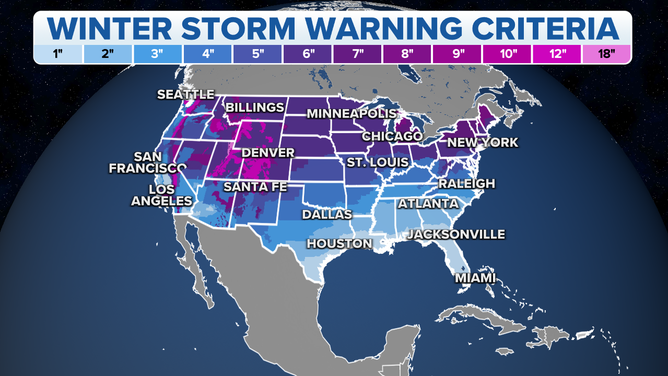
National weather officials issued urgent warnings of dangerously cold temperatures expected to impact large portions of the eastern United States heading into the weekend. Winter advisories were activated across a vast region stretching from Texas to Maine, with particular concern for states in the South Atlantic facing the potential for additional heavy snowfall. The situation has already proven deadly, with the death toll from the ongoing frigid conditions rising to at least 85 people according to recent reports from PBS NewsHour.
Emergency response efforts are underway across multiple states. In Mississippi, crews have been working to repair icy power lines, employing unconventional methods including helicopter access to reach damaged infrastructure. The state has also mobilized the National Guard to assist with road clearance operations, five days after a massive storm initially struck. Community support networks have activated in response to the crisis, with scenes like those in Nashville where over 100 people lined up outside a church to receive essential food items, highlighting the widespread impact of the severe weather event.
Diplomatic Developments: Ukraine and Venezuela
In a notable diplomatic development, President Donald Trump revealed during his first Cabinet meeting of the new year that he asked Russian President Vladimir Putin to refrain from striking Ukraine's capital, Kyiv, for one week due to the extreme cold weather affecting the region. Ukraine has been experiencing one of its coldest winters in years, and previous Russian strikes have repeatedly disrupted heating systems for thousands of civilians. President Trump stated that Putin agreed to this request, though the Kremlin has not officially confirmed this arrangement.
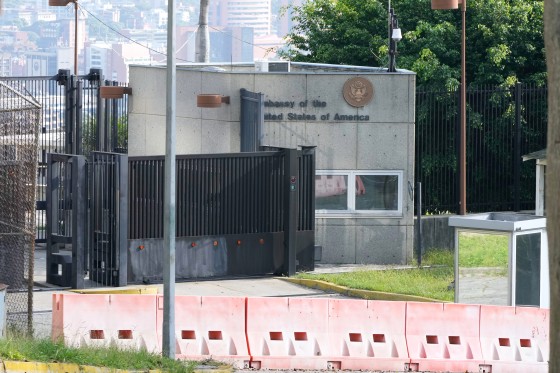
Simultaneously, the Trump administration announced plans to reopen Venezuela's airspace to commercial traffic, with the president suggesting Americans would soon be able to visit the country. Venezuela's government has not yet commented on this development. Following the announcement, American Airlines indicated it would aim to restart service to Venezuela in the coming months. The carrier was previously the largest U.S. airline operating in Venezuela before flights were suspended in 2019. In a related domestic development, Venezuela's National Assembly approved measures to open the nation's oil sector to privatization, marking a significant shift from the state-controlled model that has defined the country's socialist movement for over two decades.
European Union Designates Iran's Revolutionary Guard as Terrorist Organization
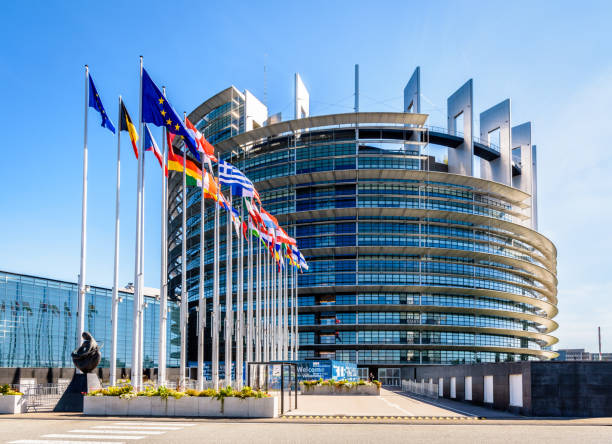
The European Union took a decisive stance against Iran's government by officially listing the Islamic Revolutionary Guard Corps (IRGC) as a terrorist organization. This designation follows Tehran's violent crackdown on protests that activists say has resulted in more than 6,400 deaths. The move aligns the E.U. with the United States and Canada, which had previously designated the IRGC as a terrorist entity. In response to the designation, Iran's foreign ministry condemned the decision as "illegal and unjustified."
The 27-nation bloc also imposed sanctions on 21 Iranian officials and organizations concurrently with the terrorist designation. E.U. Foreign Policy Chief Kaja Kallas emphasized the severity of the regime's actions, stating, "Repression cannot go unanswered" and that "if you are suppressing people, it has a price." In a potentially escalatory development, Iranian state media reported that the country plans to conduct live-fire shooting drills in the strategically vital Strait of Hormuz next week, which could disrupt traffic in the waterway through which approximately 20% of the world's oil passes.
Additional National and International Developments
Several other significant stories emerged on Thursday. In Illinois, former sheriff's deputy Sean Grayson was sentenced to 20 years in prison for fatally shooting Sonya Massey, a Black woman who had called 911 for help reporting a possible intruder. The 31-year-old white officer apologized during sentencing, acknowledging he "made terrible decisions that night." The killing had prompted protests over systemic racism in police encounters.
In sports, gymnast Jordan Chiles moved closer to potentially reclaiming a disputed bronze medal from the 2024 Paris Olympics after Switzerland's highest court sent the case back to the Court of Arbitration for Sport to examine new evidence. The case involves a scoring controversy where Chiles' third-place finish on floor exercise was overturned after Romania claimed the American team didn't file a challenge within the required timeframe.
Economically, data revealed the U.S. trade deficit widened by the most in over three decades in November, representing a sharp reversal from prior months when the deficit had shrunk amid President Trump's tariff policies. Wall Street experienced volatility with mixed results: the Dow Jones industrial average gained approximately 55 points while the Nasdaq lost more than 170 points.
Cultural Preservation and Community Loss
The Library of Congress added 25 classic films to the National Film Registry for preservation due to their "cultural, historic or aesthetic importance." The selections ranged from the iconic 1990s comedy "Clueless" to Wes Anderson's "The Grand Budapest Hotel" (2014) and the silent film "The Tramp and the Dog" from 1896. Four documentaries also joined the registry, including Ken Burns' 1981 film "Brooklyn Bridge."
The news community also mourned the loss of Shirley Raines, known to millions on TikTok as Ms. Shirley, who died at age 58. Raines founded the nonprofit Beauty 2 The Streetz, through which she helped feed and care for homeless populations on Skid Row in Los Angeles and elsewhere in California and Nevada. Her organization noted she "used her powerful media platform to bring dignity, resources and hope to some of the most underserved populations."
Thursday's developments collectively illustrate the complex interplay between environmental crises, international diplomacy, human rights, and cultural preservation. From life-threatening weather conditions to significant geopolitical decisions, these events underscore the ongoing challenges facing governments and communities worldwide, while also highlighting moments of judicial accountability, athletic perseverance, and cultural recognition that define the contemporary global landscape.