Read on the Guardian
Palau's Political Crossroads: Blocking a Controversial US Migrant Resettlement Deal
The small Pacific nation of Palau faces a critical political decision after its senate voted to block a controversial agreement with the Trump administration to resettle up to 75 third-country nationals facing removal from the United States. Signed by President Surangel Whipps Jr. in December, the deal is part of a broader $9.5 million assistance package but has sparked significant domestic opposition from traditional leaders and lawmakers concerned about social cohesion and national capacity. The future of the arrangement now rests with Palau's lower house and the president, amid calls for a public referendum.
The geopolitical landscape of the Pacific is witnessing a significant diplomatic and domestic challenge as the Republic of Palau grapples with a contentious agreement proposed by the United States. A deal, initiated under the Trump administration, to resettle a limited number of migrants from the US to Palau has hit a major legislative roadblock, casting its future into serious doubt. This development highlights the complex interplay between international diplomacy, domestic politics, and the sovereignty of small island nations.

The Deal and Its Stipulations
The memorandum of understanding (MOU) in question was signed by Palauan President Surangel Whipps Jr. in December. It forms part of a broader assistance package from the United States, valued at approximately $9.5 million. This package includes $2 million designated for security initiatives and an additional $7.5 million directly tied to the implementation of the resettlement program. The core of the agreement allows for the relocation of up to 75 "third-country nationals"—individuals from countries other than the US or Palau—who are facing removal from the United States. These individuals would be permitted to live and work in Palau, ostensibly offering them an alternative to deportation to their home countries or other destinations.
Mounting Domestic Opposition
Despite presidential approval, the deal has encountered fierce resistance within Palau's political and traditional governance structures. In a decisive move, the Palauan Senate voted to block the resettlement arrangement in January. Furthermore, the senate proposed holding a public referendum to gauge national sentiment on the issue. While such a referendum would be non-binding, lawmakers stated it would "serve as guidance to the national government in determining whether to accept any individuals" under the US deal.
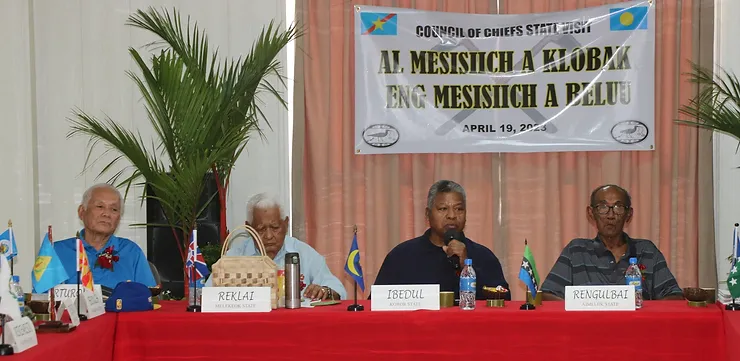
The opposition is not confined to the senate. The Council of Chiefs, a powerful body representing Palau's 16 traditional tribal chiefs, has emerged as a vocal critic. In letters to President Whipps Jr., the Council expressed that the nation was "not ready, willing, and prepared to venture into this new area of responsibility." They raised profound concerns that accepting deportees could jeopardize Palau's social cohesion and undermine its cultural values, stating they were "taken by surprise" when the signed MOU came to their attention.
Arguments For and Against
The debate has cleaved the political establishment. Proponents, including Senator Rukebai Inabo—one of only three senators who supported the deal—argue that the arrangement is "mutually beneficial." She contends it provides a humane solution for individuals with limited options, offering them a chance in a "peaceful" and "simple" country, while also bringing skilled workers to fill gaps in Palau's workforce and securing much-needed US aid.
President Whipps Jr., in a written statement, defended the agreement as a "lawful, humane solution that respects our people, our laws, and our limited capacity as a small island nation." He emphasized that Palau would review each case individually, focusing on admitting those whose skills could positively contribute to local communities.
Broader Context and Uncertain Future
This agreement is not an isolated incident but part of a wider Trump administration policy to transfer migrants facing removal from the US to third countries, a strategy that has included nations like South Sudan and Eswatini and has drawn criticism from human rights advocates. For Palau, a nation not party to the 1951 UN Refugee Convention, senators argue the country is fundamentally "not suited to serve as a country of deportation, relocation or resettlement" due to its small geographic size, infrastructure limitations, and constrained resources.
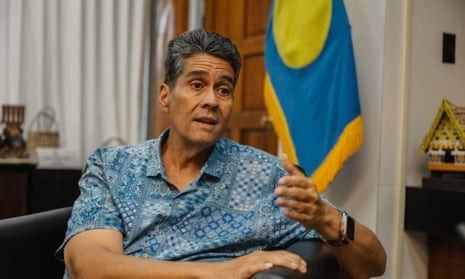
The immediate future of the deal is uncertain. The legislative action now moves to Palau's lower house, the House of Delegates, for consideration. Ultimately, the final decision rests with President Whipps Jr., who must weigh the substantial domestic opposition against the diplomatic and financial implications of the agreement with a key ally.
Conclusion
The controversy surrounding the US-Palau resettlement deal underscores the delicate balance small nations must strike between international partnerships and domestic sovereignty. It raises critical questions about the ethics of migrant transfer agreements, the capacity of microstates to absorb new populations, and the power of traditional governance in modern political decisions. As Palau's lower house deliberates and the president contemplates his next move, the outcome will not only determine the fate of 75 individuals but also signal Palau's approach to navigating its relationships and protecting its social fabric in an increasingly complex global arena.