Ancient Oceans Defy Expectations: Warmer Climate Didn't Always Mean Less Oxygen
A groundbreaking study analyzing 16-million-year-old ocean fossils reveals a surprising climate paradox: the Arabian Sea contained more oxygen during a period of intense global warming than it does today. Contrary to the simple warming-equals-deoxygenation rule, severe oxygen loss was delayed by millions of years, only occurring after the climate began to cool. This discovery, published in Communications Earth & Environment, highlights the critical role of regional factors like monsoon winds and ocean circulation in shaping marine oxygen levels, suggesting that future ocean health predictions are far more complex than previously assumed.
For decades, climate scientists have operated under a seemingly straightforward principle: as global temperatures rise, ocean oxygen levels fall. This process, known as deoxygenation, threatens marine biodiversity and ecosystem stability. However, a fascinating new study published in Nature Communications Earth & Environment challenges this linear narrative. By examining fossilized plankton from the depths of the Arabian Sea, researchers from the University of Southampton and Rutgers University have uncovered a historical paradox that could reshape our understanding of future ocean health.

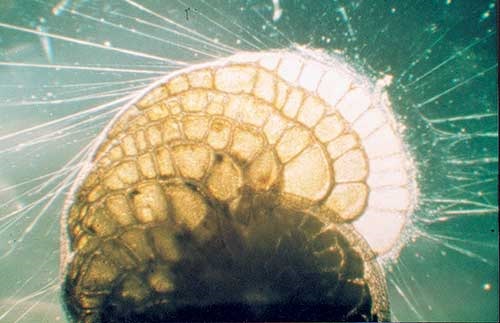
The research focuses on the Miocene Climatic Optimum (MCO), a period roughly 17 to 14 million years ago when Earth's temperatures and atmospheric carbon dioxide levels were similar to those projected for the late 21st century under high-emission scenarios. Scientists have long used this era as a natural laboratory to understand potential future climate outcomes. The team's analysis of microscopic foraminifera fossils, collected via the Ocean Drilling Program, provided a chemical snapshot of ancient seawater conditions.
The Arabian Sea Paradox: Oxygen-Rich in a Hotter World
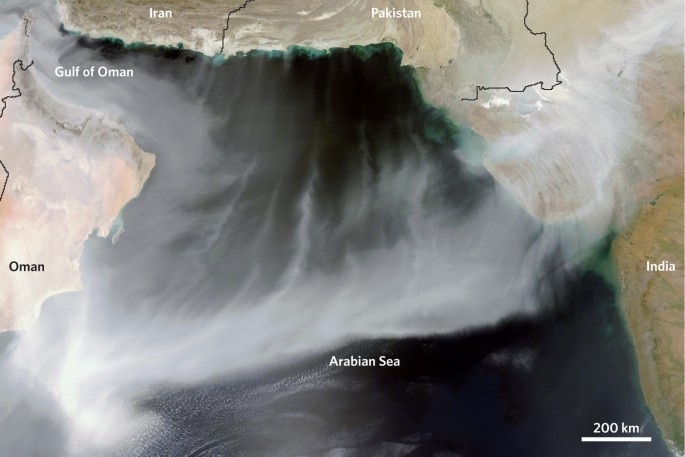
The core finding is both counterintuitive and significant. About 16 million years ago, during the peak warmth of the MCO, the Arabian Sea was better oxygenated than it is in the modern era. "Today parts of the Arabian sea are 'suboxic', supporting only limited marine life due to minimal oxygenation," explains co-lead author Dr. Alexandra Auderset. "This same region during the MCO, under similar climatic conditions, was hypoxic—so comparatively moderate oxygen content, supporting a wider range of organisms."
Even more surprising was the timing of severe oxygen depletion. The data shows that the most extreme loss of oxygen, severe enough to trigger the release of nitrogen gas from the water—a process seen in the Arabian Sea today—did not occur until roughly 12 million years ago. This was approximately 4 million years after the MCO, during a subsequent period of global cooling. This delayed response directly contradicts the expectation that maximum warming should coincide with minimum oxygen.
Why Regional Forces Trump Simple Temperature Rules
The study reveals that ocean oxygen levels are not dictated by global temperature alone. Instead, they are powerfully shaped by local and regional oceanographic forces. In the case of the Arabian Sea, the researchers point to a combination of factors that likely delayed deoxygenation.
Powerful seasonal monsoons play a dominant role. These winds drive intense ocean mixing and upwelling, which can bring deeper, nutrient-rich—and crucially, oxygenated—water to the surface. Furthermore, the study suggests that connections between the Arabian Sea and adjacent water bodies, along with shifting large-scale ocean circulation patterns, created a complex system that buffered against rapid oxygen loss during the warm MCO.
This regional complexity is highlighted by contrasting the Arabian Sea with the Pacific Ocean. "One of our previous studies shows the eastern tropical Pacific was actually well oxygenated during this period," notes co-lead author Dr. Anya Hess. "The Arabian Sea was also better oxygenated during the MCO, but not as much as the Pacific, with moderate oxygenation and an eventual decline that lagged behind the Pacific by about 2 million years."
Implications for Predicting Future Ocean Health
The implications of this research are profound for climate modeling and marine conservation. It demonstrates that global climate models that focus primarily on temperature-driven trends risk missing critical regional nuances. "Our results suggest that ocean oxygen loss, already underway today, is strongly shaped by local oceanography," states Dr. Auderset. "Global models that focus solely on climate warming risk not capturing the regional factors that may either amplify or counteract those more general trends."
While the study confirms that oxygen loss is a serious and ongoing threat—with the global ocean having lost about 2% of its oxygen per decade over the last 50 years—it also introduces a note of cautious complexity. It suggests that the relationship between warming and deoxygenation is not a simple, inevitable slide but a dynamic interplay of global and local forces. This means the future health of different ocean basins may follow divergent paths.
Ultimately, the message from the ancient Arabian Sea is one of both warning and nuance. The research underscores that "ocean response to climate warming is complex," as Dr. Auderset concludes. This complexity necessitates more sophisticated, regionally-aware models to predict future changes accurately. It also reinforces the urgent need for continued global emission reductions to mitigate warming, while simultaneously preparing adaptive strategies for marine ecosystems that must navigate a future where local oceanography will be as important as global temperature in determining their fate.