Read on PBS News
ICE Drawdown in Minnesota: Legal Tensions and Constitutional Questions
The Trump administration's top immigration official has announced plans for 'massive changes' in Minnesota, including a potential drawdown of federal agents, contingent on state cooperation. This development follows weeks of protests, fatal shootings by ICE agents, and mounting legal challenges. The situation raises fundamental questions about federal-state relations, constitutional protections for protesters and observers, and the proper scope of immigration enforcement. Legal experts analyze the administration's 'targeted enforcement' strategy, the obligations of Minnesota officials, and the role of courts as a check on federal power in this ongoing national debate.
The Trump administration's announcement of potential "massive changes" to immigration enforcement in Minnesota, including a drawdown of federal agents, marks a pivotal moment in the ongoing national debate over immigration policy and federal power. This development, reported by PBS NewsHour, comes after weeks of intense protests, fatal shootings by Immigration and Customs Enforcement (ICE) agents, and significant legal pushback from state officials and the judiciary. The situation encapsulates the complex legal, constitutional, and political tensions between federal enforcement priorities and local governance.
The Federal Proposal and State Demands
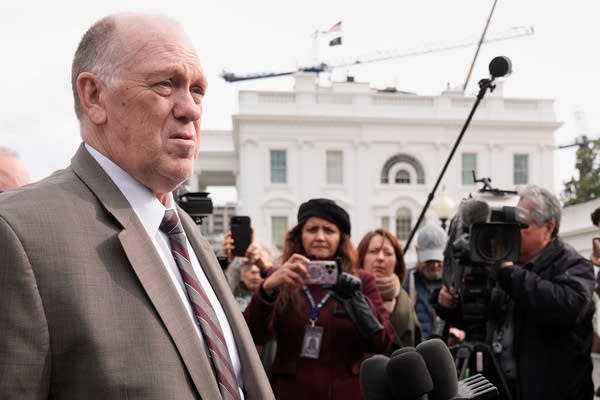
Tom Homan, President Trump's border czar, has outlined a conditional plan to reduce the number of federal agents in Minnesota, which currently stands at roughly 3,000 officers. Homan acknowledged operational missteps and stated the goal was to make enforcement "safer, more efficient, by the book." However, he explicitly tied any reduction to increased cooperation from Minnesota state and local officials, asserting, "We are not surrendering the president's mission on immigration enforcement." This stance frames the drawdown not as a retreat but as a strategic recalibration dependent on local compliance.
In stark contrast, local leaders like Minneapolis Mayor Jacob Frey have demanded a complete end to the federal operation, known as "Operation Metro Surge." Mayor Frey emphasized that the conduct "needs to stop, not just in Minneapolis. It needs to stop nationwide." This fundamental disagreement highlights the core conflict: the federal government seeks cooperation within its enforcement framework, while local officials seek the termination of the framework itself.

Legal and Constitutional Framework
The standoff raises immediate questions about legal obligations. According to Paul Butler, a former federal prosecutor and professor at Georgetown University Law Center, Minnesota officials are not constitutionally required to assist in federal immigration enforcement. However, state law does mandate that the prison system release inmates subject to deportation to ICE after they complete their sentences—a provision that facilitated the transfer of about 84 individuals last year. This creates a narrow, legally defined point of mandatory cooperation, distinct from the broader, street-level enforcement that has sparked controversy.
Rights of Protesters and Observers
The enforcement actions have swept up not only individuals targeted for immigration violations but also protesters and legal observers. This practice triggers significant constitutional protections. Individuals possess a Fourth Amendment right against unreasonable seizure, a protection the ACLU has invoked in lawsuits alleging illegal detentions. Simultaneously, the First Amendment protects the right to protest. As Professor Butler notes, while protesters cannot physically obstruct law enforcement, they maintain the right to be "annoying," including yelling, cursing, or blowing whistles at officers. The line between protected speech and unlawful obstruction remains a critical and often contested legal boundary.
The Shift to "Targeted Enforcement"
Homan's reference to "targeted enforcement" suggests a potential strategic shift. This approach would focus resources on undocumented individuals who pose threats to national security or public safety, moving away from the administration's broader strategy of mass deportations. Professor Butler argues that such a focused strategy could be a "game changer," potentially reducing the racial profiling and detention of legally present individuals that often accompany large-scale operations. He cites statistics suggesting undocumented individuals are less likely to commit violent crimes than those legally in the country, implying that targeted enforcement could yield greater public safety benefits than indiscriminate roundups.
Technology, Accountability, and the Role of Courts
Reports of federal agencies using intrusive technologies like facial recognition to track both undocumented immigrants and citizens opposed to government actions present novel legal challenges. The use of such technology in public spaces may not violate a specific right to anonymity, but it raises concerns about government overreach and the potential chilling effect on lawful protest, especially when followed by intimidating actions like agents driving by protesters' homes.

In the absence of clear congressional action, the courts have emerged as a primary check on federal power. The federal chief judge in Minnesota condemned ICE for violating nearly 100 court orders in a single month, and another judge ordered the administration to stop detaining and deporting lawfully admitted refugees from the state. These judicial interventions underscore the system of checks and balances. However, as Professor Butler points out, Congress could legislate more direct accountability measures, such as requiring clear identification, limiting the use of masks, and mandating body cameras for federal agents—reforms that would increase transparency and public trust.
Conclusion: A Nation at a Crossroads
The proposed ICE drawdown in Minnesota is more than a tactical adjustment; it is a microcosm of America's struggle to define the boundaries of immigration enforcement. It pits federal authority against local autonomy, enforcement priorities against constitutional protections, and operational tactics against demands for accountability. The conditional nature of the federal offer ensures tensions will persist, as state officials reject the premise of the operation itself. The path forward will be shaped not only by political negotiations but by ongoing legal battles in the courts, which continue to serve as a crucial bulwark against the potential abuse of power. The outcome in Minnesota will likely influence the national conversation on how, where, and against whom immigration laws are enforced.