Read on bbc.com
Burkina Faso Junta Bans All Political Parties Citing National Unity
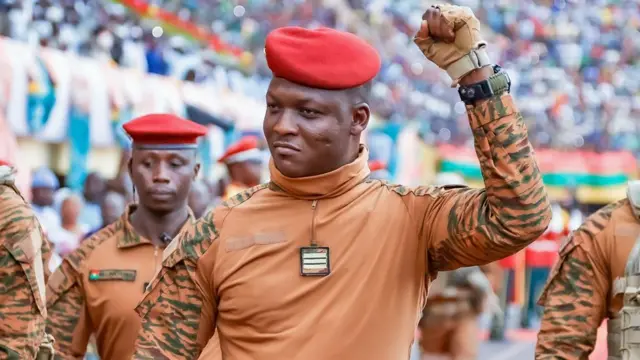
Burkina Faso's military junta has announced a comprehensive ban on all political parties, a move described by the interior minister as necessary to 'rebuild the state' and address what he called 'numerous abuses' in the multiparty system. The ban, which follows the suspension of political activities since the 2022 coup, transfers all party assets to the state and represents a significant tightening of control by junta leader Captain Ibrahim Traoré. This development occurs within a broader regional pattern of military governments restricting political freedoms in West Africa.
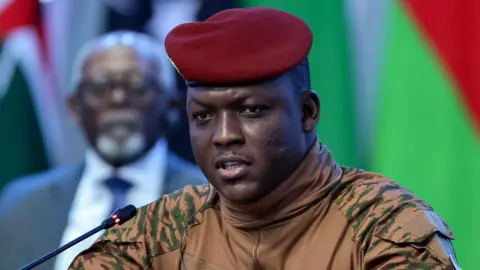
Burkina Faso's military government has taken a decisive step toward consolidating power by announcing a complete ban on all political parties. Interior Minister Emile Zerbo declared that the multiparty system had been "promoting division among citizens and weakening the social fabric," framing the prohibition as part of broader plans to "rebuild the state" after what he described as "numerous abuses." This move represents a significant escalation in the junta's control over political life in the West African nation, where political activities have been suspended since Captain Ibrahim Traoré seized power in a 2022 coup.
Details of the Political Ban
The new decree goes beyond previous restrictions that merely banned political gatherings, now prohibiting parties from operating altogether. According to Zerbo, all assets of the dissolved parties will be transferred to the state, with a draft law to be sent to the Transitional Legislative Assembly "as soon as possible." This represents a formal institutionalization of what had been de facto restrictions since the military takeover. Before the 2022 coup, Burkina Faso had more than 100 registered political parties, with 15 represented in parliament following the 2020 general election. The sheer number of parties had created what some observers described as a fragmented political landscape.
Regional Context and Junta Consolidation
Burkina Faso's political ban occurs within a broader regional pattern of military governments restricting political freedoms in West Africa. The country is one of several in the region that have experienced coups followed by the restriction of political parties and electoral institutions in recent years. In neighboring Guinea, coup leader General Mamady Doumbouya recently stood for election and won by a landslide, illustrating how military leaders in the region are transitioning to formal political power. Captain Traoré had initially pledged to restore civilian government by July 2024 but extended military rule for another five years just two months before that deadline.
Public Reaction and Political Implications
The ban has generated mixed reactions within Burkina Faso. Some citizens have expressed support for the junta's decision on social media, with one Traoré supporter arguing on X that "a country like Burkina Faso having over 100 political parties creates chaos" and that "this fragmentation often led to clientelism and corruption, where parties function more like business ventures than civic organisations." However, civil society groups have expressed concern about the implications for democratic governance. One unnamed civil society member told the BBC, "This will not help the country move forward. We're not happy with this," adding that "the regime has been pushing the idea that democracy is useless or harmful for Burkina."
The same source noted the precarious nature of military rule in Burkina Faso's history, suggesting that "no leader is ever fully secure" and that "another coup is never far from the horizon." Despite his authoritarian reputation, 37-year-old Traoré has gained a significant following across the African continent for his pan-Africanist vision and criticism of Western influence. His government has positioned itself as an alternative to what it portrays as failed Western-style democratic models in the region.
Conclusion
The banning of all political parties in Burkina Faso represents a significant milestone in the junta's consolidation of power and reflects broader regional trends of military governments restricting political pluralism. While framed by authorities as necessary for national unity and state rebuilding, the move effectively eliminates formal political opposition and institutionalizes military rule. As Burkina Faso joins other West African nations in restricting political freedoms, the long-term implications for governance, stability, and regional democratic norms remain uncertain. The transfer of party assets to the state further strengthens the junta's control over political and economic resources, potentially setting the stage for extended military rule despite initial promises of a swift return to civilian government.