Read on PBS News
Supreme Court to Hear Landmark Case on Hawaii's Strict Gun Laws
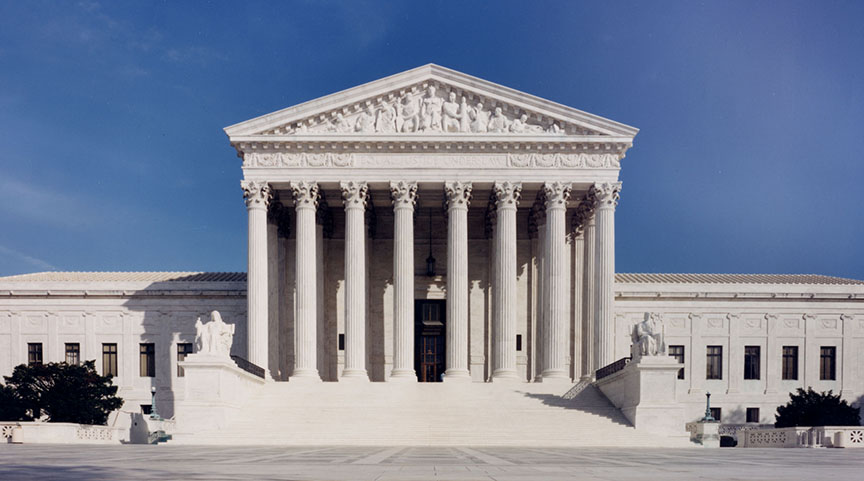
The U.S. Supreme Court will hear arguments on Tuesday regarding Hawaii's unique gun laws, which are among the strictest in the nation. The case centers on a state law that bans firearms on private property open to the public—such as stores, hotels, and restaurants—unless the owner explicitly grants permission. This legal challenge follows the Court's 2022 decision that expanded gun rights nationwide, forcing Hawaii to revise its regulations. The outcome could significantly impact the balance between Second Amendment rights and private property owners' authority to control weapons on their premises, setting a precedent for similar laws across the country.
The U.S. Supreme Court is set to hear a pivotal case that tests the boundaries of gun regulation and private property rights in America. At the center of the dispute is Hawaii's law, which prohibits carrying firearms on private property that is open to the public unless the owner provides explicit consent, either verbally or through posted signage. This case, scheduled for arguments on Tuesday, represents a critical juncture in the ongoing national debate over the Second Amendment's application in public spaces.
The Core Legal Issue
The Supreme Court has agreed to consider a single, specific question: whether Hawaii's default rule banning guns on privately owned public-access property is constitutional. Under this rule, properties like shopping centers, hotels, banks, and restaurants are presumed to be gun-free zones unless the owner affirmatively states otherwise. This places the burden on property owners to opt-in to allowing firearms, rather than requiring them to opt-out by posting prohibitions.
Three residents of Maui filed the original lawsuit in 2023, challenging this provision along with other restrictions that barred firearms at beaches, parks, and establishments serving alcohol. While a federal appeals court upheld most of Hawaii's restrictions in 2024, it left the private property question for the Supreme Court to resolve. The plaintiffs argue this default ban effectively nullifies their Second Amendment right to carry firearms for self-defense in most public spaces.
Historical Context and Legal Precedent
This case arrives just a few years after the Supreme Court's landmark 2022 decision in New York State Rifle & Pistol Association v. Bruen, which established that Americans have a constitutional right to carry firearms in public for self-defense. That ruling required gun regulations to be "consistent with the nation's historical tradition of firearm regulation." The Bruen decision forced Hawaii—which had previously made it virtually impossible to obtain carry permits—to rewrite its gun laws.

Hawaii's legal briefs point to the state's unique historical tradition of gun regulation, dating back to the Hawaiian Kingdom under King Kamehameha III, who prohibited subjects from possessing deadly weapons. The state argues this historical context should inform what constitutes "American tradition" for regulatory purposes. Conversely, the plaintiffs' attorney, Alan Beck, contends that "the laws of a monarchy that predates the United States is not part of our American tradition of constitutional rights."
The Competing Rights at Stake
The case presents a classic conflict between two protected rights: the individual's Second Amendment right to bear arms versus the private property owner's right to control what happens on their premises. Gun rights advocates argue that Hawaii's law creates a practical impossibility for lawful carry, since most business owners are reluctant to post "guns allowed" signs for fear of alienating customers, particularly international tourists unaccustomed to public firearm possession.
On the other side, gun safety advocates like Chris Marvin of Everytown for Gun Safety frame the issue as one of basic courtesy and property rights. "This restriction is built upon the courtesy we all grew up with: You don't walk into someone else's home or a local mom-and-pop shop with a weapon unless you know for a fact that you're welcome to do so," Marvin stated. The state maintains that property owners should not have to declare their spaces as gun-free; rather, carriers should seek permission.
Potential Implications and Broader Significance
The Supreme Court's decision will have ramifications beyond Hawaii's shores. A ruling against the state could undermine similar "default prohibition" laws in other jurisdictions with strict gun regulations. Conversely, a ruling upholding Hawaii's law would reinforce states' authority to create gun-free zones on private property by default, potentially inspiring similar legislation elsewhere.
This case also highlights Hawaii's distinctive position in America's gun debate. The state boasts some of the nation's strictest gun laws and correspondingly low rates of gun violence. Yet, as attorney Alan Beck notes, Hawaii also has "a vibrant hunting culture that respects firearms just as much as any state on the mainland." The outcome may determine whether states with unique historical and cultural contexts can craft gun regulations that reflect their specific circumstances while still complying with the Supreme Court's historical tradition test established in Bruen.

As arguments commence, legal observers will be watching closely to see how the justices grapple with applying 18th and 19th-century understandings of firearm regulation to 21st-century spaces like shopping malls and chain restaurants. The decision will further clarify the scope of the Second Amendment in an era of expanded carry rights and continue to shape the complex landscape of American gun policy.