Nature's Picks: The Most Striking Science Images of 2025
From a skydiver silhouetted against the Sun to a tardigrade with an icy tattoo, Nature's 2025 collection showcases the year's most remarkable scientific photography. This curated selection highlights groundbreaking astronomical observations, innovative biological research, and powerful documentation of climate change impacts. The images, sourced from prestigious competitions and scientific publications, blend artistic vision with scientific discovery, offering a unique visual summary of the year's key scientific narratives and environmental challenges.
Each year, the editors at Nature compile a collection of images that capture the intersection of scientific discovery, artistic vision, and global events. The 2025 selection is a testament to human ingenuity, natural wonder, and the pressing realities of our changing planet. From the microscopic to the cosmic, these photographs tell stories of innovation, conservation, and resilience. This article explores the standout images from Nature's 2025 picks, providing context on the science behind the spectacle and the stories of the photographers who captured these fleeting moments.

Celestial and Atmospheric Phenomena
The 2025 collection features several breathtaking images from beyond our atmosphere. One of the most dramatic is a photograph by astrophotographer Andrew McCarthy, which required months of planning with skydiver Gabriel Brown. The image shows a skydiver in perfect silhouette against the surface of the Sun, with dark sunspots visible in the background. These sunspots form where intense magnetic fields inhibit the flow of heat to the solar surface. The shot was captured using a specially designed solar telescope, a feat of precise timing and technical coordination.
Another atmospheric marvel captured in 2025 was the rare phenomenon of 'red sprites' over New Zealand. Photographers documented these bursts of electrical energy that shoot upwards from thunderstorms, creating ethereal, jagged shapes that glow for mere milliseconds. As photographer Tom Rae described the experience to Nature, "It looks like you’re seeing something that is not real, it’s very ethereal." The image serves as a stunning reminder of the complex and often invisible electrical dynamics of our atmosphere.
Groundbreaking Astronomical Imaging
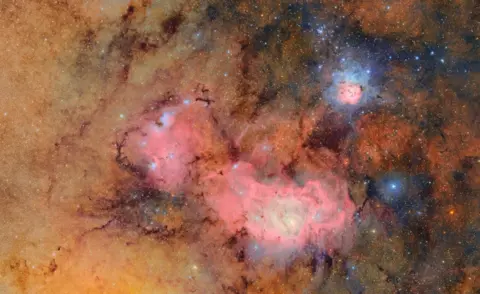
A landmark achievement in astronomical photography came online in 2025 with the Vera C. Rubin Observatory in Chile. Its 3,200-megapixel digital camera, the world's largest, produced a stunning composite image of the Trifid Nebula and the Lagoon Nebula. This "first light" image, created from hundreds of individual frames, heralds a new era of deep-space observation and promises to revolutionize our understanding of the cosmos. The clarity and detail captured by this new technology provide a glimpse into the future of astrophysics.
Microscopic Marvels and Biological Innovation
Moving from the vastness of space to the microscopic world, one of 2025's most innovative images features a tardigrade—a resilient micro-animal—sporting a minuscule 'tattoo'. Researchers used an electron beam to etch dots into a layer of ice coating the creature. The beam transforms the ice into a compound that adheres to the tardigrade's skin, leaving the design visible after the rest of the ice evaporates. As reported in Nano Letters, this high-precision technique has potential applications in biomedical engineering, and scientists are now working to adapt it for even smaller organisms like bacteria.
The natural world also provided its own wonders, as seen in Giancarlo Mazarese's photograph of the sheep nudibranch (Costasiella kuroshimae), a finalist in Oceanographic's Ocean Photographer of the Year award. This sea slug feeds on algae and incorporates the chloroplasts into its own cells, allowing it to harness solar energy through photosynthesis—a remarkable example of natural bioengineering. The image captures the slug laying its eggs in a delicate spiral pattern.
Conservation in Action and Climate Realities
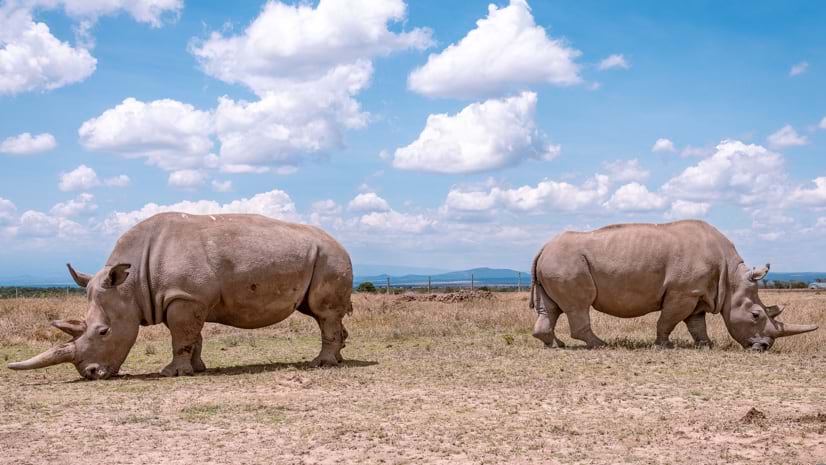
The collection powerfully documents both the successes of conservation and the stark realities of climate change. A winning image from the 2025 BigPicture Natural World Photography Competition by Ami Vitale shows a team in Kenya treating a sick black rhinoceros. The photo highlights the skill and coordination required to protect these powerful, rebounding animals, even under sedation. This image symbolizes the intense, hands-on effort behind species recovery.
Conversely, other photographs underscore the escalating climate crisis. Ethan Swope's haunting image of the urban inferno in Los Angeles captures one of the city's deadliest and most destructive fires on record. Researchers cited factors like building density, strong winds, and 'weather whiplash'—drastic swings from wet to dry conditions—in the fire's rapid spread. Nature notes that such urban firestorms are likely to become more common as global temperatures rise. Similarly, a poignant photo by Thanassis Stavrakis shows a man in Patras, Greece, navigating a dusty hill on his scooter while cradling a sheep, fleeing wildfires—a quiet testament to the human and animal toll of these disasters.
Scientific Infrastructure and Ecological Study
A unique project in Brazil, photographed by Lalo de Almeida, shows a scientific 'time machine'—a structure that pumps carbon dioxide into the forest canopy to simulate future atmospheric conditions. Located near Belém, the site of the COP30 climate summit, this experiment aims to study how the Amazon rainforest adapts to climate change. The image represents a proactive, large-scale approach to understanding our ecological future.
Editor's Personal Picks
Nature's media editors also shared personal selections that resonated with them. These included a humorous winning entry from the Nikon Comedy Wildlife Awards by 13-year-old Grayson Bell, titled 'Baptism of the Unwilling Convert', which depicts two male green frogs fighting. Another favorite was Jade Hoksbergen's exquisite shot of a tiny, well-camouflaged candy crab on pink coral, a finalist in the Ocean Photographer of the Year competition that offered a "refreshing break" from more bleak imagery. A contemplative photo by Marco Longari juxtaposed a lone mushroom with decommissioned radio telescopes in South Africa, highlighting the dialogue between nature and human-made scientific structures.
In conclusion, Nature's 2025 image collection is more than a gallery of beautiful pictures. It is a visual chronicle of a year in science, reflecting our quest for knowledge, our awe of the natural world, and the urgent challenges we face. These images remind us that science is not conducted in a vacuum but is deeply intertwined with artistry, perseverance, and the global context of our time. They invite viewers to look closer, ask questions, and appreciate the profound stories captured in a single frame.