Read on PBS News
Russia's Massive Overnight Drone and Missile Barrage on Ukraine Amid Peace Talks
Russia launched a significant overnight assault on Ukraine, deploying 653 drones and 51 missiles during a wide-reaching attack that coincided with Ukraine's Armed Forces Day. Ukrainian air defenses intercepted the majority of the incoming threats, but strikes on energy infrastructure and a nuclear plant highlighted the ongoing strategic battle. The attack occurred as U.S. and Ukrainian officials continued high-stakes talks in Florida aimed at finding a path to end the nearly four-year conflict, underscoring the complex interplay between military escalation and diplomatic efforts.
In the early hours of Saturday, December 6, 2025, Russia unleashed one of its largest combined aerial assaults on Ukraine since the invasion began nearly four years ago. The attack, involving hundreds of drones and dozens of missiles, triggered air raid alerts across the entire country and struck multiple regions, from the capital Kyiv to areas in the far west. This significant escalation occurred on a symbolic day for Ukraine—Armed Forces Day—and against the backdrop of ongoing, high-level diplomatic talks between Ukrainian and U.S. officials in Florida, aimed at negotiating an end to the war. The simultaneous military pressure and diplomatic maneuvering present a critical moment in the conflict's trajectory.
Scale and Scope of the Overnight Attack
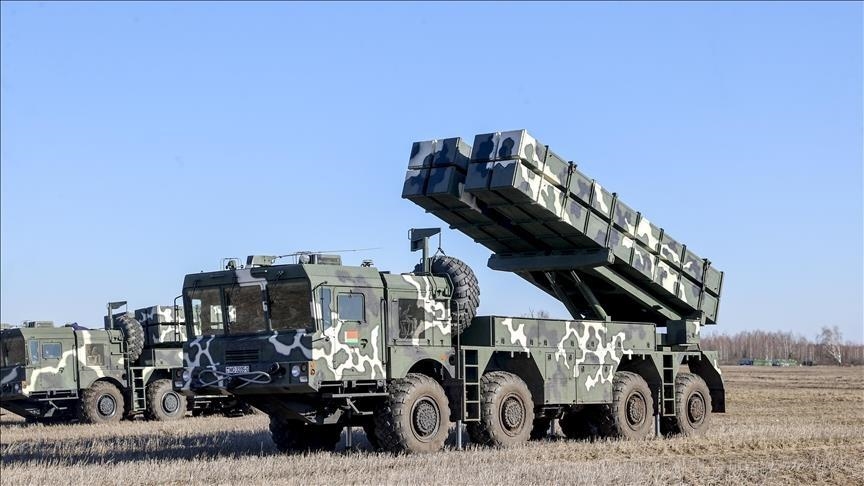
According to the Ukrainian Air Force, the Russian military deployed a total of 704 aerial assets in the coordinated barrage: 653 drones and 51 missiles. The wide-reaching nature of the attack demonstrated Russia's continued capacity to launch mass-scale assaults targeting civilian and energy infrastructure deep inside Ukrainian territory. The Ukrainian defense forces reported a high interception rate, shooting down 585 drones and 30 missiles. Despite these defensive successes, officials confirmed that at least 29 locations were struck, resulting in casualties and significant damage.
Civilian Impact and Casualties
Ukrainian Minister of Internal Affairs Ihor Klymenko reported that at least eight people were wounded in the attacks. In the Kyiv region alone, local officials confirmed at least three wounded. The assault was not confined to the front lines; drone sightings were reported as far west as the Lviv region, indicating Russia's intent to maintain psychological pressure across the nation. One notable strike targeted the train station in the city of Fastiv, located in the Kyiv region, which Ukrainian President Volodymyr Zelenskyy said was "burned down" by a drone.

Strategic Targeting of Critical Infrastructure
A central component of Russia's strategy remains the targeting of Ukraine's energy grid, a tactic Ukrainian officials have repeatedly condemned as "weaponizing" the cold against civilians. Ukraine's national energy operator, Ukrenergo, stated that the overnight attack was a "massive missile-drone attack" focused on power stations and other energy infrastructure across several regions. This marks an attempt to cripple the power grid for a fourth consecutive winter, denying civilians access to heat, light, and running water.
Nuclear Safety Incident
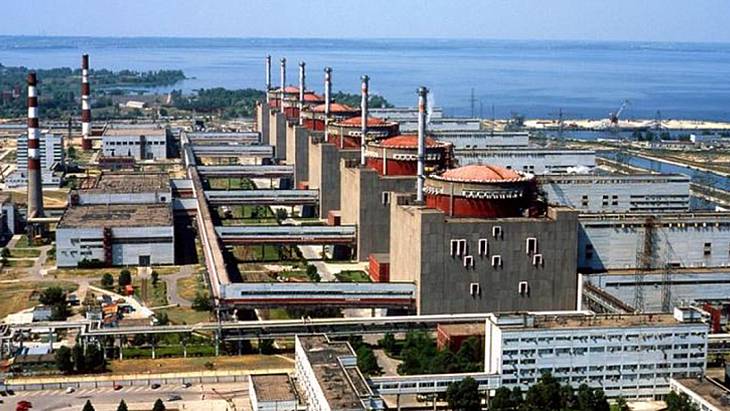
The attack also precipitated a serious nuclear safety incident. The International Atomic Energy Agency (IAEA) reported that Ukraine's Zaporizhzhia Nuclear Power Plant temporarily lost all off-site power overnight. Director General Rafael Mariano Grossi emphasized the critical need for reliable power to cool the plant's six shutdown reactors and spent fuel to prevent a catastrophic nuclear incident. The plant, which has been under Russian control since early in the invasion, is not in service but remains a high-risk facility dependent on external power.
The Diplomatic Context: Peace Talks in Florida
The massive military strike unfolded as diplomatic efforts to end the war entered a critical phase. U.S. special envoy Steve Witkoff, former President Donald Trump's son-in-law Jared Kushner, and Ukrainian negotiators Rustem Umerov and Andriy Hnatov were engaged in a third day of talks in Florida. Following discussions on Friday, the parties issued a joint statement noting progress on a security framework for postwar Ukraine but offered a sober assessment. They stated that any "real progress toward any agreement" would ultimately depend "on Russia’s readiness to show serious commitment to long-term peace." President Zelenskyy confirmed he received an update on these talks by phone on Saturday.
Ukrainian Retaliation and the Broader Conflict
In a demonstration of its own growing capabilities, Ukraine conducted retaliatory strikes on Russian territory. The General Staff of the Ukrainian Armed Forces stated that Ukrainian forces struck the Ryazan Oil Refinery in Russia. Russian Telegram news channel Astra shared footage appearing to show a fire at the refinery, though the Associated Press could not independently verify the video. Ryazan regional Gov. Pavel Malkov confirmed drone debris fell on an "industrial facility" and damaged a residential building. These strikes are part of a months-long Ukrainian campaign targeting Russian oil refineries, aimed at depriving Moscow of crucial oil export revenue needed to fund its war effort. Separately, Russia's Ministry of Defense claimed its air defenses shot down 116 Ukrainian drones over Russian territory overnight.
Conclusion: A War of Attrition and Diplomacy
The massive overnight attack underscores the brutal reality of the war in Ukraine: intense military action continues unabated even as diplomatic channels are actively explored. Russia's use of hundreds of drones and missiles on a national holiday highlights a strategy of maximum pressure, targeting both civilian morale and critical infrastructure like the energy grid and nuclear facilities. Meanwhile, the parallel peace talks, while showing progress on framework issues, reveal the fundamental challenge—any lasting agreement hinges on Russia's ambiguous commitment to peace. As Western leaders prepare to meet with President Zelenskyy in London, the world watches a conflict where every large-scale bombardment is a stark reminder of the urgent need for a sustainable resolution, yet also of the profound difficulties in achieving one.