White House Aide's Comments Suggest Broader Strategy Behind US Boat Strikes in Venezuela
White House Chief of Staff Susie Wiles has suggested the US military's attacks on alleged drug boats in Latin American waters aim to pressure Venezuelan President Nicolás Maduro, appearing to contradict the official narrative of an anti-drug campaign. Her comments, published by Vanity Fair, have sparked accusations of regime change objectives and raised legal questions about the strikes that have killed over 90 people. This analysis examines the strategic implications, international law concerns, and escalating tensions between Washington and Caracas.
Recent comments from a top White House official have cast new light on the United States military's ongoing campaign of boat strikes in waters near Venezuela, suggesting objectives that extend beyond the publicly stated war on drugs. White House Chief of Staff Susie Wiles indicated the attacks aim to pressure Venezuelan President Nicolás Maduro, a revelation that contradicts the Trump administration's official rationale and raises significant questions about US foreign policy in the region.
The Contradictory Narrative
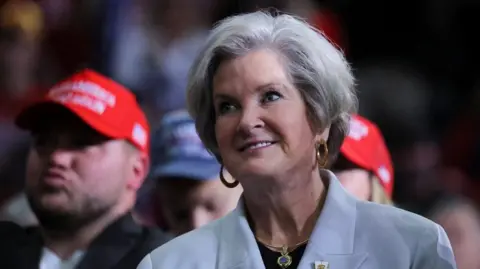
In comments published by Vanity Fair magazine, Wiles appeared to directly challenge the administration's stated purpose for the bombing campaign. "He [Trump] wants to keep on blowing boats up until Maduro cries uncle. And people way smarter than me on that say that he will," Wiles was quoted as saying. This statement emerged hours after the Pentagon announced three more boat strikes in the Eastern Pacific Ocean that reportedly killed eight people.
The administration has consistently portrayed these military actions as part of an anti-narcotics campaign, with President Trump recently signing an executive order labelling fentanyl a 'weapon of mass destruction.' However, Wiles's comments suggest a broader geopolitical strategy targeting the Venezuelan government itself. Democratic Senator Chris Murphy responded on social media platform X, stating, "So not a war on the cartels. It's regime change. Either way, totally illegal and nonsensical."
Escalating Military Presence and Actions
The United States has been intensifying its military activities near Venezuela, raising speculation about potential regime change objectives against Maduro's left-wing government. This escalation includes not only boat strikes but also significant naval deployments. The world's largest aircraft carrier, the US Navy nuclear-powered Ford-class aircraft carrier USS Gerald R. Ford, has been operating in the Caribbean region, underscoring the substantial military resources being directed toward Venezuela.
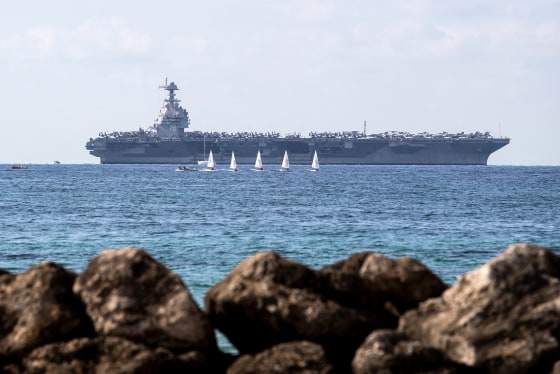
Last week marked a significant escalation when US forces raided and seized an oil tanker off the coast of Venezuela, an action Caracas denounced as "international piracy." President Trump has repeatedly asserted that Maduro's "days are numbered" and has refused to rule out a ground invasion of Venezuela. Additionally, the administration has declared the country's airspace closed "in its entirety," creating what appears to be a comprehensive military pressure campaign.
Legal and Human Rights Concerns
Legal experts have raised serious concerns about the legality of the US boat strike campaign. The targeting of vessels in international waters in the Caribbean and Pacific—which has killed more than 90 people according to reports—likely violates both US and international law. United Nations experts have specifically addressed these actions in a report, stating, "These attacks do not appear to have been conducted within the context of national self-defence, an international or non-international armed conflict, nor against individuals posing an imminent threat to life, thus violating fundamental international human rights law prohibiting arbitrary deprivation of life."
The Pentagon has provided only grainy footage as evidence that targeted boats were carrying drugs, while consistently describing victims as "narco-terrorists." The US has been designating drug-trafficking organizations as "terrorist" groups, but UN experts have rejected this label as justification for the deadly bombardments. The experts further noted that "unprovoked attacks and killings on international waters also violate international maritime laws," highlighting the broader legal implications of these military actions.
Broader Regional Strategy
The recent release of the Trump administration's National Security Strategy emphasizes the need to establish US "preeminence" in the Americas, providing context for the escalating actions against Venezuela. This regional focus extends beyond Venezuela to include threats against Colombia, which is led by another left-wing government under President Gustavo Petro. The strategy appears to represent a concerted effort to counter leftist governments in Latin America that have traditionally opposed US influence in the region.
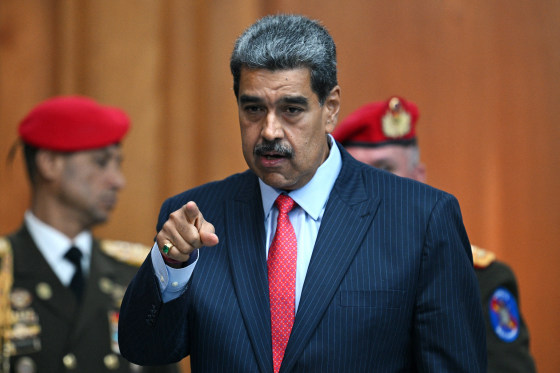
Maduro has accused the US of creating a "pretext" for war while expressing openness to diplomacy with Washington, though he rejects what he calls a "slave's peace." The oil-rich South American country has been under heavy US sanctions for years, exacerbating economic challenges. Meanwhile, prominent Venezuelan opposition figure Maria Corina Machado, who won the Nobel Peace Prize earlier this year, has promised to privatize the country's oil sector and open it to foreign investment should Maduro lose power, highlighting the economic stakes involved in the political struggle.
Conclusion: Strategic Implications and Future Outlook
The revelation from White House Chief of Staff Susie Wiles provides crucial insight into the Trump administration's strategic thinking regarding Venezuela. While publicly framed as an anti-drug campaign, the boat strikes appear to serve broader geopolitical objectives aimed at pressuring the Maduro government. This approach raises significant legal questions under international law and human rights standards, particularly regarding the justification for military actions in international waters.
As tensions continue to escalate, with increased US military presence and actions near Venezuela, the situation represents a critical test of international norms regarding sovereignty and the use of military force. The contradictory narratives emerging from the administration—between public anti-drug rhetoric and private regime change objectives—complicate diplomatic efforts and increase regional instability. The coming months will likely reveal whether this pressure campaign achieves its stated or unstated objectives, and at what cost to regional stability and international legal standards.