Read on the Guardian
Jimmy Lai's Conviction: A Watershed Moment for Hong Kong's Legal System and Press Freedom
The conviction of Hong Kong media tycoon Jimmy Lai on national security charges represents one of the most significant legal rulings since the city's 1997 handover. Facing life imprisonment after being found guilty of sedition and foreign collusion, Lai's case has drawn international condemnation from rights groups who label it a 'sham conviction' and a direct assault on press freedom. This article examines the trial's proceedings, the broader implications for Hong Kong's judicial independence under the National Security Law, and the global response to what many see as the systematic erosion of democratic safeguards in the former British colony.
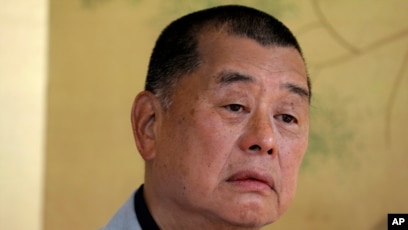
The conviction of Jimmy Lai, the 78-year-old Hong Kong pro-democracy media tycoon, marks a pivotal moment in the city's legal and political landscape. Found guilty of national security and sedition offences in December 2025, Lai faces life imprisonment in what rights organizations have universally condemned as a politically motivated prosecution designed to silence dissent. This ruling, delivered after a controversial two-year trial, represents one of the most closely watched judicial decisions since Hong Kong's return to Chinese sovereignty in 1997, with profound implications for press freedom, judicial independence, and the future of the "one country, two systems" framework.
The Trial and Verdict
Jimmy Lai's trial concluded with a guilty verdict on one count of conspiracy to publish seditious publications and two counts of conspiracy to foreign collusion. The charges stemmed from Hong Kong's National Security Law (NSL), enacted in 2020, and a British colonial-era sedition law that authorities have increasingly utilized in recent years. Prosecutors argued that Lai used his media outlet, Apple Daily, along with his foreign political connections, to lobby governments to impose sanctions and punitive measures against Chinese and Hong Kong authorities. Despite pleading not guilty to all charges, the three government-appointed judges presiding over the national security case delivered an 855-page judgment declaring the evidence against Lai "clear" and describing him as a "mastermind" of conspiracies designed to destabilize the Chinese government.
The court specifically noted that Lai "never wavered in his intention to destabilise the governance of the CCP [Chinese Communist Party]" and continued his activities "in a less explicit way" even after the NSL's enactment. This characterization formed the legal basis for the conviction, with judges asserting that Lai had harbored "hatred and resentment for the [People's Republic of China] for many of his adult years" and had contemplated how the United States could apply leverage against China long before the national security law existed. The ruling has been criticized for potentially applying the NSL retrospectively, despite official assurances that the law would not be applied retroactively.

International Response and Condemnation
The international community reacted swiftly to Lai's conviction, with rights organizations and foreign governments condemning the verdict as a fundamental attack on democratic principles. Britain, where Lai holds citizenship, reiterated its position that the prosecution was "politically motivated" and called for his immediate release. This diplomatic stance comes just weeks before an expected visit to Beijing by UK Prime Minister Keir Starmer, adding geopolitical significance to the case. The Committee to Protect Journalists labeled the conviction a "sham" and "a disgraceful act of persecution," while Amnesty International's China director noted that while the verdict was predictable, it remained "dismaying."
Human Rights Watch described the conviction as "cruel" and a "travesty of justice," asserting that "the Chinese government's mistreatment of Jimmy Lai aims to silence everyone who dares to criticise the Communist party." Taiwan's mainland affairs council also called for Lai's release, stating that "this ruling serves as a declaration to the world that Hong Kong's freedoms, democracy and judicial independence have been systematically eroded." These responses highlight the case's significance beyond Hong Kong's borders, positioning it as a litmus test for China's commitment to preserving the city's unique legal and political systems.
Implications for Press Freedom and Judicial Independence
Lai's conviction represents perhaps the most significant test of Hong Kong's press freedom since the handover. As the founder of Apple Daily, once Hong Kong's most prominent pro-democracy newspaper, Lai's prosecution sends a clear message about the limits of media criticism under the National Security Law. The Committee to Protect Journalists specifically noted that the ruling "underscores Hong Kong's utter contempt for press freedom, which is supposed to be protected under the city's mini-constitution, the Basic Law." With Apple Daily's three associated entities also found guilty of foreign collusion charges, the case establishes a precedent that could chill investigative journalism and political commentary throughout Hong Kong's media landscape.
The trial's proceedings raised additional concerns about judicial independence in national security cases. The government's selection of judges specifically for NSL cases, along with legal amendments that restricted bail rights and limited foreign lawyers' participation in Lai's defense, created what observers have called "a legal architecture fundamentally remade to ensure conviction." Samuel Chu of the US-based Campaign for Hong Kong noted that for "anyone who has engaged Hong Kong's legal system in good faith – as lawyers, advocates, or observers – this represents a decisive rupture with the city's common-law tradition." These developments suggest a worrying trend toward political influence in judicial processes, particularly in cases with political dimensions.

Health Concerns and Prison Conditions
Lai's deteriorating health has become a significant concern for his family and international observers. The 78-year-old has been in jail since late 2020 on remand and is already serving nearly ten years for protest-related sentences. His family has repeatedly raised alarms about his ailing health while in solitary confinement, alleging he has been subjected to "petty" efforts designed to demoralize him. Beh Lih Yi, Asia-Pacific director of the Committee to Protect Journalists, warned that "the risk of him dying from ill health in prison increases as each day passes – he must be reunited with his family immediately." Hong Kong authorities have consistently rejected these accusations, but the situation highlights the human cost of prolonged detention in politically sensitive cases.
Conclusion
The conviction of Jimmy Lai represents far more than the legal judgment of one individual; it symbolizes the profound transformation of Hong Kong's political and legal landscape under the National Security Law. As the city's most prominent pro-democracy figure faces life imprisonment, the international community watches with growing concern about the erosion of press freedom, judicial independence, and democratic safeguards that once distinguished Hong Kong from mainland China. With Lai's appeal scheduled for January 12, 2026, the case will continue to test the boundaries of Hong Kong's legal system and its relationship with Beijing. Regardless of the appeal's outcome, this verdict has already established a precedent that will shape Hong Kong's future, potentially deterring dissent and redefining the limits of acceptable political discourse in what was once considered Asia's freest city.