Read on nature.com
Five Essential Science Books for 2025: From Volcanic Whispers to Global Survival
Explore a curated selection of five of the best science books for 2025, as reviewed by Andrew Robinson in Nature. This list spans diverse and critical topics, from the profound connection between Indigenous communities and the Earth's geology in 'The Whispers of Rock' to the urgent political and environmental dialogues in 'Surviving the Twenty-First Century'. Discover works that blend science with culture, philosophy, and activism, offering unique perspectives on water sustainability, the legacy of nuclear weapons, and the wisdom found in traditional ecological knowledge. These books provide essential reading for anyone seeking to understand the complex scientific and societal challenges of our time.
As we navigate the complexities of the 21st century, science literature offers crucial insights that bridge empirical understanding with cultural wisdom and ethical imperatives. A recent review in Nature by Andrew Robinson highlights five standout science books slated for 2025, each tackling profound questions from environmental justice to geopolitical survival. This article delves into these selections, exploring their themes and the vital conversations they ignite about our relationship with the planet and each other. These works are not merely academic; they are calls to awareness, blending rigorous science with narrative power to engage a general audience.
The Whispers of Rock: Listening to the Earth
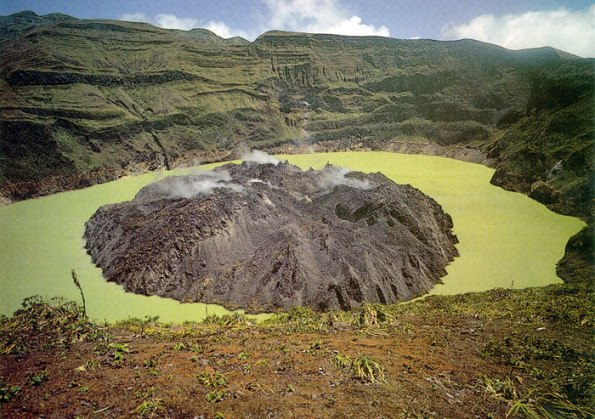
Earth scientist Anjana Khatwa's The Whispers of Rock presents a compelling argument for a deeper, more intuitive connection with geology. The book opens with a tragic historical example from 1902 on the Caribbean island of Saint Vincent. Local women reported pre-eruption signs—boiling water in the crater of La Soufrière volcano, accompanied by booming sounds and shaking—but were ignored by colonial authorities. The subsequent eruption killed 1,680 people. Khatwa uses this and other global cases to illustrate how Indigenous and local knowledge systems often possess a sophisticated understanding of natural warnings that formal science can overlook.
Khatwa's core thesis is that "awakening yourself to the whispers of rock" can fundamentally transform how we connect with and understand the world. The book advocates for a science that is more inclusive of these traditional ways of knowing, suggesting that the future of environmental monitoring and disaster preparedness may depend on such synthesis.
Lo—TEK Water: Indigenous Philosophy for Sustainability
In Lo—TEK Water, landscape designer Julia Watson champions a revolutionary view of water, informed by Indigenous philosophy. She argues that water is "not a resource to be extracted or managed, but a living relative, a system of memory, intelligence, and reciprocity." This perspective forms the foundation of the Lo—TEK (Local Traditional Ecological Knowledge) movement, which seeks to integrate ancient, place-based wisdom into modern environmental design and policy.
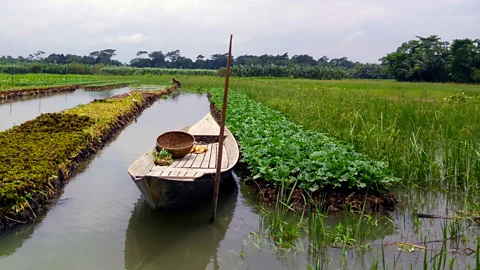
The book is a lavishly illustrated global survey, featuring contributions from diverse communities. It explores ingenious systems like Bangladesh's floating farms, China's historical dike-pond agricultural systems, and Micronesian techniques for trapping fish using natural tide flows. Watson presents these not as historical curiosities but as viable, regenerative models for contemporary water management, challenging the dominant paradigm of technological fixes with solutions rooted in ecological reciprocity.
Surviving the Twenty-First Century: A Dialogue of Giants
Surviving the Twenty-First Century captures a series of conversations between two towering intellectual figures: linguist and philosopher Noam Chomsky and José Mujica, the former president of Uruguay and a renowned political activist. Filmed in 2017 and 2022 by Saúl Alvídrez, their discussions form a brief yet dense and thought-provoking book. The dialogue ranges across the century's most pressing threats, including the climate crisis, the rise of neo-fascism, and the foundational wisdom we can still glean from nature.
Despite mutual respect, the book reveals fascinating disagreements. For instance, on the topic of automation, Chomsky expresses optimism that it could "free people to undertake truly creative and satisfying work." Mujica offers a more skeptical, grounded view, cautioning that "robots work only for their masters!" This tension between technological utopianism and pragmatic socio-economic concern runs throughout their exchange, offering readers a nuanced exploration of potential paths forward.
Warhead: The Anatomy of a Catastrophe
Nicholas Wright's Warhead, published by St. Martin’s Press, rounds out the list. While the Nature review provides less specific detail on this title, its inclusion among works discussing global survival, environmental risk, and geopolitical power suggests it delves into the science, history, and enduring threat of nuclear weapons. In the context of the other books, Warhead likely serves as a stark examination of humanity's capacity for self-destruction, acting as a sobering counterpoint to the works focused on ecological connection and sustainability.
Together, these five books create a powerful mosaic of 21st-century scientific thought. They move from the micro-scale of listening to a volcano to the macro-scale of global survival, consistently arguing that the solutions to our greatest challenges require blending empirical science with ethical philosophy, cultural wisdom, and political courage. They are essential reading for anyone invested in understanding and shaping a viable future.