Read on nature.com
Breakthrough in Asymmetric Synthesis: Creating Stable Acyclic N-Stereogenic Amines
Researchers at the Max-Planck-Institut für Kohlenforschung have achieved a significant breakthrough in asymmetric synthesis by developing the first catalytic method for creating stable, acyclic N-stereogenic amines. Published in Nature, this work overcomes the long-standing challenge of nitrogen pyramidal inversion that has made these molecules elusive targets. The team used enol silanes and nitronium ions paired with confined chiral anions to produce 'anomeric amines' stabilized by N-oxy-substituents, opening new avenues for exploring previously inaccessible enantiopure compounds.
In a landmark achievement for synthetic chemistry, researchers have successfully developed the first catalytic asymmetric synthesis of stable, acyclic N-stereogenic amines, overcoming a fundamental challenge that has persisted in chemical synthesis for decades. Published in Nature, this breakthrough from the Max-Planck-Institut für Kohlenforschung represents a significant advancement in our ability to create chiral nitrogen-containing molecules with precise stereochemical control.
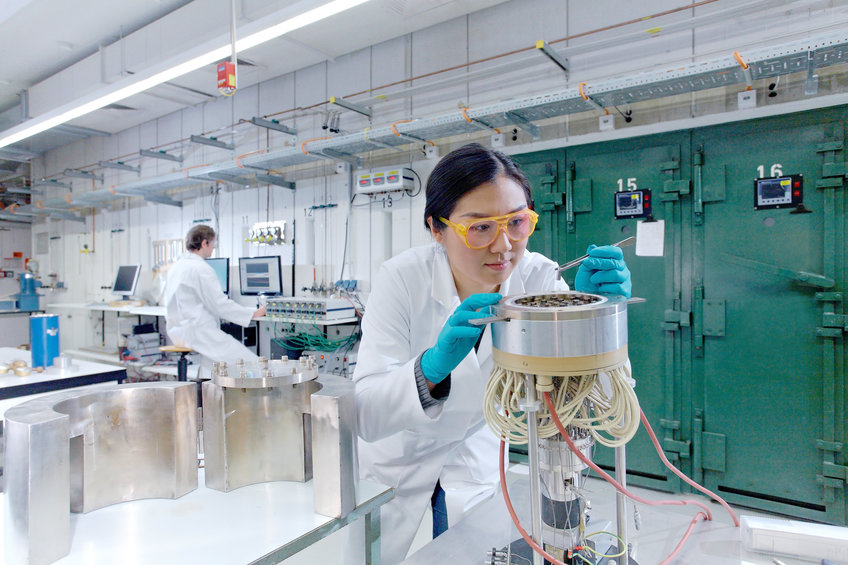
The Challenge of Nitrogen Stereogenicity
Most molecules in chemistry and biology exist as chiral compounds, meaning they have mirror-image variants called enantiomers. While chemists have developed robust methods for selectively synthesizing carbon-stereogenic molecules, creating nitrogen-stereogenic compounds has proven much more challenging. The primary obstacle lies in the rapid pyramidal inversion of nitrogen atoms in acyclic amines, which prevents the isolation of stable stereoisomers.
This limitation has restricted access to an entire class of potentially valuable compounds. As noted in the Nature publication, enantioselective approaches to nitrogen-stereogenic molecules remain uncommon, with acyclic N-stereogenic amines being particularly elusive due to their inherent instability.
Innovative Synthetic Approach
The research team, led by Chendan Zhu, Sayantani Das, and Benjamin List, developed a novel strategy that addresses the fundamental instability of these compounds. Their method involves the addition of enol silanes to nitronium ions that ion pair to a confined chiral anion. This approach represents a departure from traditional synthetic pathways and introduces new principles of stereochemical control.
The resulting compounds, termed 'anomeric amines,' benefit from a unique stabilization mechanism. Two N-oxy-substituents strategically incorporated into the molecular structure significantly hamper nitrogen inversion, allowing for the isolation and characterization of these previously unstable compounds. This stabilization represents a key innovation that makes the entire synthetic approach feasible.
Broader Implications and Future Applications
This breakthrough opens new avenues for investigating the chemistry of enantiopure anomeric amines, compounds that have remained largely unexplored due to synthetic limitations. The ability to create stable, enantiopure nitrogen-stereogenic compounds could have significant implications across multiple fields, including pharmaceutical development, materials science, and catalysis.
The research team's computational studies provided additional insights into the origin of the observed stereocontrol, challenging previously established stereochemical descriptors of enantiodifferentiation. This suggests that the methodology may represent not just a practical advance but also a conceptual shift in how chemists approach nitrogen stereochemistry.
As the field of asymmetric synthesis continues to evolve, this work demonstrates how addressing fundamental chemical challenges can unlock new classes of compounds and reaction pathways. The successful synthesis of stable acyclic N-stereogenic amines marks an important milestone in the ongoing quest to expand the synthetic chemist's toolkit and access increasingly complex molecular architectures.