Solar Superstorm Gannon: How Earth's Plasmasphere Collapsed and Slowly Recovered
In May 2024, Earth experienced its strongest solar storm in over two decades, providing scientists with unprecedented data about how our planet's protective plasma shield responds to extreme space weather. The Gannon storm compressed the plasmasphere to just one-fifth of its normal size and revealed a rare 'negative storm' phenomenon that dramatically slowed recovery. These observations from the Arase satellite offer crucial insights into protecting satellites, GPS systems, and communication networks from future solar events.
In May 2024, Earth experienced one of the most significant space weather events in over two decades when the Gannon solar superstorm struck our planet's magnetic field. This rare event provided scientists with an unprecedented opportunity to study how Earth's protective plasma layers respond to extreme solar activity. The storm, which occurred on May 10-11, 2024, compressed Earth's plasmasphere to record-low altitudes and took an unusually long time to recover, offering valuable lessons about space weather impacts on modern technology.

Unprecedented Plasmasphere Compression
The plasmasphere serves as Earth's natural shield against harmful charged particles from the Sun and deep space. Under normal conditions, this region extends approximately 44,000 kilometers above Earth's surface. However, during the Gannon storm, researchers observed the plasmasphere's outer edge compress inward to only 9,600 kilometers – roughly one-fifth of its usual size. This dramatic compression occurred within just nine hours of the storm's arrival, marking the most severe plasmasphere collapse ever recorded by the Arase satellite.
The Japan Aerospace Exploration Agency's Arase satellite, launched in 2016, happened to be in an ideal position to capture continuous data throughout the event. According to research published in Earth, Planets and Space, this marked the first time scientists had direct, continuous observations showing such extreme plasmasphere compression during a superstorm. The satellite's measurements provided crucial data about how the protective plasma layer responds to intense solar activity.
Extended Recovery Period and Negative Storms
What surprised researchers most was the plasmasphere's unusually slow recovery. While typical recovery takes one to two days, the May 2024 event required more than four days for the plasmasphere to rebuild – the longest recovery period recorded since Arase began monitoring in 2017. This extended recovery was attributed to a rare phenomenon known as a "negative storm" in the ionosphere.
Negative storms occur when intense heating alters atmospheric chemistry, causing particle levels in the ionosphere to drop sharply over large areas. This reduction in oxygen ions limits the production of hydrogen particles needed to restore the plasmasphere. Dr. Atsuki Shinbori of Nagoya University's Institute for Space-Earth Environmental Research explained that this link between negative storms and delayed plasmasphere recovery had never been clearly observed before the Gannon event.
Expanded Auroral Displays
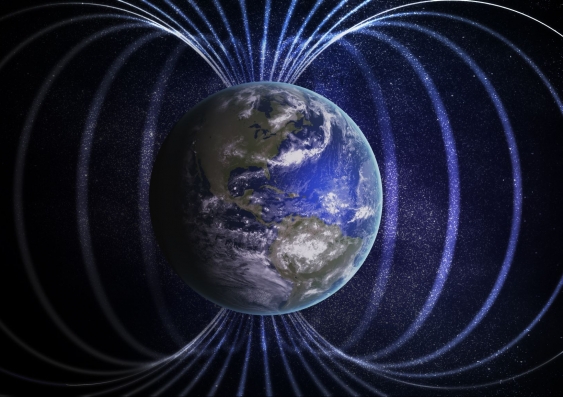
The storm's intensity also produced spectacular auroral displays far beyond their typical boundaries. Normally confined to polar regions near the Arctic and Antarctic circles, the Gannon storm pushed auroras into mid-latitude areas including Japan, Mexico, and southern Europe. This expansion occurred because the Sun's activity compressed Earth's magnetic field so strongly that charged particles could travel much farther along magnetic field lines toward the equator.
The appearance of vivid auroras in regions that rarely experience them served as a visible reminder of the storm's power. Stronger geomagnetic storms allow these light displays to reach increasingly equatorial regions, providing both a spectacular natural show and a clear indicator of space weather intensity.
Implications for Technology and Space Weather Prediction
The Gannon storm's effects on technology were significant and widespread. Several satellites experienced electrical problems or stopped transmitting data during the event, GPS signals became less accurate, and radio communications were disrupted. Understanding how long Earth's plasma layers take to recover from such disturbances is essential for predicting future space weather impacts and protecting the technology that relies on stable conditions in near-Earth space.
These observations from the Arase satellite provide a clearer understanding of how energy moves through Earth's protective plasma regions during severe solar storms. The data collected during the Gannon event will help improve space weather forecasting models and develop better protection strategies for satellites, communication systems, and navigation networks. As solar activity increases toward the next solar maximum expected around 2025, such insights become increasingly valuable for safeguarding our technology-dependent society.