Read on the Guardian
How South Korea's Smart Bin System Is Revolutionizing Food Waste Management
South Korea has achieved a remarkable 96.8% food waste recycling rate through a comprehensive national strategy. At the heart of this success are RFID-enabled smart bins that track waste by the gram, charging residents based on exact disposal amounts. This pay-as-you-throw system, combined with landfill bans and dedicated processing infrastructure, has driven significant behavioral change, reducing Seoul's daily food waste by nearly 24% over a decade. The program demonstrates how technology, policy, and public engagement can create sustainable waste management solutions.
In a world grappling with the environmental crisis of food waste, South Korea has emerged as a global leader through innovative technology and comprehensive policy. The nation's remarkable achievement of recycling 96.8% of its 4.81 million tonnes of food waste in 2023 represents a dramatic transformation built over two decades. At the core of this success lies a sophisticated system of smart bins that track waste down to the gram, creating unprecedented transparency and accountability in household waste management.
This article explores South Korea's journey from landfill crisis to recycling leader, examining the technological infrastructure, policy framework, and behavioral impacts that have made this transformation possible. We'll look at how digital measurement systems have changed household habits, the processing technology that converts waste into valuable resources, and the challenges facing further expansion of this successful model.
The Evolution of South Korea's Waste Management System
South Korea's current waste management success stems from a crisis in the early 1990s when the nation's main landfills reached capacity. This environmental emergency prompted a fundamental overhaul of waste policies, beginning with the introduction of a nationwide pay-as-you-throw scheme in 1995. Residents were required to purchase official rubbish bags, which initially reduced waste but created new problems with food scraps sitting wet in general waste, worsening odor issues.
The system evolved significantly in 2005 when South Korea banned sending food waste to landfill altogether and imposed mandatory separation requirements. Standardization accelerated after 2013 when the ocean dumping of leachate – the liquid from food waste processing – was prohibited, forcing all processing to occur on land. This regulatory framework created the foundation for the technological innovations that would follow.
RFID Smart Bin Technology
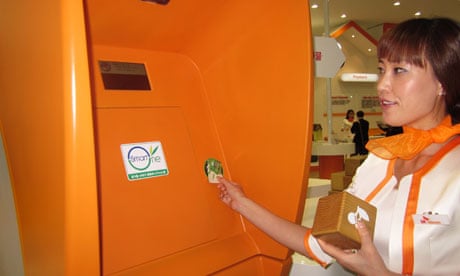
The introduction of radio frequency identification (RFID) bins in the early 2010s marked a turning point in South Korea's waste management approach. These digital facilities track wastage down to the gram, bringing about significant behavioral change among users. As documented in The Guardian's coverage, residents like Min Geum-nan in Seoul's Gangdong district now interact with these systems daily, tapping resident cards on readers and receiving immediate feedback about their waste quantities.
The financial mechanism is straightforward but effective: residents pay 130 won (about 7p) per kilogram of food waste, with fees automatically added to monthly maintenance bills. This precise measurement and billing system has created powerful incentives for waste reduction. As Min explains, "You have no choice but to pay attention because you can see exactly what you're wasting." The ability to dispose of small amounts several times daily has eliminated concerns about smells and flies that plagued earlier systems using prepaid yellow bags.
Behavioral Impact and Household Adaptation
The smart bin system has fundamentally changed how South Korean households approach food preparation and disposal. The digital display showing exact weights has made portion control part of daily life for many families. Min describes this behavioral shift: "If the family leaves food, I make less next time. You start thinking differently." Households have developed various methods for removing moisture from food waste – pressing, draining, and using strainers – since water content increases weight and cost.
Cultural norms and community reinforcement play significant roles in the system's success. Community bulletin boards regularly remind residents of sorting rules, and social expectations around proper waste management have become deeply ingrained. "People here are used to doing things properly," Min notes, highlighting how the program has become normalized through consistent implementation and social reinforcement.
Processing Infrastructure and Resource Recovery
South Korea's waste management success depends not only on collection but on sophisticated processing infrastructure. Facilities like the Gangdong district resource circulation centre in East Seoul process approximately 300 tonnes of food waste daily. The processing machinery is built underground to minimize odor complaints, addressing a common barrier to waste facility acceptance.
The processing chain begins with shredding incoming waste and extracting foreign materials like metal fragments or onion mesh bags. The waste is then pressed to remove water, with the separated liquid feeding into anaerobic digesters. The resulting biogas powers the facility's drying process and odor control systems, creating a circular energy model. The remaining solids – about 10% of the original volume – are dried, screened for contaminants, and processed into chicken feed sold nationwide and exported.

National statistics reveal the comprehensive resource recovery achieved: approximately 42% of recycled food waste becomes animal feed, 33% becomes compost, and 16% generates biogas. This multi-stream recovery maximizes the value extracted from what was previously considered mere waste.
Measurable Results and Expansion Challenges
The impact of South Korea's smart bin system is quantifiable and significant. Since citywide implementation began in Seoul in 2013, the city's food waste has fallen by 23.9% over a decade, from 3,181 tonnes daily to 2,419 tonnes. Research across individual complexes shows even more dramatic reductions, with studies of five Seoul apartment blocks finding average waste decreases of 51% once residents could see and pay for exact disposal weights.
Current coverage statistics demonstrate the system's scale: Seoul operates 27,289 RFID units serving 81.6% of apartment residents, with overall coverage across all housing types at 37.9%. Nationally, 150,738 units serve 8.54 million apartment households across 186 of the country's 229 municipalities.
Despite these successes, the program faces expansion challenges. Central government funding for installation ended in 2014, requiring local authorities to finance new machines independently. Smaller or poorer municipalities have struggled with budget constraints, reporting delays and slower uptake. Technical challenges include corrosion from the high salt content of Korean food, adding to replacement and maintenance costs for earlier machine generations.
Future Directions and Global Implications
Seoul continues to advance its waste reduction goals, pledging to cut food waste by 20% by 2030 compared with 2019 levels and expand RFID bin coverage to 90% of apartment complexes. From 2026, the city plans to introduce a points-based reward system, giving households credits toward utility bills for reducing waste.
South Korea's model offers valuable lessons for countries exploring pay-as-you-throw schemes, particularly for food waste which presents unique challenges as heavier, wetter, and more variable than packaging materials. The system's success stems from combining multiple policies – landfill bans, mandatory recycling, precise measurement, and dedicated processing plants – developed over three decades of continuous improvement.
For residents like Min Geum-nan, the system has become an intuitive part of daily life. "Separating food from other rubbish is just obvious," she says. "It would be strange not to." This normalization of sustainable practice, supported by technology and policy, represents South Korea's most significant achievement in transforming environmental challenge into systematic solution.